
 EN
EN




Manufacturing decision-makers constantly face the challenge of selecting production methods that deliver consistency, speed, and cost efficiency when dealing with large-scale orders. Among the various fabrication technologies available, plastic injection mold systems have emerged as the definitive solution for high-volume projects across industries ranging from automotive to consumer electronics. The strategic advantages of this manufacturing approach extend far beyond simple part replication, offering a comprehensive framework for achieving operational excellence in mass production environments where precision and repeatability are non-negotiable requirements.
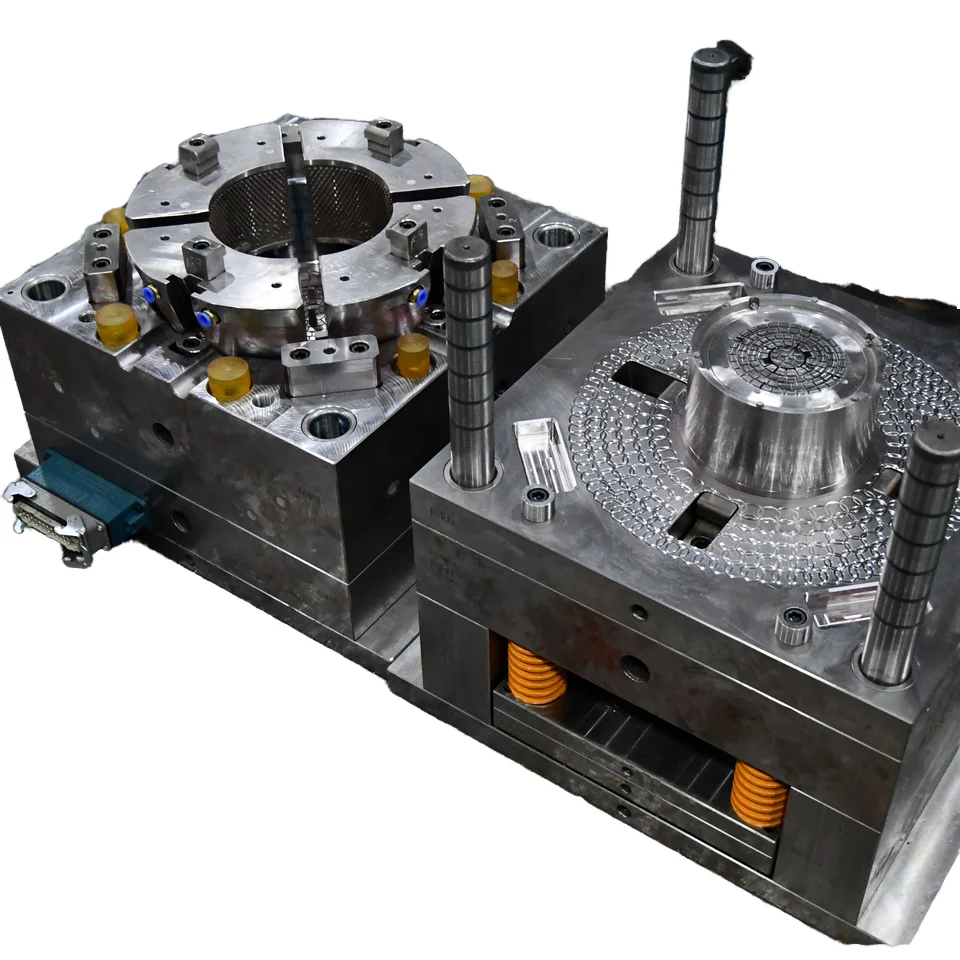
The fundamental question of why plastic injection mold technology dominates high-volume manufacturing stems from its unique ability to balance economic performance with technical capability. When production requirements exceed tens of thousands of units, the investment in precision tooling transforms from a capital expense into a strategic asset that generates compounding returns with every production cycle. This manufacturing paradigm shifts the cost structure in favor of economies of scale, where the fixed tooling investment becomes increasingly negligible as production volumes climb, while maintaining dimensional accuracy that manual or low-volume processes simply cannot match consistently across extended production runs.
Economic Advantages That Multiply with Production Scale
Per-Unit Cost Reduction Through Amortization
The economic logic behind choosing plastic injection mold for high-volume projects centers on the amortization principle that spreads initial tooling costs across thousands or millions of production cycles. While the upfront investment in a precision mold might represent a significant capital outlay, this cost becomes progressively smaller when calculated on a per-unit basis as production volumes increase. For projects targeting 50,000 units or more, the mold cost per component often drops below a few cents, making it economically unviable to consider alternative manufacturing methods that carry higher recurring costs per part.
Manufacturing organizations operating in competitive markets understand that material efficiency directly impacts bottom-line profitability. The plastic injection mold process optimizes material usage by precisely controlling the amount of polymer fed into each cavity, minimizing waste to levels typically below two percent of total material consumption. This efficiency becomes particularly significant in high-volume scenarios where even marginal waste percentages translate to substantial material costs over the production lifecycle. The closed-loop nature of injection molding also enables scrap recycling, further improving the overall material utilization rate and reducing environmental impact.
Labor Cost Optimization Through Automation
High-volume production demands operational models that minimize human intervention while maximizing output consistency. Modern plastic injection mold systems integrate seamlessly with automated material handling, robotic part extraction, and inline quality verification systems that reduce direct labor requirements to supervisory and maintenance functions. This automation capability becomes increasingly valuable as wage inflation and labor availability challenges affect manufacturing regions worldwide. A single operator can effectively monitor multiple injection molding machines simultaneously, creating labor productivity ratios that manual or semi-automated processes cannot approach.
The consistency delivered by automated plastic injection mold operations also reduces downstream costs associated with quality control, rework, and warranty claims. When dimensional tolerances remain stable across production runs spanning weeks or months, manufacturers can implement statistical process control protocols that identify deviations before they result in defective parts. This proactive quality management approach prevents costly batch rejections and maintains customer confidence in product reliability, factors that carry significant economic weight in high-volume contract manufacturing relationships.
Technical Capabilities Enabling Complex Part Production
Geometric Complexity Without Cost Penalties
One of the most compelling reasons to select plastic injection mold technology for high-volume projects involves its unique ability to produce geometrically complex parts without imposing proportional cost increases. Once the mold design incorporates features such as undercuts, threads, intricate surface textures, or multiple wall thicknesses, these complexities replicate automatically in every subsequent production cycle at no additional per-unit cost. This capability enables product designers to optimize functionality and aesthetics without the manufacturing constraints that affect machining, casting, or forming processes where complexity directly correlates with production time and cost.
The plastic injection mold process accommodates wall thickness variations, ribbing structures, and integration of multiple functional features into single components that would otherwise require assembly operations. This consolidation potential reduces part counts in product assemblies, streamlining supply chain management and eliminating assembly labor while improving overall product reliability by reducing potential failure points. In high-volume production contexts, these design freedoms translate directly into competitive advantages through reduced total product costs and accelerated time-to-market schedules.
Material Versatility for Diverse Application Requirements
Modern plastic injection mold technology supports an extensive range of thermoplastic materials, each offering distinct property profiles suited to specific application requirements. Engineering-grade polymers such as ABS, polycarbonate, nylon, and acetal provide mechanical properties approaching those of metals in certain applications, while maintaining the weight and cost advantages inherent to plastic materials. High-volume projects benefit from this material versatility by enabling manufacturers to optimize material selection for performance requirements without changing fundamental production equipment or processes.
The ability to incorporate additives, reinforcements, and colorants directly into the base polymer during the plastic injection mold process eliminates secondary finishing operations that would otherwise add cost and complexity to high-volume production schedules. Glass fiber reinforcement can be added to enhance stiffness and strength, flame retardants can be integrated to meet safety standards, and UV stabilizers can be included to extend outdoor service life. This flexibility in material formulation allows manufacturers to precisely tailor component properties to application demands while maintaining the speed and consistency advantages that define injection molding as the preferred high-volume manufacturing method.
Production Speed and Cycle Time Optimization
Rapid Cycle Times Enabling Daily Output Targets
The production velocity achievable through optimized plastic injection mold systems directly addresses the fundamental requirement of high-volume projects: delivering large quantities within constrained timeframes. Cycle times for typical components range from fifteen to sixty seconds, meaning a single molding machine can produce between 1,000 and 5,000 parts per day depending on part complexity and cooling requirements. This production rate far exceeds what alternative processes can achieve, making injection molding the only viable option when delivery schedules demand tens of thousands of components per week.
Advanced mold design techniques including conformal cooling channels and hot runner systems further compress cycle times by optimizing heat management throughout the molding process. Conformal cooling uses computer-designed cooling circuits that follow part geometry more precisely than traditional straight-line cooling channels, reducing cooling phase duration by up to thirty percent. Hot runner systems eliminate the solidified material in feed channels that must be cooled, ejected, and recycled in cold runner designs, saving both material and cycle time while improving part quality through better gate aesthetics and more consistent fill patterns.
Multi-Cavity Molds Multiplying Output Capacity
When project volumes justify the additional tooling investment, multi-cavity plastic injection mold designs multiply production output without proportional increases in machine capacity or operating costs. A sixteen-cavity mold producing identical parts delivers sixteen times the output of a single-cavity tool using the same press tonnage and cycle time. This scalability allows manufacturers to match production capacity precisely to demand forecasts, avoiding underutilization of equipment while ensuring delivery commitments remain achievable even as order volumes grow.
Family mold configurations extend this concept by producing multiple different part numbers simultaneously within a single tool, optimizing production scheduling for assemblies requiring various components in fixed ratios. This approach reduces inventory carrying costs and simplifies production planning for high-volume assembly operations where synchronized component availability directly affects assembly line efficiency. The engineering precision required to balance flow characteristics and cooling rates across multiple cavities demands advanced mold design expertise, but the resulting production efficiency gains justify this investment in high-volume manufacturing contexts.
Quality Consistency Across Extended Production Runs
Dimensional Stability and Repeatability
High-volume production projects demand unwavering dimensional consistency to ensure components remain interchangeable across production batches spanning months or years. The plastic injection mold process delivers this consistency through precise control of material temperature, injection pressure, holding pressure, and cooling time parameters that remain stable once optimized. Statistical process control data from mature injection molding operations typically shows dimensional variation measured in hundredths of millimeters, far tighter than the tolerances achievable through manual fabrication methods or even many automated machining processes.
This repeatability extends beyond simple dimensional control to encompass mechanical properties, surface finish quality, and aesthetic characteristics that remain consistent throughout production runs. Plastic injection mold systems maintain polymer melt temperature within narrow bands, ensuring molecular structure and crystallinity remain uniform from the first part to the millionth. This consistency matters particularly in applications where mechanical performance or chemical resistance must meet stringent specifications, as property variation could lead to field failures that damage brand reputation and trigger costly warranty claims.
In-Process Monitoring and Quality Assurance
Modern plastic injection mold machines integrate sophisticated sensors and control systems that monitor critical process parameters in real time, enabling immediate correction of deviations before defective parts are produced. Cavity pressure sensors detect fill imbalances, melt temperature thermocouples verify material conditioning, and position transducers confirm complete mold closure. This comprehensive process monitoring creates audit trails that document production conditions for every molding cycle, supporting quality management systems and providing traceability required in regulated industries such as medical devices and automotive safety components.
The combination of inherent process stability and active monitoring capabilities makes plastic injection mold technology particularly well-suited to high-volume projects where even small defect rates translate into significant scrap quantities and customer dissatisfaction. When producing one million units annually, a seemingly acceptable three percent defect rate results in 30,000 rejected parts, representing substantial material waste and potential delivery shortfalls. The tight process control achievable with properly maintained injection molding equipment typically keeps defect rates below 0.5 percent, and often achieves six-sigma quality levels in optimized production environments.
Tooling Longevity Supporting Multi-Year Production
Mold Life Expectancy and Maintenance
The investment in precision plastic injection mold tooling yields returns over extended production lifespans that can reach millions of cycles when properly designed and maintained. Production molds constructed from hardened tool steels and incorporating wear-resistant coatings on critical surfaces routinely achieve one million cycles or more before requiring refurbishment. This longevity proves essential for high-volume projects with sustained demand profiles, as tooling replacement costs and production downtime for tool changeovers would significantly impact project economics if mold life fell short of production requirements.
Preventive maintenance protocols including regular cleaning, lubrication of moving components, and inspection of wear-prone areas extend mold service life while maintaining production quality. Many manufacturers implement predictive maintenance approaches that monitor cycle counts and track dimensional trends to schedule mold refurbishment during planned production breaks rather than experiencing unexpected failures that disrupt delivery schedules. This proactive approach to tooling management supports the reliability and predictability that high-volume manufacturing commitments demand.
Design Modifications and Production Flexibility
While plastic injection mold tooling represents a significant fixed investment, the ability to modify existing molds provides valuable flexibility for accommodating design revisions or product variations without complete tool replacement. Mold inserts can be swapped to change specific part features, cavity surface textures can be modified through polishing or electrical discharge machining, and gate locations can be relocated to optimize fill patterns. These modification capabilities allow manufacturers to implement continuous improvement initiatives and respond to customer feedback without abandoning the tooling investment that supports high-volume production.
Some high-volume projects benefit from progressive tooling strategies where initial production uses simplified mold designs that allow rapid market entry, followed by optimized production tooling incorporating lessons learned from early manufacturing experience. This staged approach balances speed-to-market objectives with the tooling optimization that maximizes long-term production efficiency. The plastic injection mold process accommodates this strategy more readily than processes requiring specialized equipment or tooling that cannot be upgraded incrementally as production knowledge accumulates.
FAQ
What production volume justifies investment in plastic injection mold tooling?
The break-even point for plastic injection mold tooling typically occurs between 5,000 and 10,000 units depending on part complexity, size, and comparison alternatives. Simple components with minimal geometric complexity may justify tooling at lower volumes, while large or highly complex parts require higher volumes to offset tooling costs. Projects targeting 50,000 units or more almost universally benefit from injection molding economics, as per-unit costs drop substantially at these volumes and alternative processes become economically uncompetitive. The decision calculus should also consider production timeline requirements, as injection molding delivers output rates that compressed schedules may demand regardless of pure cost considerations.
How long does plastic injection mold tooling typically last in production?
Production mold longevity depends on design quality, material selection, part geometry, and maintenance practices, but properly engineered plastic injection mold tools routinely achieve 500,000 to one million cycles before requiring significant refurbishment. Molds processing abrasive-filled materials or producing parts with complex geometries that create high wear conditions may require earlier maintenance intervention, while molds producing simple geometries from non-abrasive polymers can exceed two million cycles. Regular preventive maintenance including cleaning, lubrication, and inspection extends service life significantly, and many manufacturers implement cycle-count tracking systems to schedule proactive refurbishment before quality deterioration occurs.
Can plastic injection mold accommodate multiple part variations in high-volume production?
Multi-cavity family molds enable production of different part numbers simultaneously within a single tool, making them well-suited to high-volume production of product families requiring various components in fixed ratios. This approach optimizes machine utilization and simplifies production scheduling compared to running separate single-cavity molds. Alternatively, interchangeable mold inserts allow manufacturers to produce part variations sequentially using common mold bases, reducing total tooling investment while maintaining production flexibility. The optimal approach depends on production volume ratios between variants, changeover time considerations, and whether simultaneous availability of all variants is required for downstream assembly operations.
What quality control measures ensure consistency in high-volume plastic injection mold production?
High-volume plastic injection mold operations implement layered quality assurance protocols including first-article inspection to verify setup accuracy, in-process monitoring of critical parameters such as cycle time and cavity pressure, periodic dimensional verification using coordinate measuring machines or optical comparators, and statistical process control charting to identify trends before they result in out-of-specification parts. Modern injection molding machines incorporate sensors that monitor melt temperature, injection pressure, holding pressure, and cooling time, creating process documentation for every molding cycle. This comprehensive monitoring approach enables manufacturers to maintain tight dimensional tolerances and mechanical property consistency across production runs spanning months or years, supporting the quality expectations that high-volume projects demand.
Table of Contents
- Economic Advantages That Multiply with Production Scale
- Technical Capabilities Enabling Complex Part Production
- Production Speed and Cycle Time Optimization
- Quality Consistency Across Extended Production Runs
- Tooling Longevity Supporting Multi-Year Production
-
FAQ
- What production volume justifies investment in plastic injection mold tooling?
- How long does plastic injection mold tooling typically last in production?
- Can plastic injection mold accommodate multiple part variations in high-volume production?
- What quality control measures ensure consistency in high-volume plastic injection mold production?