
 EN
EN




Complex product designs require manufacturing solutions that can handle intricate geometries, tight tolerances, and sophisticated material flows. A plastic injection mold emerges as the optimal manufacturing approach when dealing with parts that feature undercuts, thin walls, multiple cavities, and complex internal structures. The technology's ability to create precise, repeatable components with intricate details makes it indispensable for industries ranging from automotive electronics to medical devices where design complexity directly impacts product performance and functionality.
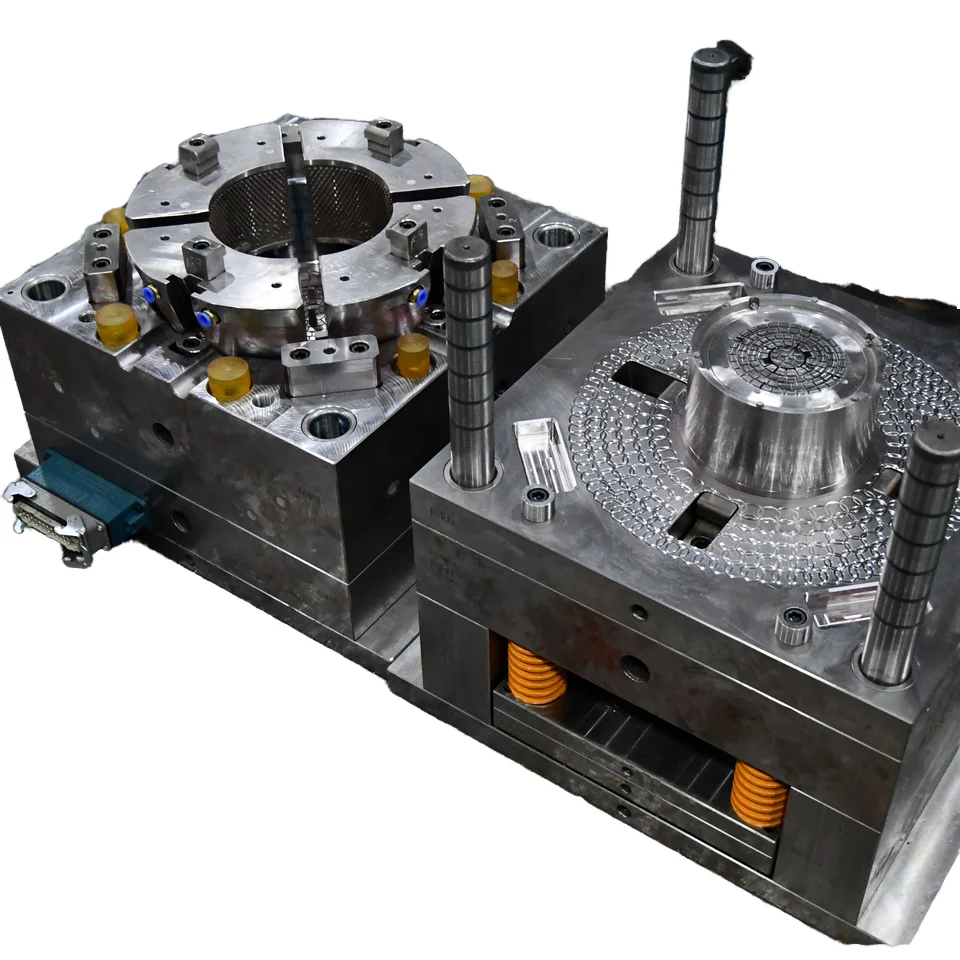
The fundamental advantage of plastic injection mold technology lies in its capability to transform liquid polymer into solid, complex shapes through controlled pressure and temperature management. Unlike other manufacturing methods that may require secondary operations or assembly steps, injection molding can produce fully formed complex components in a single cycle. This single-step capability becomes particularly valuable when dealing with designs that incorporate multiple functional elements, varying wall thicknesses, and integrated features that would otherwise require separate manufacturing processes and subsequent assembly operations.
Advanced Cavity Design and Material Flow Control
Multi-Cavity Configuration for Complex Geometries
Modern plastic injection mold systems excel at handling complex designs through sophisticated cavity configurations that accommodate intricate part geometries. The mold cavity can be precisely machined to create parts with varying wall thicknesses, internal channels, and complex surface textures that would be impossible to achieve through conventional manufacturing methods. Advanced cavity design allows for the creation of parts with undercuts, threads, and complex internal structures without requiring secondary machining operations.
The ability to incorporate multiple cavities within a single plastic injection mold enables the simultaneous production of complex components, dramatically improving manufacturing efficiency. Each cavity can be designed with specific cooling channels and material flow patterns that optimize the formation of complex geometries. This multi-cavity approach ensures consistent quality across all produced parts while maintaining the precise dimensional accuracy required for complex designs that must interface with other components in sophisticated assemblies.
Controlled Material Flow for Intricate Features
Complex designs often require precise material distribution to ensure proper formation of all features without defects such as short shots, sink marks, or weld lines. A well-designed plastic injection mold incorporates advanced runner systems and gate positioning that direct molten plastic flow to fill even the most intricate design elements completely. The controlled material flow ensures that complex features maintain their intended dimensions and surface quality throughout the production process.
Temperature and pressure control within the plastic injection mold cavity becomes critical when dealing with complex designs that feature varying wall thicknesses or intricate internal structures. Advanced mold designs incorporate multiple temperature zones and pressure monitoring systems that can be adjusted to accommodate the specific flow requirements of complex geometries. This level of control ensures that even the most challenging design features receive adequate material flow and proper formation without compromising the integrity of other part areas.
Precision Tooling and Dimensional Accuracy
High-Precision Machining Capabilities
The creation of complex designs requires exceptional precision in plastic injection mold construction, with machining tolerances often measured in micrometers. Advanced CNC machining centers and EDM equipment enable the creation of mold cavities that can reproduce intricate design features with remarkable accuracy. The precision achieved in mold construction directly translates to the dimensional accuracy of the final plastic components, ensuring that complex designs maintain their intended functionality and fit requirements.
Surface finish quality becomes particularly important when dealing with complex designs that may include optical elements, sealing surfaces, or decorative features. Modern plastic injection mold manufacturing techniques can achieve mirror-like surface finishes or complex texture patterns that are faithfully reproduced on every molded part. This capability allows designers to incorporate functional and aesthetic elements directly into the mold design, eliminating the need for secondary finishing operations that could compromise dimensional accuracy or introduce variability in complex components.
Tight Tolerance Maintenance Across Complex Features
Complex designs often require different tolerance requirements across various features of the same component. A sophisticated plastic injection mold can maintain tight tolerances on critical dimensions while allowing appropriate tolerances on less critical features. This selective tolerance control is achieved through careful mold design that considers material shrinkage, thermal expansion, and the specific requirements of each design feature.
The ability to maintain consistent dimensional accuracy across complex geometries relies heavily on the thermal management capabilities of the plastic injection mold. Advanced cooling systems ensure uniform temperature distribution throughout the mold cavity, preventing differential shrinkage that could distort complex features. Temperature-controlled mold operations enable the production of parts with complex geometries that maintain their intended dimensions and functional characteristics throughout the entire production run.
Material Versatility and Property Optimization
Advanced Polymer Selection for Complex Applications
Complex designs often require specific material properties such as chemical resistance, electrical conductivity, or mechanical strength in particular directions. The plastic injection mold process accommodates a vast range of engineering polymers, each offering unique property combinations that can be optimized for specific design requirements. Advanced thermoplastics and thermosets can be processed through injection molding to create complex components that meet demanding performance specifications.
Material selection for complex designs must consider not only the end-use requirements but also the flow characteristics and processing behavior of the chosen polymer. Some complex geometries may require low-viscosity materials to ensure complete filling of intricate features, while others may benefit from high-strength materials that can withstand the stresses associated with complex loading conditions. The plastic injection mold process can accommodate these diverse material requirements while maintaining the precision necessary for complex design reproduction.
Multi-Material Integration Capabilities
Complex designs increasingly require the integration of multiple materials with different properties within a single component. Advanced plastic injection mold systems can accommodate multi-shot molding processes that allow for the sequential injection of different materials into the same mold cavity. This capability enables the creation of complex components with varying material properties in different regions, such as rigid structural areas combined with flexible sealing elements.
The integration of multiple materials within a single plastic injection mold cycle requires sophisticated mold design that ensures proper adhesion between different polymer types while maintaining the dimensional accuracy of complex features. Advanced hot runner systems and sequential gate control enable precise timing of material injection, ensuring that each material is placed exactly where needed within the complex design. This multi-material capability expands the design possibilities for complex components while maintaining manufacturing efficiency.
Process Control and Quality Assurance
Real-Time Monitoring and Adjustment
Complex designs require sophisticated process control to ensure consistent quality and dimensional accuracy across all produced parts. Modern plastic injection mold systems incorporate real-time monitoring capabilities that track critical process parameters such as temperature, pressure, and material flow rates. This continuous monitoring enables immediate adjustments to maintain optimal processing conditions for complex geometries that may be sensitive to parameter variations.
The ability to monitor and control multiple process variables simultaneously becomes essential when dealing with complex designs that may have different requirements in various regions of the same part. Advanced control systems can manage multiple temperature zones, pressure profiles, and timing sequences to optimize the formation of each design feature. This level of process control ensures that complex components meet their design specifications consistently, even when dealing with challenging geometries or material combinations.
Quality Validation for Complex Geometries
Quality assurance for complex designs requires sophisticated measurement and inspection techniques that can verify dimensional accuracy and surface quality across intricate geometries. Modern plastic injection mold operations incorporate automated inspection systems that can measure complex three-dimensional features with high precision. These systems ensure that each produced part meets the stringent requirements associated with complex design applications.
The validation process for complex designs often requires specialized testing methods that go beyond dimensional verification. Functional testing, stress analysis, and performance validation become critical components of the quality assurance process for complex components. The consistency and repeatability of the plastic injection mold process enable thorough quality validation during initial production setup, providing confidence that subsequent production will maintain the same high standards throughout the entire manufacturing run.
Economic Advantages for Complex Design Manufacturing
Reduced Assembly Requirements
One of the most significant economic advantages of using plastic injection mold technology for complex designs is the ability to integrate multiple functional elements into a single component. Complex designs that might traditionally require multiple parts and assembly operations can often be consolidated into a single molded component. This consolidation reduces material costs, eliminates assembly labor, and minimizes the potential for assembly-related quality issues.
The elimination of assembly operations through complex design integration also reduces inventory requirements and simplifies supply chain management. A single plastic injection mold can produce complex components that replace multiple traditional parts, reducing the number of suppliers and inventory items required for final product assembly. This simplification translates to significant cost savings and improved quality control throughout the manufacturing process.
High-Volume Production Efficiency
Complex designs often benefit from the high-volume production capabilities of plastic injection mold systems. Once the initial mold investment is made, the per-part cost for complex components can be extremely competitive, especially when production volumes justify the tooling investment. The ability to produce complex parts at high speeds with consistent quality makes injection molding the preferred choice for many complex design applications.
The scalability of plastic injection mold production enables manufacturers to adjust production volumes based on demand while maintaining cost efficiency. Complex designs that might be prohibitively expensive to produce through other manufacturing methods become economically viable through injection molding, particularly when production volumes exceed the break-even point for tooling investment. This scalability makes injection molding an attractive option for complex designs across a wide range of production volume requirements.
FAQ
What types of complex features can be incorporated into injection molded parts?
Injection molding can accommodate a wide variety of complex features including undercuts, threads, internal channels, varying wall thicknesses, intricate surface textures, and multi-level geometries. Advanced mold designs can incorporate side actions, collapsing cores, and sequential operations to create features that would be impossible with simpler manufacturing methods. The key limitation is ensuring adequate material flow and proper ejection of the finished part from the mold.
How does injection molding maintain dimensional accuracy in complex designs?
Dimensional accuracy in complex injection molded parts is maintained through precise mold construction, controlled material flow, uniform temperature distribution, and consistent processing parameters. Advanced cooling systems ensure uniform shrinkage across complex geometries, while sophisticated process controls monitor and adjust critical variables in real-time. Modern injection molding can achieve tolerances of ±0.001 inches or better on critical dimensions, even in complex parts with multiple features.
What design considerations are important when developing parts for injection molding?
Key design considerations include maintaining adequate draft angles for part ejection, ensuring uniform wall thickness where possible, positioning gates for optimal material flow, and designing features that can be properly cooled and filled. Complex designs should consider the parting line location, avoid sharp corners that could create stress concentrations, and incorporate appropriate radii for material flow. Design for manufacturability principles help ensure that complex parts can be produced consistently and cost-effectively.
How do material properties affect the molding of complex designs?
Material properties significantly impact the ability to successfully mold complex designs. Flow characteristics determine how well the material fills intricate features, while shrinkage properties affect dimensional accuracy and warpage potential. Some materials may require higher processing temperatures or pressures to fill complex geometries completely, while others may offer better surface finish or mechanical properties for specific applications. Material selection must balance flow requirements with end-use performance needs for optimal results in complex designs.
Table of Contents
- Advanced Cavity Design and Material Flow Control
- Precision Tooling and Dimensional Accuracy
- Material Versatility and Property Optimization
- Process Control and Quality Assurance
- Economic Advantages for Complex Design Manufacturing
-
FAQ
- What types of complex features can be incorporated into injection molded parts?
- How does injection molding maintain dimensional accuracy in complex designs?
- What design considerations are important when developing parts for injection molding?
- How do material properties affect the molding of complex designs?