
 EN
EN




In the modern manufacturing landscape, achieving efficient mass production requires sophisticated tooling systems that can deliver consistent quality at scale. The plastic injection mold represents the cornerstone technology that transforms raw polymer materials into precise components, enabling manufacturers to produce millions of identical parts with remarkable accuracy and speed. This manufacturing process has revolutionized industries from automotive to electronics, making complex plastic products accessible and affordable to consumers worldwide.
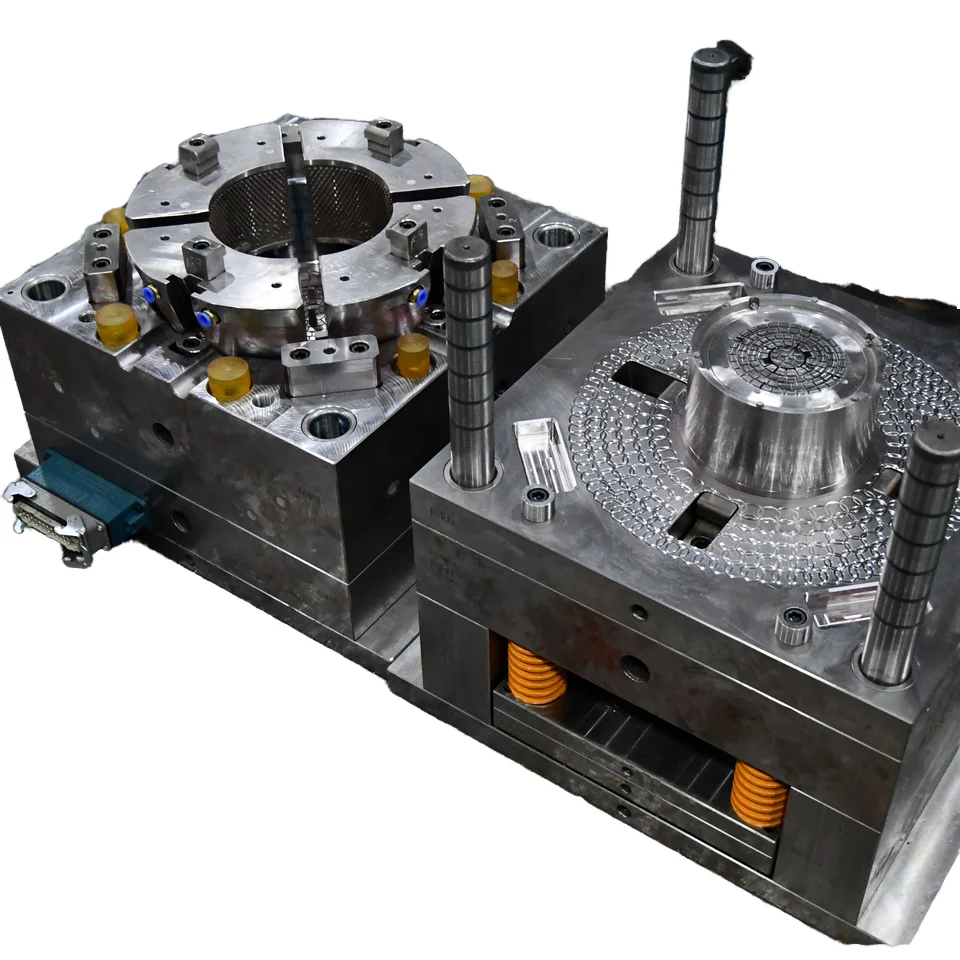
Understanding why the plastic injection mold serves as the foundation for mass production success reveals the intricate relationship between tooling precision, material flow dynamics, and production economics. Manufacturing leaders who grasp these fundamental principles can optimize their production strategies, reduce per-unit costs, and maintain competitive advantages in rapidly evolving markets where speed to market and cost efficiency determine business success.
Enabling High-Volume Production Capabilities
Rapid Cycle Time Achievement
The plastic injection mold enables manufacturers to achieve cycle times as short as 15-30 seconds per part, depending on component complexity and material requirements. This remarkable speed stems from the mold's ability to simultaneously cool and solidify multiple cavities while the next shot is being prepared. Advanced cooling channel designs within the mold structure accelerate heat removal, allowing faster demolding and reducing overall production time.
Modern injection molding systems equipped with precision-engineered molds can operate continuously for hours without interruption, producing thousands of parts per day. The mold's robust construction withstands repeated thermal cycling and mechanical stress, maintaining dimensional accuracy even after millions of injection cycles. This durability directly translates to sustained high-volume output capabilities that manual or alternative manufacturing methods cannot match.
Multi-Cavity Production Efficiency
A well-designed plastic injection mold can incorporate multiple cavities, allowing simultaneous production of several identical parts in a single injection cycle. Family molds can even produce different related components together, maximizing machine utilization and reducing setup time. This multi-cavity approach multiplies production output without proportionally increasing labor costs or machine time.
The economic advantage becomes pronounced when comparing single-cavity manual processes to 16-cavity or 32-cavity injection molds. While initial tooling investment increases with cavity count, the per-part production cost decreases dramatically as volume scales. Manufacturers targeting millions of units find that the plastic injection mold enables economically viable mass production that alternative methods cannot achieve.
Ensuring Dimensional Precision and Repeatability
Tolerances and Quality Control
Mass production demands unwavering dimensional consistency across millions of parts, and the plastic injection mold delivers this precision through carefully engineered cavity geometries and controlled material flow. Modern injection molds achieve tolerances within ±0.001 inches on critical dimensions, ensuring that each molded component meets exact specifications regardless of production sequence or timing.
The mold's steel construction provides thermal stability that prevents dimensional drift during extended production runs. Unlike manual forming processes where operator variation affects quality, the plastic injection mold eliminates human inconsistency by mechanically controlling every aspect of part formation. This automated precision enables manufacturers to meet stringent quality standards required by automotive, medical, and aerospace applications.
Surface Finish Control
The plastic injection mold surface finish directly transfers to molded parts, providing consistent texture and appearance across entire production runs. Manufacturers can specify exact surface requirements during mold design, incorporating textures, logos, or functional features that emerge perfectly formed from each injection cycle. This capability eliminates secondary finishing operations that would otherwise add cost and time to mass production workflows.
Advanced mold polishing techniques and surface treatments ensure that aesthetic requirements remain constant throughout the mold's operational life. Whether producing glossy consumer electronics housings or textured automotive interior components, the plastic injection mold maintains surface quality standards that manual processes cannot reliably duplicate at mass production volumes.
Optimizing Material Utilization and Cost Structure
Minimal Material Waste
The plastic injection mold process generates minimal material waste compared to subtractive manufacturing methods, as the exact amount of molten plastic required for each part is injected into the cavity. Runners and gates, while necessary for material flow, represent the only excess material, and these can often be reground and recycled back into the production stream.
This efficient material utilization becomes increasingly important as raw material costs rise and environmental regulations tighten. The plastic injection mold enables manufacturers to calculate precise material requirements per part, facilitating accurate cost forecasting and inventory management for large-scale production programs. Hot runner systems can further reduce waste by eliminating runners entirely, though initial mold investment increases.
Labor Cost Reduction
Mass production economics rely heavily on minimizing labor content per part, and the plastic injection mold excels in this area through automation capabilities. Once the mold is installed and process parameters are established, production requires minimal operator intervention beyond machine monitoring and quality sampling. This labor efficiency becomes crucial when producing millions of parts where even small per-unit labor savings translate to significant total cost reductions.
The automated nature of injection molding with properly designed molds also reduces dependency on skilled labor for individual part formation. While mold design and setup require expertise, the actual production process can be managed by operators with basic training, providing workforce flexibility and reducing labor costs compared to manual manufacturing methods requiring specialized skills for each part produced.
Facilitating Complex Geometry Manufacturing
Intricate Feature Formation
The plastic injection mold enables mass production of components with complex internal geometries, undercuts, and intricate details that would be impossible or economically prohibitive using traditional manufacturing methods. Through sophisticated mold designs incorporating slides, lifters, and collapsible cores, manufacturers can produce parts with hollow sections, threads, living hinges, and multiple Wall thicknesses in a single operation.
This geometric flexibility allows product designers to optimize functionality without constraining design creativity due to manufacturing limitations. The plastic injection mold process accommodates everything from simple flat panels to complex three-dimensional housings with internal ribs, bosses, and integration features. Such design freedom enables manufacturers to consolidate multiple components into single molded parts, reducing assembly costs and improving product reliability.
Insert Molding and Overmolding Capabilities
Advanced plastic injection mold designs support insert molding and overmolding processes that combine different materials in a single production step. Metal inserts can be positioned within the mold cavity before injection, becoming permanently encapsulated within the plastic component. This capability enables mass production of products requiring metal strength in specific areas while maintaining the cost and weight advantages of plastic in other regions.
Overmolding processes use specialized mold designs to apply soft plastic materials over rigid substrates, creating ergonomic grips, seals, or decorative elements. The plastic injection mold facilitates these multi-material combinations at production speeds suitable for mass manufacturing, eliminating secondary assembly operations that would otherwise increase costs and production time.
Supporting Production Scalability and Flexibility
Volume Scaling Economics
The economic model of the plastic injection mold strongly favors high-volume production due to the inverse relationship between tooling costs and per-part costs. While initial mold investment may represent a significant capital expenditure, this cost amortizes across millions of parts, resulting in extremely low per-unit tooling costs for mass production applications.
Manufacturing businesses can leverage this cost structure to achieve competitive pricing advantages in high-volume markets. The plastic injection mold investment becomes more attractive as projected volumes increase, creating natural economies of scale that encourage mass production strategies. This economic dynamic has driven the adoption of injection molding across industries where volume justifies the initial tooling investment.
Process Optimization and Continuous Improvement
Once established, the plastic injection mold process provides a stable platform for continuous improvement initiatives targeting cycle time reduction, quality enhancement, and cost optimization. Process parameters can be fine-tuned to achieve optimal performance, and data collection systems can monitor production metrics to identify improvement opportunities.
The controlled nature of injection molding allows manufacturers to implement systematic improvements that benefit entire production runs. Scientific molding principles applied to plastic injection mold operations enable process optimization based on measured data rather than trial and error, resulting in consistent improvements in productivity and quality that compound over time.
FAQ
What volume levels justify plastic injection mold investment for mass production?
Generally, production volumes exceeding 10,000 parts annually begin to justify plastic injection mold investment, though the exact breakeven point depends on part complexity, material requirements, and alternative manufacturing costs. For truly cost-effective mass production, volumes typically need to reach 50,000 to 100,000 parts or higher, where the per-part mold cost becomes negligible compared to material and processing costs.
How long do plastic injection molds typically last in mass production environments?
Well-maintained plastic injection molds constructed from premium tool steels can produce 1 million to 5 million parts before requiring major refurbishment, depending on material abrasiveness, part complexity, and operating conditions. Some molds designed for non-abrasive materials like polyethylene can exceed 10 million cycles with proper maintenance, making them suitable for very long-term mass production programs.
Can plastic injection molds be modified after initial production begins?
Yes, plastic injection molds can be modified to accommodate design changes, though modifications should be planned carefully to avoid compromising mold integrity. Adding material is easier than removing it, so initial mold design often incorporates planned modification points. Minor adjustments like gate location changes or small dimension modifications are commonly performed, while major geometry changes may require new cavity sections or complete mold reconstruction.
What factors most significantly impact plastic injection mold performance in mass production?
Cooling system design, gate and runner configuration, and material selection represent the most critical factors affecting mold performance. Proper cooling ensures consistent cycle times and dimensional stability, while optimized flow paths minimize filling pressure and reduce stress concentrations. Steel selection balances durability requirements with cost considerations, particularly important for molds intended for multi-million part production runs.
Table of Contents
- Enabling High-Volume Production Capabilities
- Ensuring Dimensional Precision and Repeatability
- Optimizing Material Utilization and Cost Structure
- Facilitating Complex Geometry Manufacturing
- Supporting Production Scalability and Flexibility
-
FAQ
- What volume levels justify plastic injection mold investment for mass production?
- How long do plastic injection molds typically last in mass production environments?
- Can plastic injection molds be modified after initial production begins?
- What factors most significantly impact plastic injection mold performance in mass production?