
 EN
EN




In modern manufacturing, plastic molding has become one of the most widely adopted production methods across virtually every industrial sector. From consumer electronics and automotive components to medical devices and home appliance housings, the ability to shape thermoplastic and thermosetting materials into precise, repeatable forms has transformed how manufacturers approach product development and large-scale production. Understanding the key advantages of plastic molding processes helps engineers, procurement managers, and business decision-makers make informed choices about manufacturing strategy.
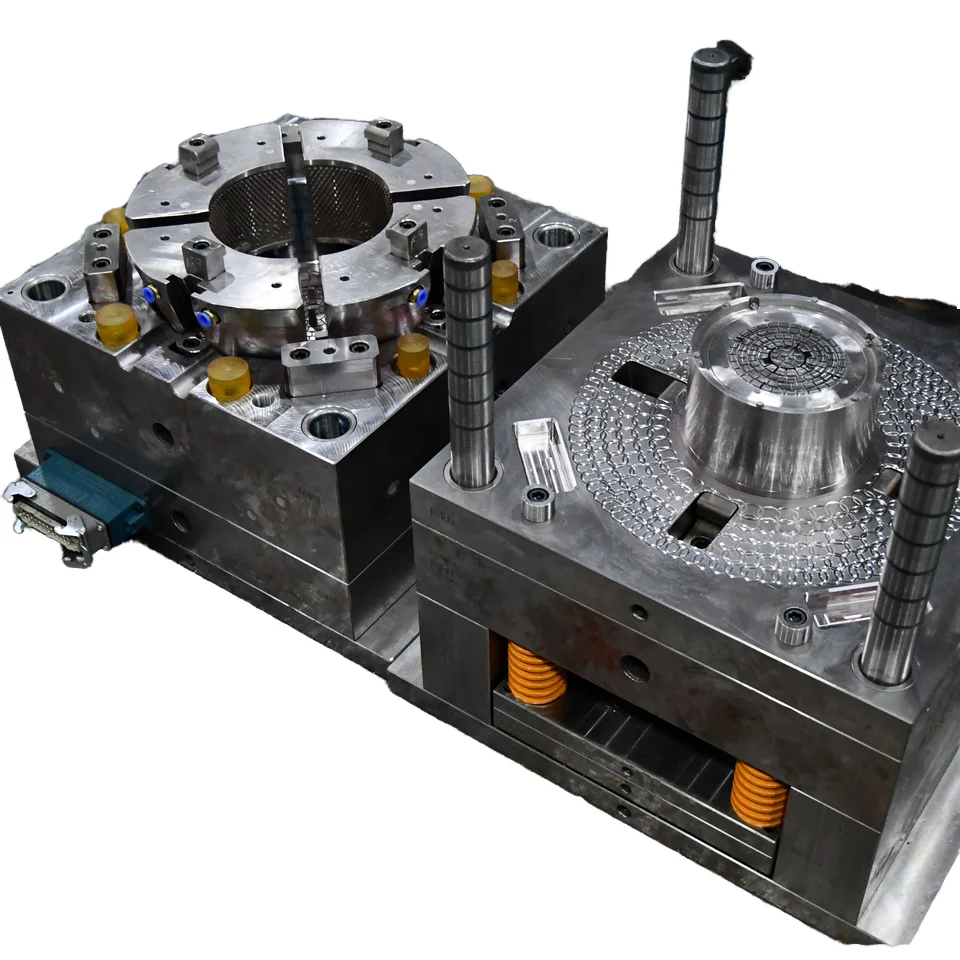
The advantages of plastic molding are not limited to cost savings alone. They span dimensional accuracy, material versatility, production speed, and design freedom — all of which are critical factors in competitive B2B manufacturing environments. This article examines the core benefits that make plastic molding a preferred process for high-volume and precision-driven production, and explains why these advantages translate directly into measurable business value for manufacturers and their customers.
Exceptional Design Flexibility and Geometric Complexity
Freedom to Produce Complex Geometries
One of the most significant advantages of plastic molding is the ability to produce parts with highly complex geometries in a single production cycle. Unlike machining or fabrication processes that require multiple steps to achieve intricate shapes, plastic molding allows undercuts, internal channels, thin walls, and multi-feature surfaces to be formed simultaneously. This capability reduces the need for secondary operations and assembly steps, which directly lowers production costs and lead times.
For industries such as home appliances, automotive interiors, and consumer electronics, this geometric freedom is not a luxury — it is a functional requirement. Housing components, brackets, and enclosures often demand precise snap-fit features, integrated mounting bosses, and complex surface textures that would be prohibitively expensive to achieve through alternative manufacturing methods. Plastic molding delivers all of these features within a single tool cycle.
The design flexibility offered by plastic molding also supports product differentiation. Manufacturers can incorporate brand-specific aesthetics, ergonomic contours, and functional integration directly into the molded part, reducing the number of individual components in an assembly and simplifying the overall product architecture.
Design Iteration and Tooling Adaptability
Modern plastic molding tooling, particularly CNC-machined molds with hot runner systems, supports design iteration without requiring entirely new tooling for every modification. Inserts and interchangeable mold components allow engineers to adjust cavity geometry, gate locations, or surface finishes without scrapping the entire mold base. This adaptability shortens the product development cycle and reduces the financial risk associated with design changes.
For B2B manufacturers working across multiple product generations or customizing parts for different clients, this tooling flexibility is a strategic advantage. It means that plastic molding can accommodate evolving specifications while maintaining the dimensional consistency and repeatability that high-volume production demands.
High Production Efficiency and Scalability
Fast Cycle Times and High Output Rates
Plastic molding processes, particularly injection molding, are characterized by short cycle times that enable high output rates even for complex parts. Depending on part geometry, material, and wall thickness, cycle times can range from a few seconds to a couple of minutes. This speed makes plastic molding one of the most efficient manufacturing processes available for medium to high production volumes.
The efficiency of plastic molding is further enhanced by multi-cavity tooling, where a single mold produces multiple identical parts per cycle. This approach multiplies output without proportionally increasing machine time or labor costs, making it highly cost-effective at scale. For manufacturers supplying large retail or industrial customers, the ability to meet high-volume demand consistently is a critical competitive advantage.
Automation integration is another factor that amplifies the production efficiency of plastic molding. Robotic part removal, automated quality inspection, and in-line assembly operations can be synchronized with the molding cycle, reducing manual handling and minimizing the risk of human error. The result is a production system that operates with high throughput and consistent quality across extended production runs.
Scalability from Prototype to Mass Production
Plastic molding scales effectively from low-volume prototype runs to full mass production without requiring fundamental changes to the manufacturing process. Prototype tooling, often made from aluminum or softer steel grades, allows manufacturers to validate part design and material performance before committing to hardened production tooling. This staged approach reduces financial exposure during product development while maintaining process continuity.
Once production tooling is in place, plastic molding can sustain millions of cycles with minimal variation in part quality, provided that process parameters are properly controlled. This scalability makes plastic molding suitable for both niche industrial applications and mass-market consumer products, giving manufacturers a single process platform that serves multiple business needs.
Material Versatility and Performance Optimization
Wide Range of Compatible Materials
Plastic molding is compatible with an extensive range of thermoplastic and thermosetting materials, each offering distinct mechanical, thermal, chemical, and aesthetic properties. Common engineering plastics used in plastic molding include ABS, polycarbonate, nylon, polypropylene, POM, and glass-filled variants that enhance stiffness and dimensional stability. This material breadth allows manufacturers to select the optimal resin for each application without changing the fundamental production process.
For home appliance housings, ABS and PC/ABS blends are frequently specified in plastic molding applications because they combine impact resistance, surface quality, and processability. In automotive and industrial applications, glass-filled nylon or POM may be preferred for their superior mechanical strength and resistance to elevated temperatures. The ability to switch materials within the same plastic molding process gives product engineers significant latitude in performance optimization.
Material selection in plastic molding also influences downstream finishing options. Some resins accept painting, plating, or laser marking more readily than others, allowing manufacturers to achieve specific surface aesthetics or functional coatings without additional process complexity. This integration of material and finish selection within the plastic molding workflow streamlines the overall production process.
Consistency and Repeatability Across Material Runs
One of the defining characteristics of plastic molding is its ability to produce dimensionally consistent parts across large production runs, even when processing materials with varying flow characteristics. Modern injection molding machines equipped with closed-loop process control monitor and adjust parameters such as injection pressure, melt temperature, and cooling time in real time, ensuring that each part meets specification regardless of minor variations in raw material batches.
This repeatability is particularly valuable in regulated industries such as medical devices and automotive components, where dimensional tolerances are tightly controlled and traceability is required. Plastic molding processes that incorporate statistical process control and documented parameter records provide the quality assurance infrastructure that these industries demand.
Cost Efficiency Over the Product Lifecycle
Low Per-Unit Cost at Volume
While the initial investment in plastic molding tooling can be significant, the per-unit cost of molded parts decreases substantially as production volume increases. The tooling cost is amortized across the total number of parts produced, meaning that high-volume production runs yield very low marginal costs per part. This cost structure makes plastic molding economically superior to machining or fabrication for most medium and high-volume applications.
Material utilization in plastic molding is also highly efficient. Unlike subtractive manufacturing processes that generate significant material waste, plastic molding uses only the material required to fill the mold cavity, with minimal runner and sprue waste — particularly in hot runner systems where the runner material is kept molten and reinjected rather than discarded. This efficiency reduces raw material costs and supports sustainability objectives.
Labor costs in plastic molding are relatively low compared to manual fabrication or assembly processes, especially when production is automated. The combination of low per-unit material cost, minimal labor input, and high output rates makes plastic molding one of the most cost-competitive manufacturing processes available for plastic components at scale.
Durability of Tooling and Long-Term Investment Value
High-quality plastic molding tools, particularly those machined from P20 or hardened H13 steel, are designed to withstand hundreds of thousands to millions of production cycles. This durability means that the tooling investment delivers value over an extended product lifecycle, supporting multiple production campaigns without significant maintenance costs. For manufacturers with stable, long-running product lines, the return on tooling investment in plastic molding is substantial.
Proper mold maintenance, including regular cleaning, lubrication, and inspection of wear-prone components such as ejector pins and gate inserts, further extends tool life and protects the quality of molded parts. Manufacturers who treat plastic molding tooling as a long-term asset rather than a consumable resource consistently achieve lower total cost of ownership and more predictable production economics.
Surface Quality and Finishing Integration
High-Quality Surface Finish Directly from the Mold
Plastic molding produces parts with surface finishes that often require no secondary processing before use or assembly. Mold cavities can be polished to mirror finishes for optical or aesthetic applications, textured for grip or visual effect, or engraved with logos and part identification markings. This in-mold finishing capability eliminates the need for separate painting, texturing, or marking operations in many applications.
For home appliance housings and consumer-facing components, the surface quality achievable through plastic molding is a direct contributor to perceived product quality. A well-maintained mold with a properly specified surface finish produces parts that meet aesthetic standards without additional cost or process steps, which is a meaningful advantage in competitive consumer markets.
Integration of Color and Functional Additives
Plastic molding allows color to be incorporated directly into the resin through masterbatch or pre-colored compounds, eliminating the need for post-mold painting in many applications. This approach reduces production steps, lowers the risk of coating adhesion failures, and ensures color consistency across large production runs. For manufacturers producing branded consumer products, in-mold coloring through plastic molding provides a reliable and cost-effective solution.
Functional additives such as UV stabilizers, flame retardants, antistatic agents, and reinforcing fillers can also be compounded into the resin used in plastic molding, tailoring the material performance to specific application requirements without changing the molding process. This additive flexibility makes plastic molding adaptable to a wide range of regulatory and performance standards across different industries and markets.
FAQ
What types of products are most commonly produced using plastic molding?
Plastic molding is used to produce a vast range of products including home appliance housings, automotive interior and exterior components, medical device enclosures, consumer electronics casings, industrial fittings, and packaging components. Any application requiring precise, repeatable plastic parts in medium to high volumes is a strong candidate for plastic molding processes.
How does hot runner technology improve plastic molding efficiency?
Hot runner systems keep the plastic in the runner channels molten throughout the production cycle, eliminating the need to eject and recycle solidified runner material with each shot. This reduces material waste, shortens cycle times, and improves part quality by maintaining more consistent melt conditions at the gate. Hot runner technology is particularly beneficial in high-volume plastic molding applications where material savings and cycle time reductions have a significant cumulative impact on production economics.
What factors influence the tooling cost for plastic molding?
Tooling cost in plastic molding is influenced by part complexity, mold size, number of cavities, steel grade selected, surface finish requirements, and the type of gating system used. Complex parts with tight tolerances, deep cores, or multiple side actions require more sophisticated tooling and higher machining investment. However, for high-volume production, the per-unit cost impact of tooling is typically small, making the investment economically justified.
Can plastic molding accommodate design changes after tooling is completed?
Yes, plastic molding tooling can often be modified to accommodate design changes, particularly when the changes involve adding material to the part rather than removing it. Mold steel can be removed to add plastic volume, and inserts can be replaced to change localized features. However, significant geometry changes may require new tooling. Working with experienced tooling engineers during the design phase of plastic molding projects minimizes the likelihood of costly post-completion modifications.