
 EN
EN



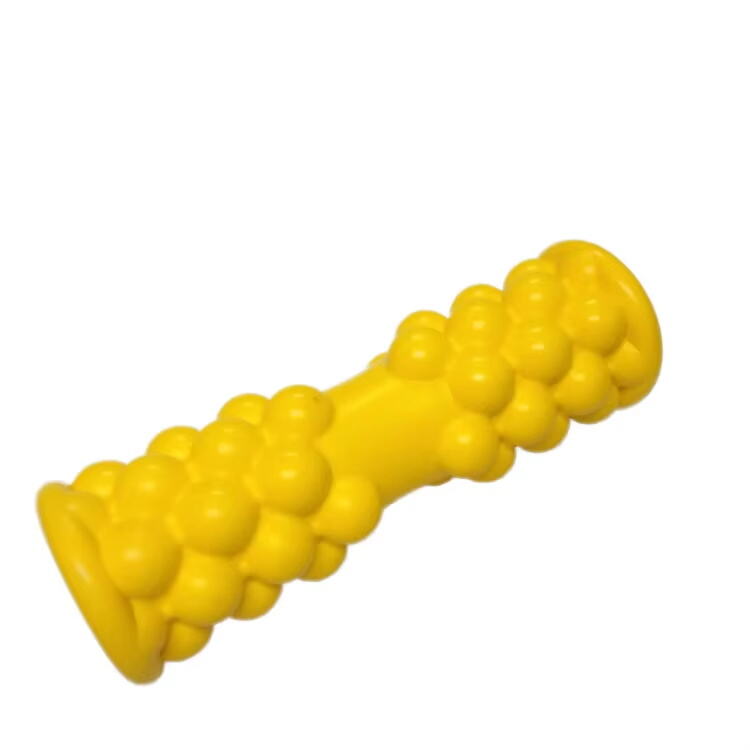
When product designers and engineers ask whether plastic molding can genuinely improve product design flexibility, the answer is a clear and well-supported yes. Across industries ranging from consumer electronics to household goods and industrial components, plastic molding has become one of the most reliable manufacturing methods for achieving complex geometries, tight tolerances, and design variations that would be difficult or cost-prohibitive with other processes. The real question is not whether plastic molding enables flexibility, but rather how it does so and under what conditions that flexibility delivers the most value to product development teams.
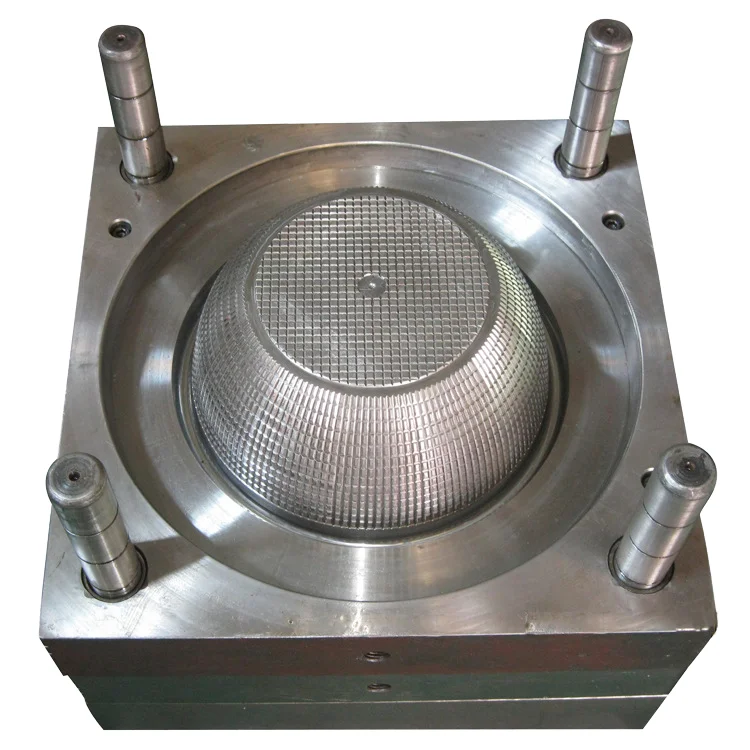
Design flexibility in manufacturing refers to the ability to accommodate changes in shape, material, function, or production volume without requiring a complete overhaul of the production system. Plastic molding excels in this area because the mold itself serves as a highly precise and repeatable template that can be engineered to support a wide range of design intentions. Whether a product requires undercuts, thin walls, integrated snap-fit features, or multi-material construction, plastic molding provides a framework that supports these requirements at scale. Understanding the specific mechanisms behind this flexibility helps designers make smarter decisions earlier in the development cycle.
How Plastic Molding Enables Complex Geometry and Form Freedom
Achieving Shapes That Other Processes Cannot
One of the most significant ways plastic molding improves design flexibility is by enabling complex three-dimensional shapes that would be extremely difficult to produce through machining, casting, or fabrication. Injection-based plastic molding allows molten material to flow into intricate cavities, filling undercuts, internal channels, and curved surfaces with consistent accuracy. This means designers are not constrained by the limitations of subtractive manufacturing, where material is removed from a solid block and complex internal features are nearly impossible to achieve.
Plastic molding supports features such as living hinges, integrated clips, ribbed structures for added strength, and hollow sections that reduce material use without sacrificing structural integrity. These features can all be incorporated into a single molded part, reducing the need for secondary assembly operations. For product designers working on consumer goods or household products, this translates directly into faster assembly, lower labor costs, and a cleaner final product appearance.
The ability to consolidate multiple components into a single plastic molding also reduces the number of parts in a product's bill of materials. Fewer parts mean fewer potential failure points, simpler supply chains, and more predictable quality outcomes. This part consolidation capability is one of the clearest demonstrations of how plastic molding expands what is possible in product design.
Supporting Iterative Design Changes Through Mold Modifications
Design flexibility is not only about what can be made initially — it is also about how easily a design can evolve. Plastic molding supports iterative development because molds can be modified to accommodate design changes without requiring a completely new tool. Inserts, slides, and interchangeable core sections allow engineers to adjust specific features of a part while keeping the base mold structure intact. This approach significantly reduces the cost and lead time associated with design revisions.
For product teams working in competitive markets, the ability to refine a design quickly is a strategic advantage. Plastic molding allows teams to test a design, gather feedback, make targeted modifications to the mold, and produce updated samples without starting from scratch. This iterative capability is especially valuable during the transition from prototype to production, where minor adjustments are common and expected.
Mold modifications in plastic molding are typically far less expensive than creating an entirely new mold, which means design teams can afford to explore more options and make evidence-based decisions rather than locking in a design prematurely due to cost concerns. This dynamic fundamentally changes how product development teams approach the design process.
Material Selection as a Driver of Design Flexibility
Matching Material Properties to Design Requirements
Plastic molding is not limited to a single material type, and this breadth of material options is a major contributor to its design flexibility. Engineers can select from a wide range of thermoplastics and engineering-grade resins, each offering different combinations of stiffness, impact resistance, chemical resistance, thermal stability, and surface finish quality. The ability to choose the right material for a specific application means that plastic molding can serve vastly different product categories without requiring changes to the fundamental process.
For example, a household product that requires a soft-touch exterior and a rigid structural core can be produced using two-shot or overmolding techniques within the plastic molding process. This allows designers to specify different material properties in different zones of the same part, achieving functional and aesthetic goals simultaneously. The result is a product that feels premium, performs reliably, and is produced efficiently in a single manufacturing workflow.
Materials such as ABS, PC, PP, and PVC each bring distinct characteristics to plastic molding applications. ABS offers excellent impact resistance and surface finish quality, making it a common choice for consumer electronics housings. PP provides chemical resistance and fatigue performance suitable for living hinges and snap-fit closures. PC delivers optical clarity and high-temperature resistance for applications where transparency or heat exposure is a concern. This material diversity means plastic molding can be adapted to serve nearly any product design requirement.
Surface Finish and Aesthetic Customization
Beyond structural and functional properties, plastic molding also provides significant flexibility in surface finish and visual appearance. Mold surfaces can be textured, polished, or patterned to produce a wide range of aesthetic outcomes directly from the molding process, without requiring secondary finishing operations. A polished mold cavity produces a glossy surface, while a textured cavity produces a matte or grain finish that can mimic leather, brushed metal, or other premium materials.
This surface customization capability is particularly valuable for consumer-facing products where appearance influences purchasing decisions. Plastic molding allows brands to differentiate their products visually while maintaining the cost efficiency of high-volume production. Color can also be introduced directly into the material through masterbatch pigments, eliminating the need for painting or coating in many applications.
The combination of material selection and surface finish control means that plastic molding gives designers a high degree of creative freedom. Products can be engineered to look and feel exactly as intended, with the manufacturing process supporting rather than constraining the design vision.
Scalability and Volume Flexibility in Plastic Molding
Adapting Production Volume Without Redesigning the Product
Design flexibility also encompasses the ability to scale production up or down in response to market demand without requiring fundamental changes to the product or its manufacturing process. Plastic molding is well-suited to this kind of volume flexibility because the same mold can be used to produce anywhere from a few hundred to several million parts, depending on the mold material and construction quality. This scalability means that a product designed for plastic molding can move from low-volume initial production to high-volume mass production without a redesign.
For businesses launching new products, this scalability reduces financial risk. A company can begin with a smaller production run to validate market demand, then scale up using the same plastic molding tooling once the product has proven itself commercially. This approach avoids the need to commit to large production volumes before market acceptance is confirmed, which is a significant advantage in product categories with uncertain demand.
Multi-cavity molds further enhance the volume flexibility of plastic molding by allowing multiple identical parts to be produced in each machine cycle. As production requirements grow, manufacturers can transition from single-cavity to multi-cavity tooling, increasing output without changing the part design or the downstream assembly process. This progression is a natural and cost-effective way to scale plastic molding production.
Supporting Product Variants and Family Molds
Many product lines require multiple variants of the same basic design — different sizes, colors, or feature configurations intended for different market segments. Plastic molding supports this requirement through family molds, which allow multiple related parts to be produced in a single mold tool. This approach reduces tooling investment while maintaining the design consistency that defines a product family.
Family molds are particularly useful for products that share a common design language but differ in specific dimensions or features. By engineering a single mold to accommodate these variations, manufacturers can produce an entire product range with a single tooling investment. This is a direct expression of how plastic molding improves design flexibility at the product portfolio level, not just the individual part level.
Interchangeable inserts within a plastic molding tool can also be used to produce variants by swapping specific mold sections while keeping the rest of the tool unchanged. This technique is widely used in household product manufacturing, where a single base design may be offered in multiple configurations to meet different consumer preferences or regional requirements.
Practical Implications for Product Development Teams
Integrating Plastic Molding Early in the Design Process
To fully realize the design flexibility that plastic molding offers, product development teams should engage with molding considerations early in the design process rather than treating manufacturing as a downstream concern. Design for manufacturability principles specific to plastic molding — such as uniform wall thickness, appropriate draft angles, and strategic gate placement — should be incorporated from the earliest stages of concept development. When these principles are applied early, they prevent costly redesigns later and ensure that the final product can be produced efficiently and consistently.
Early collaboration between designers and tooling engineers also allows the team to identify opportunities for part consolidation, material optimization, and mold feature integration that might not be apparent when design and manufacturing are treated as separate phases. This integrated approach is one of the most effective ways to leverage the full design flexibility that plastic molding provides.
Prototyping with plastic molding — whether through soft tooling, bridge tooling, or rapid injection molding — allows teams to validate designs with production-representative parts before committing to full production tooling. This validation step reduces the risk of discovering design issues after expensive hard tooling has been produced, and it gives teams the confidence to move forward with a design that has been tested under realistic conditions.
Balancing Design Ambition with Tooling Economics
While plastic molding offers substantial design flexibility, it is important for product teams to balance design ambition with the economic realities of tooling investment. More complex mold designs — those with multiple slides, lifters, or side actions — cost more to produce and maintain than simpler tools. Understanding where complexity adds genuine value to the product and where it can be simplified without compromising function is a key skill for designers working with plastic molding.
In many cases, a small design adjustment — such as repositioning a feature to eliminate an undercut or modifying a wall angle to improve draft — can significantly reduce tooling complexity and cost without any meaningful impact on product performance or appearance. These kinds of design-for-manufacturing optimizations are only possible when the team has a clear understanding of how plastic molding works and what drives tooling cost.
The goal is not to limit design ambition but to direct it intelligently. Plastic molding is most powerful when designers understand its capabilities and constraints well enough to work with them creatively, producing designs that are both innovative and manufacturable at a cost that supports the product's commercial objectives.
FAQ
Can plastic molding accommodate design changes after the mold has been built?
Yes, plastic molding molds can often be modified to accommodate design changes through techniques such as adding or removing steel from the mold cavity, inserting new mold sections, or replacing interchangeable cores. The feasibility and cost of modifications depend on the nature of the change and the original mold design, but targeted adjustments are generally far less expensive than building an entirely new tool.
What types of products benefit most from the design flexibility of plastic molding?
Products that benefit most from plastic molding design flexibility include those with complex geometries, integrated functional features, multi-material requirements, or the need for multiple variants within a product family. Consumer goods, household products, medical devices, and industrial components are all categories where plastic molding's flexibility delivers significant value to product development teams.
How does material choice affect design flexibility in plastic molding?
Material choice in plastic molding directly affects what design features are achievable and how the final product performs. Different resins offer different combinations of stiffness, impact resistance, chemical resistance, and surface finish quality. Selecting the right material for a specific application allows designers to meet functional and aesthetic requirements simultaneously, expanding the range of design solutions that plastic molding can support.
Is plastic molding suitable for low-volume production runs?
Plastic molding can be adapted for low-volume production through the use of soft tooling or aluminum molds, which have lower upfront costs than hardened steel production tools. While the per-part cost is higher at low volumes than at high volumes, plastic molding remains a viable option for initial market validation, bridge production, or specialized applications where volumes are inherently limited.