
 EN
EN




Die casting stands as one of the most critical manufacturing processes in modern industrial production, enabling manufacturers to create complex metal components with exceptional precision and efficiency. This advanced metalworking technique involves forcing molten metal under high pressure into precisely engineered molds, resulting in parts that meet stringent quality standards across diverse industries. The die casting process has revolutionized how manufacturers approach mass production of metal components, offering unparalleled repeatability and dimensional accuracy that traditional manufacturing methods struggle to achieve.
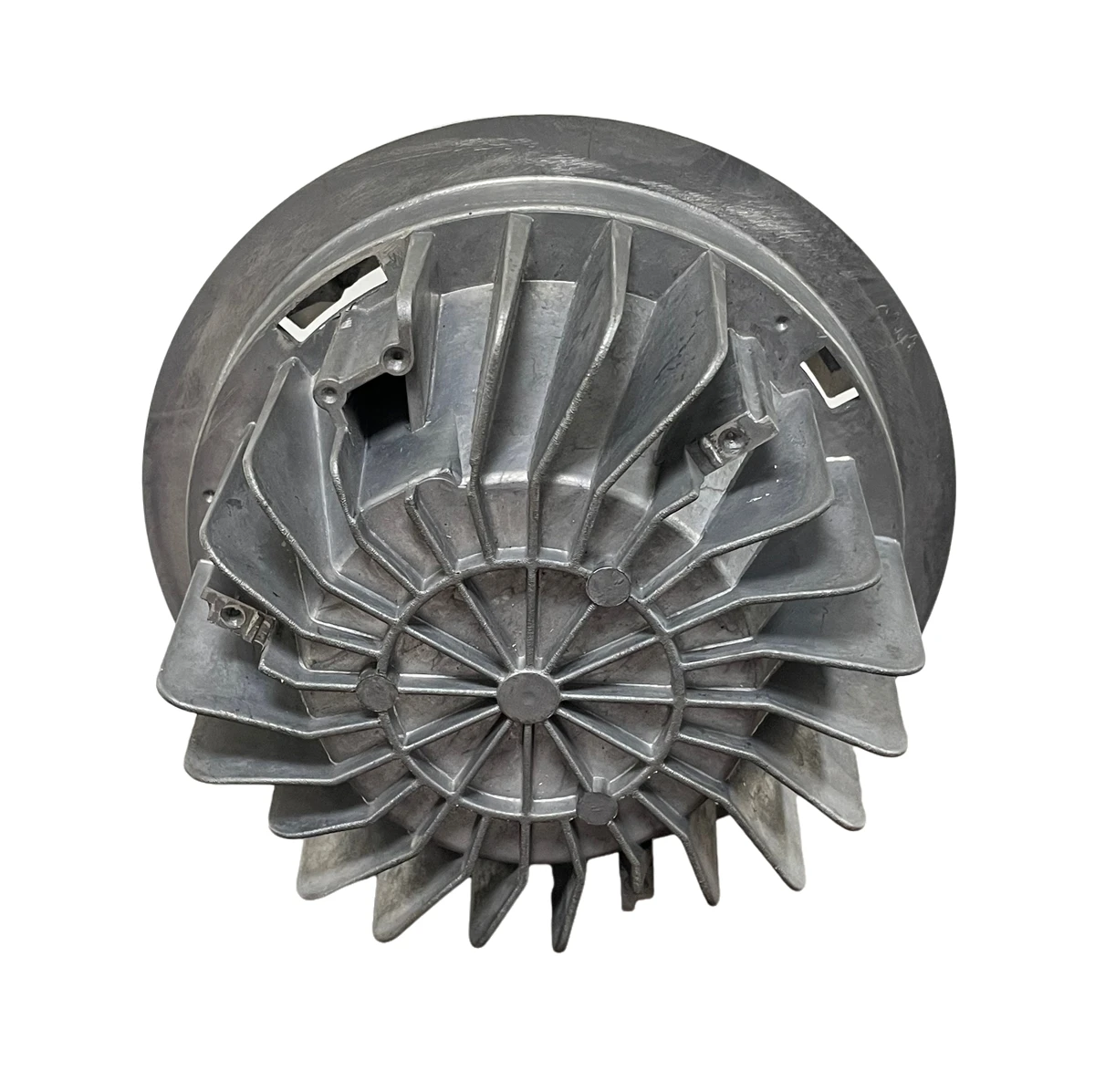
The significance of die casting in metal manufacturing extends far beyond simple part production, encompassing economic advantages, material optimization, and technological innovation. Modern industries rely heavily on die casting to produce everything from automotive engine components to consumer electronics housings, demonstrating the versatility and reliability of this manufacturing approach. Understanding why die casting has become essential requires examining its fundamental principles, advantages, and applications across various industrial sectors.
Fundamental Principles of Die Casting Technology
High-Pressure Metal Injection Process
The core mechanism of die casting involves injecting molten metal into steel molds under extreme pressure, typically ranging from 1,500 to 25,000 PSI depending on the application requirements. This high-pressure environment ensures complete mold cavity filling, eliminating voids and achieving superior surface finishes that often require minimal post-processing. The rapid injection speed, combined with controlled cooling rates, allows manufacturers to produce complex geometries with tight tolerances that would be impossible or economically unfeasible using alternative manufacturing methods.
Temperature control plays a crucial role in successful die casting operations, requiring precise management of both molten metal temperature and mold thermal conditions. Advanced die casting systems incorporate sophisticated temperature monitoring and control mechanisms that optimize cycle times while maintaining consistent part quality. The relationship between injection pressure, temperature, and timing creates a delicate balance that experienced die casting professionals must master to achieve optimal results consistently.
Mold Design and Engineering Excellence
Die casting molds represent sophisticated engineering achievements, incorporating complex cooling channels, ejection systems, and precise dimensional features that enable mass production of identical parts. The investment in high-quality mold design and construction typically pays dividends through extended mold life, reduced maintenance requirements, and consistent part quality throughout production runs. Modern computer-aided design tools allow engineers to simulate die casting processes before physical mold construction, identifying potential issues and optimizing designs for maximum efficiency.
Mold materials and construction techniques significantly impact both initial investment costs and long-term operational efficiency in die casting operations. Premium tool steels and advanced heat treatment processes extend mold life while maintaining dimensional stability under repeated thermal cycling. The precision machining required for die casting molds demands specialized equipment and expertise, contributing to the overall value proposition of this manufacturing approach.
Economic Advantages in Manufacturing Operations
Cost-Effective Mass Production
Die casting delivers exceptional economic benefits for medium to high-volume production runs, offering lower per-unit costs compared to machining, forging, or other traditional manufacturing processes. The ability to produce near-net-shape parts reduces material waste and minimizes secondary machining operations, translating directly into cost savings throughout the production cycle. Manufacturers can achieve significant economies of scale when producing thousands or millions of identical components using die casting technology.
Labor efficiency represents another compelling economic advantage of die casting, as automated systems can operate with minimal direct supervision once properly configured. Modern die casting machines incorporate advanced automation features that reduce manual intervention while maintaining consistent quality standards. The combination of high production rates and reduced labor requirements makes die casting particularly attractive for manufacturers competing in cost-sensitive markets.
Material Utilization and Waste Reduction
Efficient material utilization stands as a hallmark of professional die casting operations, with minimal waste generation compared to subtractive manufacturing processes like machining. The precision of die casting molds ensures that material usage closely matches final part requirements, reducing both raw material costs and waste disposal expenses. Recycling capabilities within die casting operations allow manufacturers to reprocess sprues, runners, and rejected parts, further enhancing material efficiency.
Environmental considerations increasingly influence manufacturing decisions, making the waste reduction capabilities of die casting particularly valuable for sustainability-focused organizations. The ability to recycle aluminum and other die casting alloys multiple times without significant property degradation supports circular economy principles while reducing environmental impact. This sustainability aspect of die casting aligns with corporate responsibility initiatives and regulatory requirements in many industries.
Technical Capabilities and Performance Benefits
Dimensional Accuracy and Surface Quality
The dimensional accuracy achievable through die casting exceeds most alternative manufacturing processes, with typical tolerances ranging from ±0.1mm to ±0.3mm depending on part size and complexity. This precision eliminates or minimizes secondary machining operations, reducing production time and costs while maintaining consistent quality across large production runs. The smooth surface finish inherent in die casting often meets final specification requirements without additional processing, streamlining manufacturing workflows.
Surface quality consistency represents a critical advantage for manufacturers producing components requiring aesthetic appeal or functional surface properties. Die casting naturally produces uniform surface textures and finishes that enhance both appearance and performance characteristics. The ability to incorporate surface features directly into die casting molds eliminates secondary operations while ensuring consistent results throughout production runs.
Complex Geometry Production Capabilities
Die casting enables the production of intricate geometries that would be challenging or impossible to achieve through conventional machining or forming processes. Internal passages, undercuts, thin walls, and complex surface contours can be incorporated directly into die casting designs, eliminating assembly requirements and reducing overall part counts in finished products. This capability proves particularly valuable in industries where weight reduction and space optimization are critical design considerations.
The integration of multiple features into single die casting components simplifies assembly processes while improving overall product reliability. Eliminating joints and connections between separate components reduces potential failure points while streamlining manufacturing and assembly operations. Modern die casting technology continues to push the boundaries of geometric complexity, enabling innovative product designs that leverage the unique capabilities of this manufacturing process.
Material Properties and Alloy Selection
Aluminum Alloy Advantages
Aluminum alloys represent the most popular material choice for die casting applications, offering an excellent combination of strength, weight, corrosion resistance, and thermal conductivity. The lightweight nature of aluminum die casting components contributes significantly to fuel efficiency in automotive applications and portability in consumer products. Advanced aluminum alloys developed specifically for die casting provide enhanced mechanical properties while maintaining excellent castability and surface finish characteristics.
Thermal management capabilities of aluminum die casting components make them ideal for applications requiring heat dissipation, such as electronic housings and automotive engine components. The inherent thermal conductivity of aluminum, combined with the thin-wall capabilities of die casting, creates efficient heat transfer solutions that would be difficult to achieve using alternative materials or manufacturing processes. This thermal performance advantage drives adoption in increasingly demanding thermal management applications.
Zinc and Magnesium Applications
Zinc die casting offers unique advantages for applications requiring exceptional dimensional stability, superior surface finish, and enhanced durability in demanding environments. The lower melting temperature of zinc alloys reduces energy requirements and extends mold life compared to higher-temperature materials, making zinc die casting particularly cost-effective for appropriate applications. Zinc's natural corrosion resistance and ability to accept various finishing treatments expand design possibilities for both functional and aesthetic applications.
Magnesium die casting provides the ultimate lightweight solution for applications where weight reduction is paramount, offering strength-to-weight ratios superior to aluminum while maintaining excellent die casting characteristics. The automotive and aerospace industries increasingly adopt magnesium die casting for components where every gram of weight reduction translates into performance improvements. Despite higher material costs, magnesium die casting often provides overall cost advantages when considering the value of weight reduction in final applications.
Industry Applications and Market Demand
Automotive Manufacturing Integration
The automotive industry represents the largest consumer of die casting components, utilizing this technology for engine blocks, transmission housings, structural components, and decorative trim pieces. Modern vehicles incorporate hundreds of die casting components that contribute to fuel efficiency, performance, and aesthetic appeal while meeting stringent safety and durability requirements. The trend toward electric vehicles creates new opportunities for die casting in battery housings, motor housings, and thermal management systems.
Automotive die casting requirements continue to evolve with advancing vehicle technologies, demanding improved material properties, reduced weight, and enhanced integration capabilities. The shift toward autonomous and electric vehicles creates new design challenges that die casting technology is uniquely positioned to address through innovative alloy development and advanced processing techniques. This evolution ensures continued growth and innovation in automotive die casting applications.
Electronics and Consumer Products
Electronics manufacturing relies heavily on die casting for component housings, heat sinks, and structural elements that provide both protection and thermal management for sensitive electronic components. The precision and surface quality achievable through die casting enable direct integration of mounting features, connector interfaces, and thermal management elements that simplify product design and assembly. Miniaturization trends in electronics drive demand for increasingly precise and complex die casting components.
Consumer product manufacturers leverage die casting capabilities to create durable, attractive components that withstand daily use while maintaining aesthetic appeal throughout product lifecycles. The ability to incorporate branding elements, functional features, and finishing surfaces directly into die casting components reduces assembly complexity while enhancing product differentiation. This versatility makes die casting an essential technology for competitive consumer product development.
Quality Control and Manufacturing Excellence
Process Monitoring and Control Systems
Modern die casting operations incorporate sophisticated monitoring and control systems that ensure consistent quality while optimizing production efficiency and reducing waste. Real-time process parameter monitoring allows operators to detect and correct variations before they impact part quality, maintaining tight quality control throughout production runs. Advanced sensors and data analysis systems provide insights that enable continuous process improvement and predictive maintenance scheduling.
Statistical process control methodologies integrated into die casting operations provide quantitative evidence of process capability and quality consistency, supporting certification requirements and customer quality expectations. The ability to document and analyze process variations enables manufacturers to identify optimization opportunities while maintaining traceability throughout production cycles. This level of process control distinguishes professional die casting operations from less sophisticated manufacturing approaches.
Inspection and Testing Protocols
Comprehensive inspection protocols ensure that die casting components meet all dimensional, mechanical, and aesthetic requirements before shipment to customers or assembly operations. Advanced measurement technologies, including coordinate measuring machines and optical scanning systems, provide rapid, accurate verification of complex geometries and surface characteristics. Non-destructive testing methods verify internal quality and structural integrity without compromising production schedules.
Quality assurance programs in die casting facilities typically incorporate both in-process monitoring and final inspection procedures that provide multiple verification points throughout production cycles. Documentation and traceability systems maintain detailed records of process parameters, inspection results, and material certifications that support quality investigations and continuous improvement initiatives. This comprehensive approach to quality management ensures consistent performance and customer satisfaction.
Environmental Impact and Sustainability
Energy Efficiency Advantages
Die casting operations demonstrate superior energy efficiency compared to many alternative manufacturing processes, particularly when considering the entire production cycle from raw material to finished component. The high production rates achievable through die casting reduce per-unit energy consumption while the near-net-shape production minimizes energy-intensive secondary processing operations. Modern die casting equipment incorporates energy-efficient technologies that further reduce environmental impact while maintaining production capability.
The lightweight components produced through die casting contribute to energy savings throughout product lifecycles, particularly in transportation applications where weight reduction directly translates to fuel efficiency improvements. This lifecycle energy benefit often exceeds the manufacturing energy investment, creating positive environmental impact that extends far beyond the production facility. Recognition of these benefits drives increased adoption of die casting in environmentally conscious industries.
Recycling and Circular Economy Benefits
The recyclability of die casting materials, particularly aluminum and zinc alloys, supports circular economy principles while reducing dependence on virgin raw materials. Most die casting alloys can be recycled multiple times without significant property degradation, making end-of-life component recovery economically viable and environmentally beneficial. This recyclability factor increasingly influences material selection decisions as manufacturers seek sustainable production solutions.
Closed-loop recycling systems within die casting facilities capture and reprocess production waste, including sprues, runners, and rejected parts, maximizing material utilization while minimizing environmental impact. The economic benefits of internal recycling, combined with environmental advantages, create compelling business cases for sustainable die casting practices. These benefits align with corporate sustainability goals and regulatory requirements in many jurisdictions.
Future Developments and Innovation Trends
Advanced Alloy Development
Ongoing research in die casting alloy development focuses on enhancing mechanical properties, reducing weight, and improving processing characteristics to meet evolving industry demands. New aluminum alloys incorporating advanced strengthening mechanisms provide improved performance while maintaining excellent castability and surface finish characteristics. These material innovations enable die casting applications in increasingly demanding environments while expanding design possibilities.
The development of hybrid and composite materials specifically designed for die casting applications opens new possibilities for combining different material properties within single components. These advanced materials may incorporate reinforcing elements, functional additives, or specialized surface treatments that enhance performance beyond what traditional alloys can achieve. Such innovations position die casting technology for continued growth and application expansion.
Process Automation and Industry 4.0 Integration
Advanced automation technologies and Industry 4.0 principles are transforming die casting operations through enhanced connectivity, data analytics, and artificial intelligence integration. Smart manufacturing systems optimize process parameters in real-time while predicting maintenance requirements and quality variations before they impact production. These technological advances improve efficiency, reduce waste, and enhance quality consistency while reducing operational costs.
The integration of robotic systems and automated material handling creates highly efficient die casting cells that operate with minimal human intervention while maintaining flexibility for different product requirements. Advanced programming and adaptive control systems enable rapid changeovers between different products while optimizing setup times and reducing waste. This automation evolution ensures die casting remains competitive in high-wage manufacturing environments.
FAQ
What makes die casting more economical than other manufacturing processes
Die casting offers superior economics for medium to high-volume production through reduced per-unit costs, minimal material waste, and high production rates that eliminate many secondary operations. The near-net-shape production capability reduces machining requirements while automated operation minimizes labor costs. When considering total production costs including material utilization, processing time, and finishing requirements, die casting typically provides significant cost advantages over alternative manufacturing methods for appropriate applications.
How does die casting achieve superior dimensional accuracy
The combination of high injection pressure, precision-machined steel molds, and controlled cooling conditions enables die casting to achieve dimensional tolerances typically ranging from ±0.1mm to ±0.3mm. The rigid mold construction and consistent process parameters eliminate many variables that affect dimensional accuracy in other manufacturing processes. Advanced process control systems monitor and adjust critical parameters in real-time, ensuring consistent dimensional performance throughout production runs.
Which industries benefit most from die casting technology
Automotive manufacturing represents the largest consumer of die casting components, followed by electronics, aerospace, and consumer products industries. Any application requiring complex geometries, tight tolerances, good surface finish, and cost-effective mass production can benefit from die casting technology. The lightweight, durable components produced through die casting prove particularly valuable in applications where weight reduction, dimensional accuracy, and production efficiency are critical design considerations.
What environmental advantages does die casting provide
Die casting demonstrates excellent environmental performance through high material utilization efficiency, recyclability of most die casting alloys, and energy-efficient production processes. The lightweight components produced contribute to fuel efficiency improvements in transportation applications, creating lifecycle energy benefits that exceed manufacturing energy consumption. Additionally, the near-net-shape production minimizes waste generation while closed-loop recycling systems capture and reprocess production waste, supporting circular economy principles and reducing environmental impact.
Table of Contents
- Fundamental Principles of Die Casting Technology
- Economic Advantages in Manufacturing Operations
- Technical Capabilities and Performance Benefits
- Material Properties and Alloy Selection
- Industry Applications and Market Demand
- Quality Control and Manufacturing Excellence
- Environmental Impact and Sustainability
- Future Developments and Innovation Trends
- FAQ