
 EN
EN




Manufacturing hollow plastic products requires specialized techniques that can create seamless, lightweight structures with exceptional durability. Among the various plastic forming processes available today, blow molding stands out as the premier method for producing bottles, containers, automotive parts, and countless other hollow items that define modern manufacturing. This transformative process combines efficiency, precision, and cost-effectiveness to deliver products that meet the demanding requirements of industries ranging from packaging to aerospace engineering.
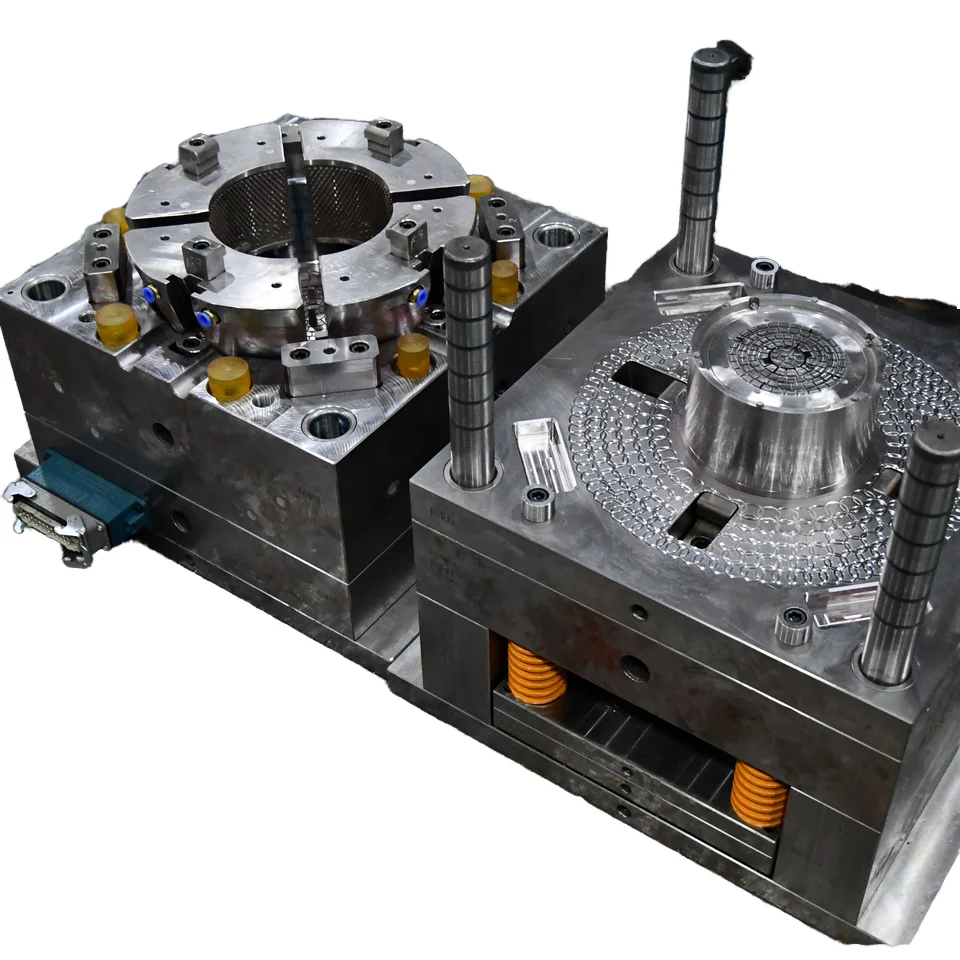
The fundamental principles of blow molding center on the controlled expansion of heated plastic material within precisely engineered molds. This process creates uniform wall thickness, superior structural integrity, and consistent dimensional accuracy across production runs. Understanding the technical aspects and practical applications of this manufacturing method reveals why it has become indispensable for producing hollow plastic components across multiple industries.
Technical Foundations of Blow Molding Operations
Core Process Mechanics and Material Flow
The blow molding process begins with the preparation of thermoplastic materials, typically polyethylene, polypropylene, or PET, which are heated to their optimal processing temperatures. During this critical phase, the polymer chains become sufficiently mobile to allow for controlled deformation while maintaining the molecular structure necessary for final product strength. The heated material forms a parison or preform, depending on the specific blow molding variant being employed.
Precise temperature control throughout the heating phase ensures consistent material properties and prevents degradation that could compromise the final product quality. The molten plastic exhibits specific viscosity characteristics that determine flow patterns within the mold cavity. Professional operators monitor these parameters continuously to maintain optimal processing conditions and achieve repeatable results across extended production runs.
Air pressure application represents the defining characteristic of blow molding technology. Controlled pneumatic systems deliver precise pressure levels that force the heated plastic against the mold walls, creating the desired hollow geometry. The pressure timing and magnitude directly influence wall thickness distribution, surface finish quality, and dimensional accuracy of the finished components.
Mold Design Principles and Engineering Considerations
Effective mold design requires comprehensive understanding of material flow patterns, cooling requirements, and dimensional stability factors. Engineers must account for plastic shrinkage rates, thermal expansion coefficients, and stress distribution patterns when developing mold geometries. These considerations ensure that finished products meet specified tolerances and performance requirements.
Cooling system integration within the mold structure significantly impacts cycle times and product quality. Strategic placement of cooling channels maintains uniform temperature distribution throughout the molding process, preventing warping, sink marks, or other defects that could compromise product functionality. Advanced mold designs incorporate conformal cooling technologies that follow complex part geometries for enhanced thermal management.
Surface finish requirements drive specific mold surface treatments and texturing approaches. Polished surfaces produce clear, glossy finishes suitable for consumer packaging applications, while textured surfaces provide enhanced grip characteristics or aesthetic appeal for automotive and industrial components. The blow molding mold surface directly transfers to the final product, making precision machining and surface preparation essential for achieving desired results.
Blow Molding Process Variations and Applications
Extrusion Blow Molding Capabilities
Extrusion blow molding represents the most widely used variant of this manufacturing process, particularly suited for producing bottles, containers, and other cylindrical hollow products. The process begins with continuous extrusion of a hollow parison, which is then captured between mold halves and inflated to conform to the mold cavity geometry. This approach offers excellent production rates and material utilization efficiency.
Material distribution control in extrusion blow molding enables manufacturers to create products with varying wall thicknesses optimized for specific performance requirements. Parison programming systems adjust wall thickness profiles to strengthen high-stress areas while minimizing material usage in less critical regions. This capability proves particularly valuable for automotive fuel tanks and industrial containers that must withstand internal pressure and external impacts.
Multi-layer extrusion capabilities expand the functional possibilities of blow molded products by incorporating barrier layers, colorants, or recycled content within the wall structure. These advanced systems co-extrude different materials simultaneously, creating composite structures with enhanced properties such as improved chemical resistance, UV protection, or oxygen barrier characteristics.
Injection Blow Molding Precision Manufacturing
Injection blow molding combines the precision of injection molding with the efficiency of blow forming to produce high-quality hollow products with exceptional dimensional accuracy. This process creates preforms through injection molding, then transfers them to blow molding stations where controlled air pressure shapes the final product geometry. The result is superior neck finish quality and consistent wall thickness distribution.
Pharmaceutical and medical device applications frequently rely on injection blow molding due to its ability to produce containers with precise dimensional tolerances and excellent surface finish quality. The process eliminates flash and provides superior thread quality compared to other blow molding variants, making it ideal for applications requiring leak-proof seals and precise fitment characteristics.
Production flexibility in injection blow molding systems allows manufacturers to quickly change between different product configurations without extensive tooling modifications. Quick-change capabilities reduce setup times and enable economical production of smaller batch quantities, supporting diverse product portfolios and customized manufacturing requirements.
Material Science and Performance Characteristics
Thermoplastic Material Selection Criteria
Selecting appropriate thermoplastic materials for blow molding applications requires careful consideration of end-use requirements, processing characteristics, and cost factors. High-density polyethylene remains the most popular choice for many applications due to its excellent processability, chemical resistance, and cost-effectiveness. Low-density polyethylene offers superior flexibility and impact resistance for applications requiring durability under stress.
Polypropylene provides enhanced temperature resistance and clarity, making it suitable for food packaging and automotive applications exposed to elevated temperatures. PET materials offer exceptional clarity, barrier properties, and recyclability, positioning them as preferred choices for beverage containers and cosmetic packaging applications. Each material exhibits unique flow characteristics that influence processing parameters and mold design requirements.
Advanced polymer grades incorporate specific additives to enhance performance characteristics such as UV resistance, antistatic properties, or flame retardancy. These specialized formulations expand the application scope of blow molded products into demanding industrial environments while maintaining the inherent advantages of the manufacturing process.
Mechanical Properties and Structural Performance
Blow molded products exhibit unique mechanical properties resulting from the biaxial orientation that occurs during the forming process. This orientation enhances tensile strength, impact resistance, and barrier properties compared to unstretched materials. The degree of orientation depends on blow-up ratios, processing temperatures, and cooling rates during manufacturing.
Stress distribution patterns in hollow products require careful analysis to optimize wall thickness distribution and prevent failure under operating conditions. Engineers use finite element analysis and physical testing to validate design approaches and ensure adequate safety margins for pressure vessels, fuel tanks, and other critical applications.
Long-term performance characteristics of blow molded products depend on material selection, processing conditions, and environmental exposure factors. Accelerated aging tests and field evaluations provide data necessary for predicting service life and establishing appropriate design factors for specific applications.
Quality Control and Process Optimization
Dimensional Accuracy and Tolerance Management
Achieving consistent dimensional accuracy in blow molding operations requires systematic control of multiple process variables including material temperature, blow pressure, timing sequences, and cooling rates. Statistical process control methods monitor key dimensions throughout production runs to identify trends and prevent defective products from reaching customers.
Advanced measurement systems utilize laser scanning, coordinate measuring machines, and automated inspection equipment to verify dimensional compliance across critical product features. These systems provide real-time feedback to process control systems, enabling automatic adjustments to maintain tight tolerances throughout extended production campaigns.
Tolerance stack-up analysis becomes particularly important for products requiring precise fitment with mating components. Engineers must account for material shrinkage, thermal effects, and manufacturing variations when establishing design tolerances and inspection criteria for critical assemblies.
Surface Quality and Aesthetic Standards
Surface quality control in blow molding encompasses multiple factors including gloss levels, color consistency, texture uniformity, and defect prevention. Mold surface preparation, material handling procedures, and processing parameter optimization all contribute to achieving desired surface characteristics.
Defect prevention strategies focus on eliminating common issues such as weld lines, sink marks, and surface blemishes that can compromise product appearance or functionality. Root cause analysis of quality issues enables process improvements and preventive maintenance programs that maintain consistent production quality.
Color matching and consistency require careful control of colorant addition systems, mixing procedures, and processing conditions. Spectrophotometric measurement systems verify color compliance and detect variations that could affect product acceptance in quality-sensitive applications.
Economic Advantages and Production Efficiency
Cost-Effectiveness and Material Utilization
Blow molding offers exceptional material utilization efficiency compared to alternative manufacturing processes for hollow products. The absence of significant waste generation, combined with the ability to incorporate recycled content, makes this process environmentally sustainable and economically attractive for high-volume production applications.
Energy consumption per part remains relatively low due to efficient heating systems and optimized cycle times. Modern blow molding equipment incorporates energy recovery systems, efficient heating technologies, and optimized cooling systems that minimize operating costs while maintaining production quality standards.
Tooling costs for blow molding typically represent a smaller percentage of total production costs compared to other manufacturing processes, particularly for large volume applications. Simple mold construction and reduced complexity contribute to lower initial investment requirements and shorter payback periods.
Production Scalability and Automation Integration
Modern blow molding systems incorporate advanced automation technologies that enable lights-out production capabilities and consistent quality output. Robotic systems handle part removal, inspection, and packaging operations while reducing labor costs and improving workplace safety.
Scalability advantages of blow molding allow manufacturers to adjust production capacity through equipment modifications or additional production lines without requiring completely new manufacturing approaches. This flexibility supports business growth and market expansion strategies while maintaining consistent product quality standards.
Integration with Industry 4.0 technologies enables predictive maintenance, real-time quality monitoring, and data-driven process optimization. These capabilities reduce downtime, improve overall equipment effectiveness, and provide valuable insights for continuous improvement initiatives.
Industry Applications and Future Developments
Automotive Industry Integration
Automotive applications of blow molding continue expanding as manufacturers seek lightweight, durable components that reduce vehicle weight while maintaining performance standards. Fuel tanks, air intake manifolds, and fluid reservoirs represent primary applications where blow molding provides optimal combinations of weight, cost, and functionality.
Electric vehicle development creates new opportunities for blow molded components including battery cooling systems, lightweight structural elements, and specialized fluid handling components. These applications demand enhanced temperature resistance, electrical properties, and long-term durability characteristics.
Advanced automotive applications incorporate multi-material construction, integrated sensors, and complex geometries that challenge traditional manufacturing approaches. Blow molding technology continues evolving to meet these demanding requirements through enhanced material capabilities and process innovations.
Packaging Innovation and Sustainability
Packaging applications drive significant innovation in blow molding technology, particularly in areas of barrier properties, recyclability, and lightweighting. Consumer preferences for sustainable packaging solutions encourage development of bio-based materials and enhanced recycling capabilities.
Smart packaging integration incorporates sensors, indicators, and communication technologies within blow molded containers to provide enhanced functionality and consumer interaction capabilities. These developments require specialized material formulations and processing techniques that maintain traditional advantages while adding new features.
Regulatory compliance requirements for food contact applications, pharmaceutical packaging, and chemical containment drive continuous improvement in material purity, barrier properties, and quality assurance systems throughout the blow molding industry.
FAQ
What types of products are best suited for blow molding manufacturing
Blow molding excels at producing hollow products with relatively simple geometries, including bottles, containers, tanks, automotive components, and toys. The process works best for items requiring uniform wall thickness, good strength-to-weight ratios, and cost-effective high-volume production. Products with complex internal geometries or requiring precise internal features may be better suited to alternative manufacturing methods.
How does blow molding compare to injection molding for hollow products
Blow molding offers significant advantages for hollow products including lower tooling costs, faster cycle times, and better material utilization compared to injection molding. However, injection molding provides superior dimensional accuracy, surface finish quality, and ability to create complex geometries with tight tolerances. The choice depends on specific product requirements, volume expectations, and quality standards.
What factors determine the wall thickness distribution in blow molded parts
Wall thickness distribution depends on parison programming, blow-up ratios, material flow characteristics, and mold geometry. Advanced parison control systems adjust material distribution during extrusion to compensate for stretching patterns and create optimized thickness profiles. Proper mold design and processing parameter control ensure consistent results across production runs.
Can blow molding accommodate recycled materials and sustainable manufacturing practices
Yes, blow molding readily accommodates recycled content and supports sustainable manufacturing through efficient material utilization, minimal waste generation, and energy-efficient processing. Many applications successfully incorporate significant percentages of recycled materials while maintaining performance requirements. Advanced sorting and processing technologies continue improving the quality and applicability of recycled content in blow molding operations.
Table of Contents
- Technical Foundations of Blow Molding Operations
- Blow Molding Process Variations and Applications
- Material Science and Performance Characteristics
- Quality Control and Process Optimization
- Economic Advantages and Production Efficiency
- Industry Applications and Future Developments
-
FAQ
- What types of products are best suited for blow molding manufacturing
- How does blow molding compare to injection molding for hollow products
- What factors determine the wall thickness distribution in blow molded parts
- Can blow molding accommodate recycled materials and sustainable manufacturing practices