
 EN
EN




Manufacturing plastic components has evolved significantly over the decades, with injection molding emerging as the dominant production method for countless industries. This sophisticated manufacturing process transforms raw plastic materials into precisely engineered parts through advanced tooling systems. The widespread adoption of injection molding across automotive, electronics, medical, and consumer goods sectors demonstrates its unparalleled effectiveness in modern manufacturing. Understanding the fundamental advantages of this technology reveals why it remains the preferred choice for producing high-quality plastic components at scale.
Superior Production Efficiency and Speed
Rapid Cycle Times Enable High-Volume Production
The injection mold process delivers exceptional production efficiency through remarkably fast cycle times that typically range from seconds to minutes per part. Advanced molding systems can produce hundreds or thousands of identical components within a single production day, making this method ideal for high-volume manufacturing requirements. Modern injection molding machines incorporate sophisticated heating, cooling, and ejection systems that optimize each production cycle for maximum throughput. The automated nature of the process minimizes manual intervention, allowing continuous operation with minimal supervision and reducing labor costs significantly.
Temperature control systems within injection molding equipment ensure consistent processing conditions that maintain quality while maximizing production speed. The precise timing of material injection, cooling phases, and part ejection creates a seamless manufacturing rhythm that maximizes equipment utilization. This efficiency translates directly into cost savings for manufacturers who need to produce large quantities of plastic components within tight deadlines and budget constraints.
Automated Systems Reduce Labor Dependencies
Contemporary injection molding operations leverage advanced automation technologies that minimize human intervention while maintaining consistent quality standards. Robotic systems handle material feeding, part removal, quality inspection, and packaging processes with precision that exceeds manual operations. These automated workflows reduce labor costs while eliminating variability associated with human operators, creating more predictable production outcomes. The integration of sensors and monitoring systems provides real-time feedback that allows immediate adjustments to maintain optimal processing conditions.
Automated injection molding lines can operate continuously across multiple shifts with minimal staffing requirements, maximizing equipment return on investment. The reduced dependency on skilled operators makes production scheduling more flexible while maintaining consistent output quality. This automation advantage becomes particularly valuable when manufacturing complex components that would require extensive manual assembly or finishing operations using alternative production methods.
Exceptional Dimensional Accuracy and Consistency
Precision Engineering Delivers Tight Tolerances
The injection mold process achieves dimensional tolerances that meet the most demanding engineering specifications across various industries. Advanced computer-controlled molding systems maintain precise pressure, temperature, and timing parameters that ensure consistent part dimensions throughout production runs. The steel or aluminum mold cavities are machined to exacting specifications using CNC equipment, creating the foundation for accurate part reproduction. This precision capability enables manufacturers to produce components that fit perfectly within complex assemblies without requiring secondary machining operations.
Quality control systems integrated into modern molding equipment continuously monitor critical dimensions and surface characteristics during production. Statistical process control methods track dimensional variations and trigger automatic adjustments when parameters drift beyond acceptable ranges. This real-time monitoring ensures that every produced component meets specified tolerances, reducing waste and eliminating costly rework operations that would otherwise impact production efficiency and profitability.
Consistent Part-to-Part Reproducibility
Injection molding technology delivers unmatched consistency in part-to-part reproduction, ensuring that every component meets identical specifications regardless of production volume or timing. The controlled environment within molding equipment eliminates variables that could affect part quality, such as temperature fluctuations, pressure variations, or material inconsistencies. Advanced process monitoring systems track hundreds of parameters simultaneously, creating a comprehensive database of processing conditions that can be replicated for future production runs.
This reproducibility advantage proves particularly valuable for manufacturers producing components that must maintain strict quality standards across extended production periods. Medical device manufacturers, automotive suppliers, and electronics producers rely on this consistency to ensure their products meet regulatory requirements and performance specifications. The ability to produce identical components over months or years of production enables manufacturers to maintain quality certifications and customer satisfaction levels that would be difficult to achieve using less controlled manufacturing processes.
Material Versatility and Performance Optimization
Wide Range of Compatible Plastic Materials
Injection molding technology accommodates an extensive variety of thermoplastic materials, each offering unique properties that can be optimized for specific application requirements. Engineering plastics such as ABS, polycarbonate, nylon, and polyoxymethylene provide exceptional strength, durability, and chemical resistance for demanding applications. Commodity plastics including polyethylene, polypropylene, and polystyrene offer cost-effective solutions for high-volume consumer products while maintaining adequate performance characteristics.
Specialty materials including glass-filled composites, flame-retardant formulations, and bio-based plastics expand the application possibilities for injection molded components. Material suppliers continuously develop new formulations that enhance specific properties such as impact resistance, thermal stability, electrical conductivity, or UV resistance. This material diversity allows design engineers to select optimal plastic formulations that meet precise performance requirements while maintaining cost-effectiveness and manufacturability.
Enhanced Material Properties Through Processing
The injection molding process can actually improve certain material properties compared to the raw plastic feedstock through controlled processing conditions and molecular orientation. The high-pressure injection phase aligns polymer chains in directions that enhance mechanical properties such as tensile strength and impact resistance. Controlled cooling rates can influence crystalline structure formation in semi-crystalline plastics, optimizing properties like stiffness, chemical resistance, and dimensional stability.
Advanced molding techniques such as gas-assist injection, structural foam molding, and multi-shot processing enable the creation of components with property gradients or integrated features that would be impossible to achieve through other manufacturing methods. These specialized processes allow manufacturers to optimize material distribution within components, creating lightweight structures with enhanced performance characteristics. The ability to tailor material properties during the molding process provides significant design flexibility that supports innovative product development across multiple industries.
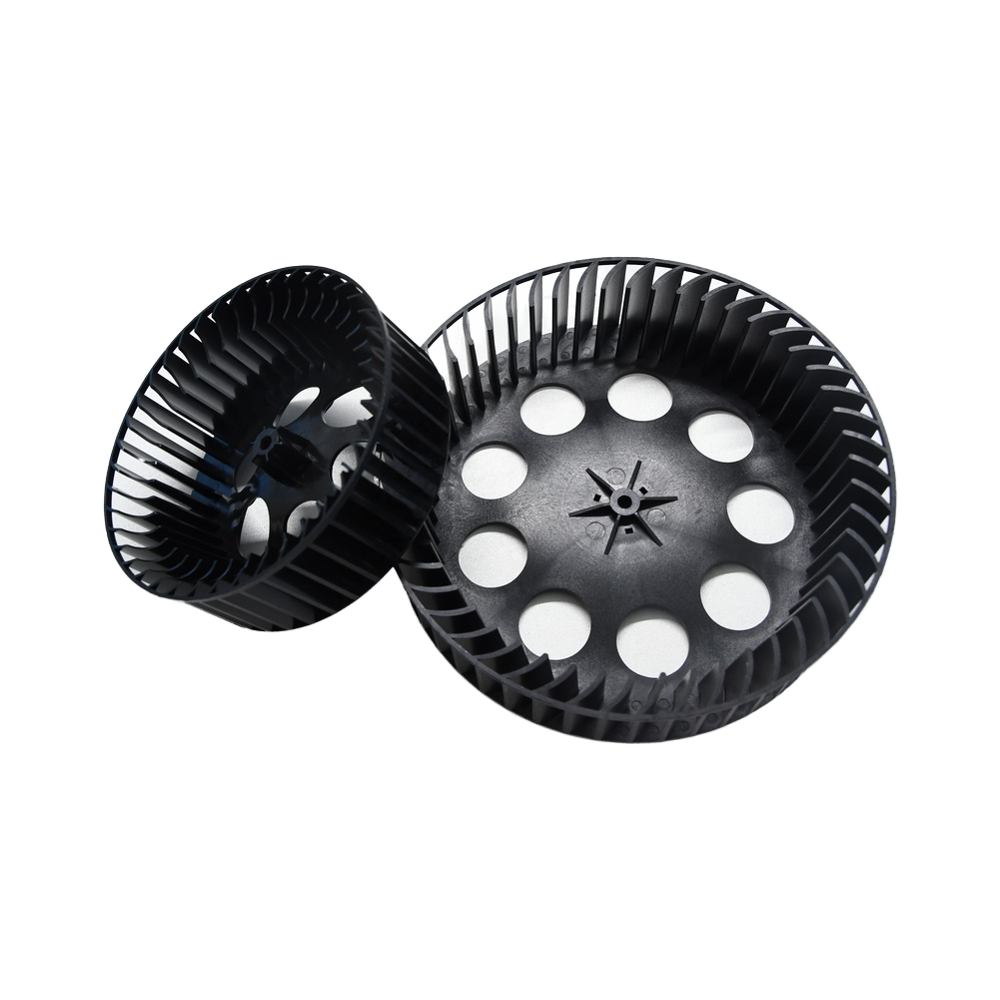
Design Flexibility and Complex Geometry Capabilities
Intricate Feature Integration
Injection molding enables the creation of highly complex geometric features within single components, eliminating the need for multiple parts and assembly operations. Advanced mold design techniques allow the incorporation of undercuts, threads, living hinges, and intricate surface textures that would be extremely difficult or impossible to achieve using alternative manufacturing methods. Multi-cavity molds can produce multiple different components simultaneously, while family molds enable the production of complete assemblies in single molding cycles.
The ability to integrate multiple functions within single molded components reduces assembly complexity, eliminates potential failure points, and minimizes overall product costs. Design features such as integral fasteners, alignment guides, and sealing surfaces can be molded directly into components, creating more robust and reliable products. This design flexibility supports innovative product architectures that improve performance while reducing manufacturing complexity and associated costs.
Surface Finish and Aesthetic Options
Injection molding technology offers extensive surface finish options that range from mirror-like smoothness to complex textured patterns that enhance both functionality and aesthetics. Mold surface treatments including polishing, texturing, engraving, and coating applications create finished components that require no secondary operations. Advanced surface technologies such as in-mold decoration, insert molding, and overmolding enable the integration of graphics, labels, and multiple materials within single production cycles.
The precision surface reproduction capabilities of injection molding ensure that aesthetic features remain consistent across entire production runs, maintaining brand identity and quality perception. Specialized surface treatments can provide functional benefits such as improved grip, reduced friction, enhanced durability, or antimicrobial properties. This combination of aesthetic and functional surface options enables manufacturers to create products that meet both performance requirements and market expectations for visual appeal and user experience.
Cost Effectiveness Across Production Volumes
Economies of Scale in High-Volume Production
Injection molding demonstrates exceptional cost effectiveness for medium to high-volume production runs, with per-part costs decreasing significantly as production quantities increase. The initial investment in mold tooling becomes negligible when amortized across thousands or millions of components, creating substantial cost advantages compared to alternative manufacturing methods. Material utilization efficiency in injection molding typically exceeds ninety percent, minimizing waste and reducing raw material costs per finished component.
Automated production processes eliminate most labor costs associated with individual part manufacturing, while high-speed cycle times maximize equipment productivity and reduce overhead allocation per component. The combination of material efficiency, labor reduction, and equipment utilization creates compelling economic advantages that improve significantly as production volumes increase. These cost benefits enable manufacturers to offer competitive pricing while maintaining healthy profit margins across their product portfolios.
Reduced Secondary Operations and Finishing
Components produced through injection molding typically require minimal or no secondary operations such as machining, drilling, or surface finishing, reducing overall manufacturing costs and lead times. The precision and surface quality achievable directly from the molding process eliminates expensive finishing operations that would be necessary with other manufacturing methods. Integration of multiple features within single molded components reduces assembly labor and associated quality control requirements.
The elimination of secondary operations also removes potential sources of dimensional variation and quality issues that could impact final product performance. This manufacturing efficiency translates into shorter production lead times, reduced work-in-process inventory, and simplified production scheduling. Manufacturers benefit from streamlined workflows that reduce handling, transportation, and storage costs while improving overall operational efficiency and customer responsiveness.
FAQ
What types of plastic materials work best with injection molding processes
Injection molding accommodates virtually all thermoplastic materials including commodity plastics like polyethylene and polypropylene, engineering plastics such as ABS and polycarbonate, and high-performance materials like PEEK and PPS. Material selection depends on specific application requirements including mechanical properties, chemical resistance, temperature performance, and cost considerations. Glass-filled and mineral-filled composites can also be processed to enhance strength and stiffness characteristics.
How does injection molding compare to other plastic manufacturing methods in terms of cost
Injection molding typically offers the lowest per-part costs for medium to high-volume production runs due to fast cycle times, material efficiency, and minimal secondary operations. While initial tooling costs are higher than methods like thermoforming or rotational molding, these costs are quickly amortized across production volumes. The precision and consistency of injection molding often eliminates expensive finishing operations required by other processes, further improving cost effectiveness.
What are the typical lead times for injection mold tooling and production setup
Mold design and manufacturing typically requires four to twelve weeks depending on complexity, with simple single-cavity molds requiring less time than complex multi-cavity or family molds. Advanced manufacturing technologies including high-speed machining and EDM processes can reduce tooling lead times significantly. Production setup and validation usually adds one to two weeks to establish optimal processing parameters and complete quality verification procedures.
Can injection molding produce components with varying wall thicknesses and complex geometries
Modern injection molding technology can accommodate significant wall thickness variations and complex three-dimensional geometries through advanced mold design and processing techniques. Gas-assist injection molding enables hollow sections and thick-to-thin transitions, while sequential valve gating allows complex flow patterns in challenging geometries. Computer simulation software optimizes mold design and processing parameters to ensure complete filling and consistent quality in complex components.
Table of Contents
- Superior Production Efficiency and Speed
- Exceptional Dimensional Accuracy and Consistency
- Material Versatility and Performance Optimization
- Design Flexibility and Complex Geometry Capabilities
- Cost Effectiveness Across Production Volumes
-
FAQ
- What types of plastic materials work best with injection molding processes
- How does injection molding compare to other plastic manufacturing methods in terms of cost
- What are the typical lead times for injection mold tooling and production setup
- Can injection molding produce components with varying wall thicknesses and complex geometries