
 EN
EN




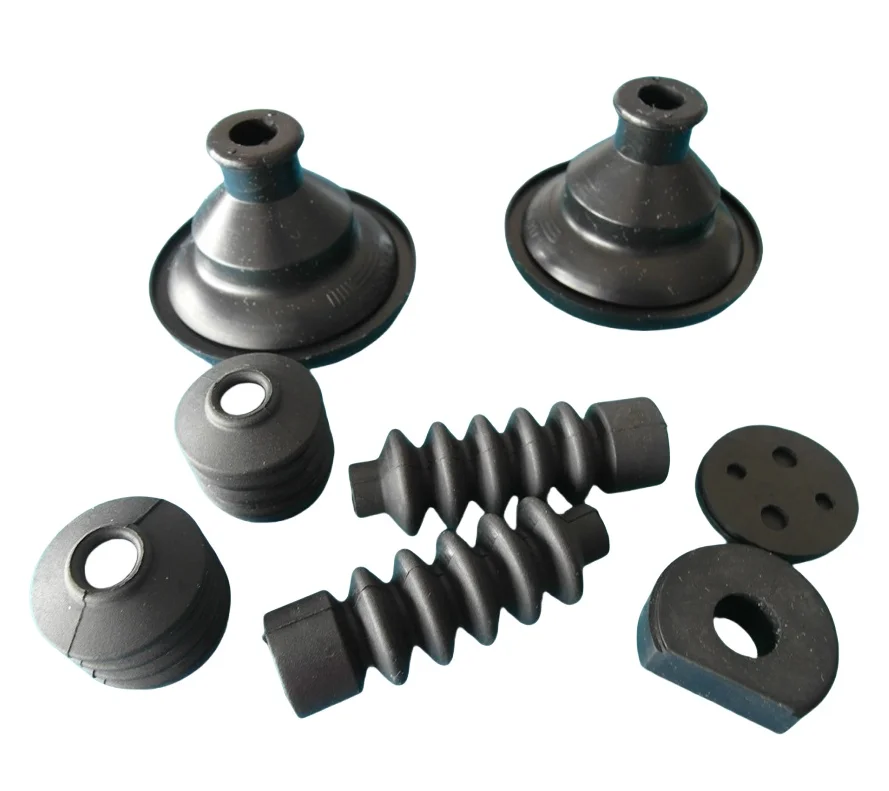
Industrial manufacturing demands precision, durability, and cost-effectiveness in every component used throughout production processes. Modern manufacturers increasingly turn to rubber molding solutions to address complex sealing, vibration dampening, and component protection challenges. This advanced manufacturing technique offers unparalleled flexibility in creating custom components that meet exact specifications while maintaining consistent quality standards. The integration of rubber molding technology into industrial applications has revolutionized how companies approach product design, manufacturing efficiency, and long-term performance optimization across diverse sectors.
Understanding Industrial Rubber Molding Technologies
Compression Molding Fundamentals
Compression molding represents one of the most established rubber molding techniques utilized in industrial manufacturing environments. This process involves placing uncured rubber material into a heated mold cavity, where pressure and temperature combine to cure the material into its final shape. The controlled environment ensures consistent wall thickness, precise dimensional tolerances, and optimal material properties throughout the finished component. Industries ranging from automotive to aerospace rely heavily on compression rubber molding for producing gaskets, seals, and specialized components that require exceptional durability under extreme operating conditions.
The compression molding process offers significant advantages in terms of material utilization efficiency and production cost management. Unlike other manufacturing methods, compression rubber molding minimizes waste generation while maximizing the mechanical properties of the finished product. Temperature and pressure parameters can be precisely controlled to optimize cure characteristics, resulting in components with superior tensile strength, chemical resistance, and thermal stability. These characteristics make compression molding particularly valuable for applications requiring long-term reliability in harsh industrial environments.
Injection Molding Applications
Injection molding technology has transformed the rubber molding landscape by enabling high-volume production of complex geometries with exceptional precision and repeatability. This automated process involves injecting heated rubber compound into precision-machined mold cavities under controlled pressure conditions. The resulting components exhibit consistent dimensional accuracy, smooth surface finishes, and optimal mechanical properties that meet stringent industrial specifications. Injection rubber molding proves particularly effective for producing intricate components with thin walls, complex internal passages, or multiple durometer requirements within a single part.
Modern injection molding systems incorporate advanced process monitoring and control technologies that ensure consistent quality throughout extended production runs. Real-time monitoring of injection pressure, mold temperature, and cure time parameters enables manufacturers to maintain tight tolerances while optimizing cycle times. The automation capabilities inherent in injection rubber molding systems significantly reduce labor costs while improving production efficiency and quality consistency. These advantages make injection molding the preferred choice for high-volume industrial applications requiring cost-effective production of precision rubber components.
Material Selection for Optimal Performance
Synthetic Rubber Compounds
Selecting appropriate synthetic rubber compounds plays a crucial role in determining the ultimate performance characteristics of molded components. Nitrile rubber (NBR) compounds offer exceptional oil and fuel resistance, making them ideal for automotive and industrial applications involving petroleum-based fluids. Ethylene Propylene Diene Monomer (EPDM) materials provide outstanding weathering resistance and thermal stability, making them suitable for outdoor applications and high-temperature environments. The rubber molding process can accommodate various synthetic compounds, each engineered to address specific performance requirements and operating conditions encountered in industrial applications.
Advanced synthetic rubber formulations incorporate specialized additives that enhance specific performance characteristics while maintaining processability during molding operations. Antioxidants prevent premature aging under thermal stress, while plasticizers improve low-temperature flexibility without compromising high-temperature performance. Carbon black and silica reinforcing fillers increase tensile strength and abrasion resistance, extending component service life in demanding applications. The flexibility of rubber molding processes allows manufacturers to customize compound formulations to meet unique application requirements while maintaining cost-effectiveness.
Natural Rubber Integration
Natural rubber continues to play an important role in industrial rubber molding applications where superior elasticity, tear resistance, and fatigue resistance are paramount. The unique molecular structure of natural rubber provides exceptional resilience and recovery characteristics that synthetic alternatives often cannot match. Natural rubber compounds excel in applications involving repeated flexing, dynamic loading, or shock absorption requirements. The rubber molding process readily accommodates natural rubber formulations, enabling manufacturers to capitalize on these superior mechanical properties while maintaining precise dimensional control.
Hybrid formulations combining natural and synthetic rubbers offer optimized performance characteristics that leverage the strengths of both material types. These carefully engineered blends provide balanced properties that address multiple performance requirements within a single component. Natural rubber contributes superior mechanical properties, while synthetic components enhance chemical resistance, thermal stability, or specialized performance characteristics. The versatility of rubber molding processes enables seamless processing of these complex formulations while maintaining consistent quality and dimensional accuracy throughout production runs.
Design Optimization Strategies
Wall Thickness Considerations
Optimal wall thickness design significantly impacts both the rubber molding process efficiency and final component performance characteristics. Uniform wall thickness distribution ensures consistent heat transfer during the curing process, minimizing internal stresses and dimensional variations that could compromise component integrity. Excessive wall thickness can lead to extended cure times, increased material costs, and potential quality issues such as trapped air or incomplete curing in thick sections. Conversely, insufficient wall thickness may result in inadequate strength, premature failure, or processing difficulties during demolding operations.
Advanced design software enables engineers to optimize wall thickness distribution while considering material flow characteristics, mold filling patterns, and curing kinetics specific to each rubber molding application. Finite element analysis tools help predict material behavior during the molding process, identifying potential problem areas before expensive tooling is manufactured. This predictive approach reduces development time, minimizes tooling modifications, and ensures optimal component performance from the initial production run. Proper wall thickness design directly contributes to improved product reliability, reduced manufacturing costs, and enhanced overall system performance.
Draft Angle Implementation
Incorporating appropriate draft angles into rubber molding designs facilitates efficient demolding operations while minimizing component distortion and surface defects. Draft angles reduce the contact area between molded components and mold surfaces, decreasing ejection forces required for part removal. This reduction in demolding stress helps preserve dimensional accuracy, surface quality, and component integrity throughout extended production runs. Proper draft angle implementation also extends mold life by reducing wear on critical mold surfaces subjected to repeated contact during demolding cycles.
The optimal draft angle for rubber molding applications depends on material properties, component geometry, surface texture requirements, and production volume considerations. Softer rubber compounds typically require larger draft angles due to their tendency to deform during demolding, while harder compounds may function effectively with minimal draft. Complex geometries with deep draws or intricate features may necessitate variable draft angles to ensure uniform demolding forces throughout the component. Experienced rubber molding engineers balance these competing requirements to achieve optimal production efficiency while maintaining component quality standards.
Quality Control and Testing Protocols
Dimensional Verification Methods
Comprehensive dimensional verification protocols ensure that rubber molding operations consistently produce components meeting stringent industrial specifications. Coordinate measuring machines (CMM) provide precise three-dimensional measurements of critical features, enabling detailed comparison against design specifications and tolerance requirements. Optical measurement systems offer rapid, non-contact inspection capabilities that facilitate high-volume quality control without risking component damage. These advanced measurement technologies enable manufacturers to maintain tight dimensional control while identifying process variations before they impact product quality or customer satisfaction.
Statistical process control (SPC) methodologies applied to rubber molding operations provide early warning systems for process drift or equipment wear that could compromise component quality. Real-time monitoring of critical dimensions enables immediate corrective action when measurements approach specification limits. Historical data analysis reveals long-term trends that guide preventive maintenance schedules and process optimization efforts. This proactive approach to quality control minimizes rejected components, reduces production costs, and ensures consistent delivery of high-quality molded products to industrial customers.
Material Property Validation
Rigorous material property testing confirms that rubber molding processes achieve specified performance characteristics essential for demanding industrial applications. Tensile strength testing evaluates the maximum stress components can withstand before failure, while elongation measurements assess flexibility and deformation capabilities. Hardness testing using Shore durometers provides standardized measurements of material stiffness that correlate with application-specific performance requirements. Comprehensive property validation ensures that molded components will perform reliably throughout their intended service life under specified operating conditions.
Accelerated aging tests simulate long-term environmental exposure effects on rubber molding components, providing valuable data on expected service life and performance degradation patterns. Thermal cycling tests evaluate dimensional stability and mechanical property retention under temperature variations typical of industrial operating environments. Chemical resistance testing confirms compatibility with fluids, solvents, or atmospheric contaminants encountered in specific applications. These comprehensive testing protocols provide confidence that molded components will meet or exceed performance expectations throughout their intended service life.
Industrial Applications and Case Studies
Automotive Sector Implementation
The automotive industry represents one of the largest consumers of rubber molding technology, utilizing molded components for sealing, vibration isolation, and component protection applications. Engine compartment seals manufactured through precision rubber molding provide reliable barriers against fluid leakage while withstanding extreme temperature variations and chemical exposure. Suspension system components molded from specialized rubber compounds deliver vibration dampening characteristics that enhance ride comfort while maintaining vehicle handling performance. The demanding requirements of automotive applications drive continuous innovation in rubber molding materials, processes, and quality control methodologies.
Electric vehicle development has created new opportunities for rubber molding applications, particularly in battery cooling systems, cable management, and electromagnetic interference shielding. High-voltage electrical systems require specialized sealing solutions that combine electrical insulation properties with traditional sealing performance. Thermal management systems in electric vehicles utilize molded rubber components for coolant distribution, temperature control, and system reliability. These emerging applications demonstrate the adaptability of rubber molding technology to address evolving industrial requirements while maintaining cost-effectiveness and production scalability.
Aerospace and Defense Applications
Aerospace applications demand rubber molding components that meet extremely stringent performance, reliability, and safety standards while operating under severe environmental conditions. Aircraft fuel systems utilize molded seals and gaskets that must maintain integrity across wide temperature ranges while resisting fuel degradation and maintaining dimensional stability. Landing gear systems employ rubber molding technology for shock absorption, noise reduction, and component protection applications that require exceptional durability and consistent performance throughout extended service intervals.
Defense applications leverage rubber molding technology for equipment protection, environmental sealing, and shock isolation in demanding field conditions. Military vehicle components manufactured through specialized rubber molding processes must withstand extreme temperatures, chemical exposure, and mechanical stress while maintaining operational reliability. Electronic equipment enclosures utilize molded rubber seals to provide environmental protection against moisture, dust, and electromagnetic interference. The critical nature of defense applications drives stringent quality control requirements and material traceability standards that influence rubber molding process development and implementation strategies.
Cost-Effectiveness and Production Efficiency
Tooling Investment Analysis
Initial tooling investment represents a significant component of rubber molding project economics, requiring careful analysis of production volumes, component complexity, and long-term manufacturing requirements. High-quality mold construction using premium tool steels ensures extended service life and consistent component quality throughout production runs, justifying higher initial investment through reduced maintenance costs and improved part quality. Multi-cavity mold designs enable higher production rates while distributing tooling costs across larger quantities, improving overall project economics for high-volume applications.
Advanced mold design technologies, including computer-aided design (CAD) and finite element analysis (FEA), optimize tooling configurations while minimizing development time and costs. Rapid prototyping techniques enable validation of design concepts before committing to production tooling, reducing the risk of expensive modifications during production startup. Modular mold construction allows incremental capacity expansion as production volumes increase, providing flexibility to match tooling investment with market demand. These strategic approaches to tooling investment enable manufacturers to optimize rubber molding project economics while maintaining production flexibility.
Production Scalability Factors
Production scalability in rubber molding operations depends on careful balance between equipment capacity, material handling systems, and quality control capabilities. Automated material handling systems reduce labor costs while ensuring consistent material preparation and feeding to molding equipment. Multi-station molding systems enable continuous production with integrated curing, cooling, and finishing operations that maximize equipment utilization. These scalability factors enable rubber molding operations to respond efficiently to changing production requirements while maintaining cost-effectiveness.
Process automation technologies, including programmable logic controllers (PLC) and distributed control systems (DCS), enable consistent production of high-quality molded components with minimal operator intervention. Real-time process monitoring and control systems optimize cure cycles, minimize material waste, and ensure consistent component quality throughout extended production runs. Predictive maintenance programs utilizing vibration analysis, thermal imaging, and oil analysis techniques minimize unplanned equipment downtime while extending equipment service life. These advanced production management approaches maximize rubber molding operation efficiency while controlling manufacturing costs.
FAQ
What materials work best for industrial rubber molding applications
Material selection for industrial rubber molding depends on specific application requirements including temperature exposure, chemical compatibility, mechanical stress levels, and environmental conditions. Nitrile rubber (NBR) excels in applications involving oil and fuel contact, while EPDM provides superior weather resistance and thermal stability. Fluoroelastomers offer exceptional chemical resistance for aggressive environments, and natural rubber delivers superior mechanical properties for dynamic applications. Consulting with experienced rubber molding specialists ensures optimal material selection for specific industrial requirements.
How does rubber molding compare to other manufacturing processes
Rubber molding offers distinct advantages over alternative manufacturing processes for producing elastomeric components. Compared to machining operations, molding provides superior material utilization efficiency, complex geometry capabilities, and integrated assembly features. Unlike adhesive bonding or mechanical fastening, molded components eliminate potential failure points while providing superior sealing and vibration isolation performance. The ability to incorporate multiple durometers, embedded components, or specialized surface textures within a single molding operation provides design flexibility unavailable through conventional manufacturing processes.
What quality standards apply to industrial rubber molding
Industrial rubber molding operations typically comply with multiple quality standards depending on application requirements and customer specifications. ISO 9001 quality management systems provide foundational quality control frameworks, while AS9100 addresses aerospace-specific requirements and TS 16949 covers automotive applications. FDA compliance may be required for food contact applications, while UL listing ensures electrical safety for specific applications. Military specifications (MIL-SPEC) and aerospace standards (AMS) define stringent requirements for defense and aerospace applications requiring comprehensive material and process validation.
How long do rubber molding tools typically last
Tool life in rubber molding applications varies significantly based on mold construction materials, production volumes, component complexity, and maintenance practices. High-quality steel molds properly maintained can produce millions of components over many years of service, while aluminum tooling may be suitable for shorter production runs or prototype development. Regular maintenance including cleaning, inspection, and surface treatment extends tool life while maintaining component quality. Predictive maintenance programs utilizing mold monitoring systems help optimize maintenance schedules while minimizing production interruptions and extending overall tool service life.