
 EN
EN



Manufacturing industries continuously seek advanced production methods to optimize efficiency and reduce costs in mass production environments. Among the various metalworking techniques available today, die casting has emerged as a cornerstone technology for producing high-quality metal components at scale. This precision manufacturing process involves forcing molten metal under high pressure into steel molds, creating complex geometries with exceptional dimensional accuracy and surface finish quality that traditional machining methods struggle to achieve consistently.
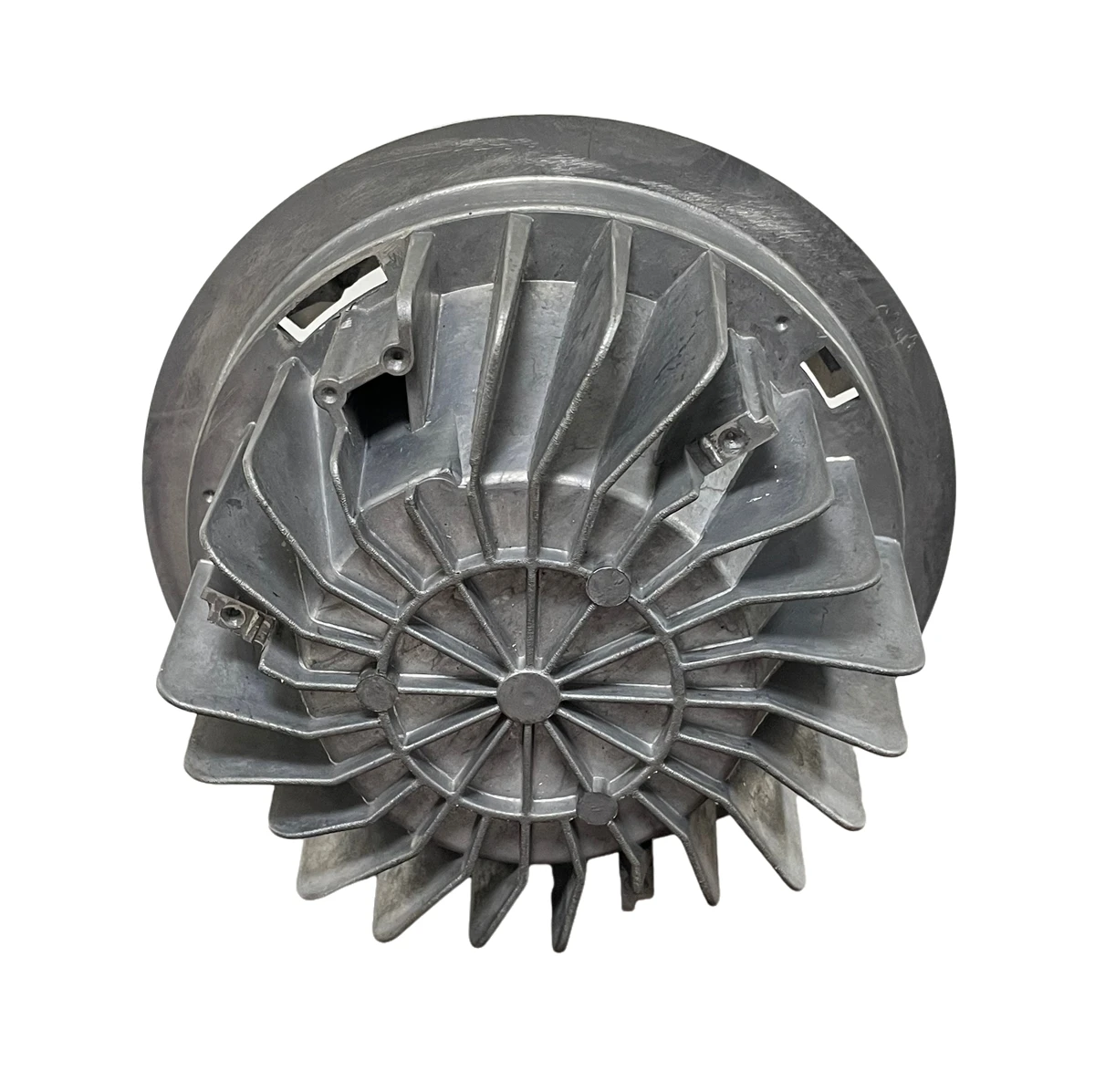
The automotive, aerospace, electronics, and construction industries have increasingly adopted die casting processes to meet demanding production schedules while maintaining stringent quality standards. Modern die casting operations can produce thousands of identical parts per day with minimal variation, making this technology particularly valuable for manufacturers who require consistent output volumes. The process efficiency gains become even more pronounced when considering the reduced need for secondary machining operations and the ability to incorporate complex features directly into the cast component.
Fundamental Principles of Die Casting Technology
High-Pressure Metal Injection Process
Die casting operates on the principle of injecting molten metal into precision-machined steel dies under extremely high pressure, typically ranging from 1,500 to 25,000 pounds per square inch. This pressure ensures complete mold cavity filling and creates the dense, uniform microstructure that distinguishes die casting products from other casting methods. The rapid injection speed, often exceeding several meters per second, minimizes the time available for premature solidification and ensures consistent part quality across large production runs.
The high-pressure environment during die casting also eliminates many common casting defects such as porosity, cold shuts, and incomplete fills that plague traditional gravity casting methods. This pressure-driven approach enables manufacturers to produce thin-walled components with intricate details that would be impossible to achieve through conventional casting techniques. The controlled cooling rates inherent in the die casting process also contribute to predictable mechanical properties and dimensional stability in finished components.
Precision Tooling and Mold Design
The steel dies used in die casting represent sophisticated engineering achievements, incorporating complex cooling channels, ejection systems, and gating designs that optimize metal flow patterns. These precision-machined tools can withstand thousands of casting cycles while maintaining dimensional accuracy within tight tolerances. The initial investment in high-quality tooling pays dividends through consistent part production and extended die life, making die casting economically attractive for medium to high-volume manufacturing applications.
Modern die casting molds feature advanced cooling systems that precisely control solidification rates and minimize cycle times. Strategic placement of cooling channels ensures uniform heat extraction while preventing thermal stress that could lead to die cracking or dimensional distortion. The integration of automated ejection systems further enhances production efficiency by reducing manual handling requirements and minimizing the risk of part damage during removal from the die cavity.
Production Efficiency Advantages in Mass Manufacturing
Rapid Cycle Times and High Output Rates
One of the most compelling advantages of die casting in mass production environments is the extremely short cycle times achievable with modern equipment. Typical die casting cycles range from 30 seconds to several minutes, depending on part size and complexity, allowing manufacturers to produce hundreds or thousands of components per day from a single machine. This rapid production capability directly translates to lower per-unit costs and improved manufacturing economics compared to alternative production methods.
The automated nature of modern die casting operations further enhances production efficiency by minimizing manual intervention and reducing labor costs. Computer-controlled systems manage metal temperature, injection pressure, and cooling cycles with precision that human operators cannot match consistently. This automation also enables continuous production runs with minimal supervision, allowing manufacturers to maximize equipment utilization and meet aggressive delivery schedules demanded by today's competitive marketplace.
Material Utilization and Waste Reduction
Die casting processes demonstrate exceptional material efficiency through precise control of metal quantities and minimal waste generation. The closed-mold system ensures that virtually all injected metal contributes to the finished component, with only small amounts of material lost through runners, gates, and flash. Even these secondary materials can often be recycled directly back into the production process, further improving overall material utilization rates.
The near-net-shape capability of die casting significantly reduces the amount of subsequent machining required to achieve final dimensions and surface finishes. This reduction in secondary operations not only saves material that would otherwise become machining chips but also eliminates the time and energy costs associated with additional processing steps. The combination of minimal material waste and reduced secondary processing makes die casting an environmentally sustainable choice for mass production applications.
Quality Consistency and Dimensional Accuracy
Tight Tolerance Control Capabilities
Die casting processes routinely achieve dimensional tolerances within ±0.003 inches on critical features, surpassing the accuracy levels attainable through many alternative manufacturing methods. This precision stems from the rigid steel tooling and controlled processing conditions that characterize modern die casting operations. The ability to maintain tight tolerances across thousands of production cycles eliminates the need for extensive sorting and inspection procedures that can bottleneck other manufacturing processes.
The repeatability inherent in die casting operations ensures that each component meets identical specifications, reducing variability in downstream assembly operations. This consistency proves particularly valuable in industries such as automotive and aerospace manufacturing, where component interchangeability and precise fit requirements are critical for product performance and safety. The predictable dimensional characteristics of die casting components also simplify quality control procedures and reduce inspection costs.
Superior Surface Finish Characteristics
Components produced through die casting typically exhibit excellent surface finish quality straight from the mold, often eliminating the need for extensive finishing operations. The smooth steel die surfaces impart a corresponding finish to cast components that may be suitable for final assembly without additional processing. This surface quality advantage reduces manufacturing costs and cycle times while improving the aesthetic appearance of finished products.
The controlled cooling environment during die casting also minimizes surface defects such as oxidation, inclusion entrapment, and grain boundary irregularities that can compromise both appearance and performance. When additional surface treatments are required, the consistent substrate provided by die casting components ensures uniform coating adhesion and appearance. This predictable surface quality makes die casting components ideal for applications requiring decorative finishes or functional coatings.
Economic Benefits for Large-Scale Production
Cost-Per-Unit Optimization
The economics of die casting become increasingly attractive as production volumes increase, with per-unit costs declining significantly at higher output levels. The high initial tooling investment is amortized across thousands or millions of components, making die casting extremely cost-effective for mass production applications. Labor costs remain relatively constant regardless of production volume, further improving the economic advantage at higher quantities.
Energy consumption per component in die casting operations is typically lower than alternative manufacturing processes due to the rapid cycle times and efficient heat transfer characteristics of the process. The elimination of secondary machining operations also reduces overall energy requirements and associated costs. These energy savings become substantial when multiplied across large production runs, contributing significantly to improved manufacturing economics.
Reduced Secondary Processing Requirements
The near-net-shape capability of die casting processes minimizes the need for extensive secondary machining, reducing both processing time and material waste. Many die casting components require only minimal finishing operations such as deburring or drilling of secondary features, significantly reducing manufacturing complexity and cost. This reduction in processing steps also decreases the potential for quality issues and simplifies production scheduling.
The integration of complex features directly into die casting components eliminates multiple assembly operations that would otherwise be required with fabricated alternatives. Features such as mounting bosses, cooling fins, and decorative elements can be incorporated into the initial casting, reducing part count and assembly labor requirements. This design flexibility allows engineers to optimize components for both functionality and manufacturing efficiency simultaneously.
Material Advantages and Alloy Selection
Aluminum Alloy Performance Benefits
Aluminum die casting alloys offer exceptional strength-to-weight ratios while maintaining excellent corrosion resistance and thermal conductivity properties. These characteristics make aluminum die casting components ideal for automotive, aerospace, and electronics applications where weight reduction and performance are critical considerations. The fluidity of molten aluminum also enables the production of complex, thin-walled components that would be difficult or impossible to achieve with heavier materials.
Modern aluminum die casting alloys incorporate carefully balanced compositions that optimize both castability and mechanical properties. Alloys such as ADC12 and A380 provide excellent die filling characteristics while delivering the strength and durability required for demanding applications. The recyclability of aluminum also supports sustainable manufacturing practices, allowing waste material to be reprocessed and reused without significant property degradation.
Specialized Alloy Applications
Die casting processes accommodate a wide range of specialized alloys designed for specific performance requirements. Zinc alloys offer superior dimensional stability and surface finish quality, making them ideal for precision components and decorative applications. Magnesium alloys provide the ultimate in weight reduction while maintaining adequate strength for structural applications.
The selection of appropriate die casting alloys depends on factors such as operating temperature, corrosion exposure, mechanical loading, and cost considerations. Advanced alloy formulations continue to expand the application range for die casting components, enabling manufacturers to optimize material properties for specific service requirements. This flexibility in material selection allows die casting to compete effectively with alternative manufacturing processes across diverse industries.
Advanced Equipment and Technology Integration
Modern Machine Capabilities
Contemporary die casting machines incorporate sophisticated control systems that monitor and adjust critical process parameters in real-time. These systems maintain optimal metal temperature, injection velocity, and pressure profiles throughout each casting cycle, ensuring consistent quality and minimizing process variation. Advanced sensors provide continuous feedback on die temperature, metal quality, and cycle performance, enabling predictive maintenance and quality optimization.
The integration of robotics and automation systems in modern die casting facilities further enhances production efficiency and quality consistency. Automated systems handle part extraction, trimming, and inspection operations with precision and speed that exceed human capabilities. These automated systems also improve workplace safety by minimizing operator exposure to high-temperature processes and reducing repetitive motion injuries.
Process Monitoring and Quality Control
Real-time process monitoring systems enable die casting operators to identify and correct quality issues before they impact production output. Statistical process control techniques applied to critical parameters such as cycle time, temperature, and pressure provide early warning of potential problems. This proactive approach to quality management reduces scrap rates and improves overall production efficiency.
Advanced inspection technologies including coordinate measuring machines, X-ray imaging, and optical scanning systems enable comprehensive quality verification of die casting components. These inspection capabilities ensure that products meet customer specifications while identifying process trends that may require adjustment. The data collected through these quality systems also supports continuous improvement initiatives and process optimization efforts.
Applications Across Industrial Sectors
Automotive Industry Integration
The automotive industry represents the largest consumer of die casting components, utilizing this technology for critical applications including engine blocks, transmission housings, and structural components. Die casting enables automotive manufacturers to produce lightweight components that improve fuel efficiency while maintaining the strength and durability required for vehicle safety. The high-volume production capabilities of die casting align perfectly with automotive manufacturing requirements.
Advanced automotive die casting applications include structural components that replace multiple welded assemblies with single-piece castings. These mega-castings reduce part count, eliminate joining operations, and improve structural integrity while reducing overall vehicle weight. The precision and repeatability of die casting processes ensure that these critical components meet stringent automotive quality and safety standards.
Electronics and Consumer Products
The electronics industry relies heavily on die casting for producing housings, heat sinks, and connector components that require precise dimensions and excellent electromagnetic shielding properties. Die casting processes enable the production of thin-walled electronic enclosures with complex internal features that provide both functional performance and aesthetic appeal. The excellent thermal conductivity of aluminum die casting components makes them ideal for heat dissipation applications in electronic devices.
Consumer product manufacturers utilize die casting for producing durable components that must withstand repeated use while maintaining attractive appearance. Applications include appliance housings, furniture hardware, and decorative elements that benefit from the superior surface finish and dimensional consistency achievable through die casting processes. The cost-effectiveness of die casting at moderate to high volumes makes it attractive for consumer product applications.
FAQ
What production volumes make die casting economically viable?
Die casting becomes economically attractive for production runs typically exceeding 1,000 to 5,000 pieces annually, depending on part complexity and tooling costs. The high initial investment in steel tooling is offset by low per-unit costs, making die casting increasingly cost-effective as volumes increase. For very high-volume applications exceeding 100,000 pieces annually, die casting often provides the lowest cost per component compared to alternative manufacturing methods.
How does die casting cycle time compare to other manufacturing processes?
Die casting cycle times typically range from 30 seconds to several minutes per component, significantly faster than most alternative processes such as sand casting, permanent mold casting, or machining from solid stock. The rapid cycle times achievable with modern die casting equipment enable manufacturers to produce hundreds or thousands of components per day, making it ideal for mass production applications requiring quick turnaround and high output rates.
What dimensional tolerances can be achieved through die casting?
Modern die casting processes routinely achieve dimensional tolerances within ±0.003 to ±0.005 inches on critical features, with some applications achieving even tighter tolerances through controlled processing conditions. The precision steel tooling and high-pressure injection process ensure excellent repeatability across large production runs. These tight tolerances often eliminate the need for secondary machining operations, reducing overall manufacturing costs and cycle times.
Which materials are most suitable for die casting applications?
Aluminum alloys represent the most common die casting materials due to their excellent strength-to-weight ratio, corrosion resistance, and thermal properties. Zinc alloys offer superior dimensional stability and surface finish quality for precision applications, while magnesium alloys provide maximum weight reduction for aerospace and automotive applications. The selection of appropriate die casting alloys depends on specific performance requirements including strength, temperature resistance, and environmental exposure conditions.
Table of Contents
- Fundamental Principles of Die Casting Technology
- Production Efficiency Advantages in Mass Manufacturing
- Quality Consistency and Dimensional Accuracy
- Economic Benefits for Large-Scale Production
- Material Advantages and Alloy Selection
- Advanced Equipment and Technology Integration
- Applications Across Industrial Sectors
- FAQ