
 EN
EN



In industrial operations where equipment faces extreme temperatures, aggressive chemicals, high pressures, and abrasive contaminants, the reliability of sealing solutions becomes critical to operational continuity and safety. A seal ring serves as the frontline defense against fluid leakage, contamination ingress, and system failure in these demanding conditions. Unlike standard sealing components designed for moderate environments, seal rings engineered for harsh applications must demonstrate exceptional material resilience, structural integrity, and dimensional stability under stress. Understanding what makes a seal ring suitable for such challenging environments requires examining the interplay between material science, design engineering, application requirements, and real-world performance characteristics that distinguish industrial-grade sealing solutions from conventional alternatives.
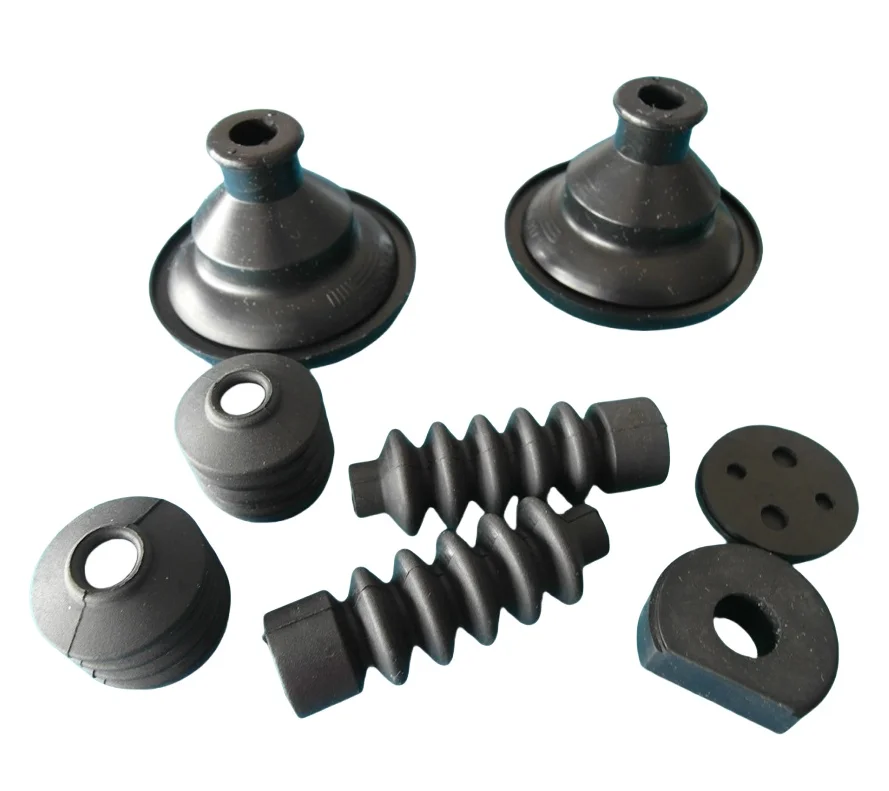
The suitability of a seal ring for harsh environments stems from a complex combination of factors including material composition, cross-sectional geometry, surface finish quality, and compatibility with the specific operational parameters of the application. Engineers and procurement professionals must evaluate these factors systematically to ensure that selected seal rings will maintain sealing effectiveness throughout their expected service life, even when subjected to thermal cycling, chemical exposure, mechanical wear, and dynamic pressure fluctuations. This comprehensive analysis explores the specific attributes that enable seal rings to perform reliably in harsh industrial environments, providing technical insights that support informed decision-making in critical sealing applications across manufacturing, petrochemical, automotive, aerospace, and heavy equipment industries.
Material Properties That Enable Harsh Environment Performance
Elastomer Selection and Chemical Resistance
The foundational attribute that makes a seal ring suitable for harsh environments is the selection of elastomeric or thermoplastic materials with inherent resistance to the specific challenges present in the application. Nitrile rubber, fluoroelastomers, perfluoroelastomers, and specialized compounds such as hydrogenated nitrile and ethylene propylene diene monomer each offer distinct resistance profiles to oils, fuels, acids, bases, solvents, and other aggressive media. A seal ring fabricated from appropriately selected material maintains its molecular structure and physical properties when exposed to chemicals that would cause swelling, softening, cracking, or dissolution in unsuitable materials. This chemical compatibility ensures that the seal ring continues to exert consistent contact pressure against mating surfaces, preventing leakage pathways from developing as the component ages in service.
Beyond basic chemical resistance, the polymer network structure of high-performance seal ring materials incorporates crosslinking density optimization, plasticizer selection, and stabilizer packages that resist degradation from oxidation, ozone exposure, and ultraviolet radiation. In outdoor applications or environments with atmospheric contaminants, these stabilization systems prevent surface crazing, hardening, and loss of elasticity that would compromise sealing effectiveness. The molecular weight distribution and polymer architecture also influence low-temperature flexibility, ensuring that the seal ring maintains sufficient compliance to accommodate surface irregularities and dynamic movements even when ambient temperatures drop significantly below room conditions. This combination of chemical resistance and environmental stability forms the material foundation for harsh environment suitability.
Temperature Resistance and Thermal Stability
Thermal performance requirements often define the boundary conditions for seal ring selection in harsh environments, as extreme temperatures accelerate material degradation mechanisms and alter dimensional characteristics. A seal ring suitable for high-temperature applications must resist thermal decomposition, maintain mechanical properties above the glass transition temperature, and exhibit minimal compression set when subjected to sustained heat exposure. Fluoroelastomers and perfluoroelastomers demonstrate continuous service capability at temperatures exceeding 200 degrees Celsius, while specialized silicone formulations offer flexibility at cryogenic temperatures below negative 50 degrees Celsius. The thermal expansion coefficient of the seal ring material must also align reasonably with the housing and shaft materials to prevent excessive clearance changes or stress concentrations as temperatures fluctuate during operational cycles.
Thermal cycling presents particular challenges for seal ring performance, as repeated expansion and contraction can induce fatigue cracking, extrusion damage, and permanent deformation. Materials engineered for harsh environments incorporate heat-resistant polymers with stable crosslink structures that resist chain scission and reversion even after thousands of thermal cycles. The heat aging characteristics of the seal ring material determine the rate at which hardness increases, tensile strength declines, and elongation capacity diminishes over time, directly impacting service life predictions. Advanced compound formulations include antioxidants and heat stabilizers that slow these aging processes, extending the operational window before replacement becomes necessary due to loss of sealing function.
Mechanical Strength and Abrasion Resistance
In harsh environments characterized by particulate contamination, dynamic motion, or high-pressure differentials, the mechanical properties of a seal ring become critical performance determinants. Tensile strength, tear resistance, and abrasion resistance define the ability of the seal ring to withstand physical stresses without material removal, crack propagation, or catastrophic failure. Harder durometer compounds generally offer superior abrasion resistance and extrusion resistance under pressure, but may sacrifice conformability to surface imperfections. The optimal hardness specification for a seal ring depends on the specific balance required between sealing effectiveness on imperfect surfaces and resistance to mechanical damage from operational forces.
Dynamic applications involving reciprocating or rotary motion subject the seal ring to continuous friction and wear, generating localized heat and progressively removing material from the sealing surfaces. Compounds formulated with reinforcing fillers such as carbon black, silica, or aramid fibers exhibit enhanced wear resistance, extending service intervals in applications where replacement access is limited or downtime costs are prohibitive. The elastic memory of the seal ring material also contributes to harsh environment suitability by allowing the component to recover from temporary deformation caused by pressure spikes, contamination passage, or installation stresses. This resilience prevents permanent set conditions that would create leakage paths and reduce sealing effectiveness over the operational lifecycle.
Design Features That Enhance Environmental Tolerance
Cross-Sectional Geometry and Contact Mechanics
The geometric profile of a seal ring fundamentally determines how effectively it creates and maintains a sealing interface under varying environmental conditions. O-ring cross-sections, square sections, rectangular sections, and custom profiles each generate distinct contact pressure distributions, compression characteristics, and response behaviors to pressure, temperature, and movement. In harsh environments, the seal ring geometry must accommodate greater dimensional tolerances in the gland or groove while maintaining sufficient squeeze to ensure continuous contact. Larger cross-sections generally provide greater resilience to extrusion damage under high pressure and better resistance to chemical volume changes, while smaller sections offer reduced friction and improved responsiveness to dynamic conditions.
The contact width and pressure distribution created by a seal ring against mating surfaces directly influences sealing effectiveness and wear patterns. Designs that distribute contact pressure across a broader interface reduce localized stress concentrations that accelerate material fatigue and wear, particularly important in applications with surface roughness variations or alignment imperfections. Finite element analysis of seal ring compression reveals how different geometries respond to installation squeeze, system pressure, thermal expansion, and gland manufacturing tolerances, enabling optimization for specific harsh environment conditions. The balance between initial interference and operational flexibility determines whether the seal ring will maintain effective sealing throughout temperature excursions, pressure fluctuations, and long-term material property changes.
Surface Finish and Coating Technologies
Surface characteristics of a seal ring significantly impact friction behavior, wear resistance, and compatibility with mating surfaces in harsh environments. Molded seal rings exhibit surface finishes determined by mold quality and demolding processes, while precision-machined seal rings can achieve controlled surface textures that optimize sealing and reduce friction. Surface treatments including plasma modification, chemical etching, and coating application alter the interface properties without changing bulk material characteristics, enabling enhanced performance in specific applications. Fluoropolymer coatings reduce initial breakout friction and running friction in dynamic seal ring applications, minimizing heat generation and extending service life in high-speed or high-pressure systems.
The microscopic surface topography of a seal ring influences fluid film formation, particle entrapment, and adhesion characteristics that affect both sealing effectiveness and durability. Controlled roughness patterns can enhance lubrication retention while preventing excessive fluid passage, particularly important in applications with marginal lubrication or contaminated media. Surface energy modification through plasma or chemical treatment improves wetting characteristics and chemical bonding with certain fluids, enhancing compatibility and resistance to chemical attack. These surface engineering approaches allow seal ring designers to address specific harsh environment challenges without compromising the fundamental material properties required for chemical resistance, temperature tolerance, and mechanical strength.
Backup and Anti-Extrusion Features
High-pressure applications in harsh environments often require additional mechanical support beyond the inherent strength of the seal ring material to prevent extrusion damage and premature failure. Backup rings fabricated from rigid thermoplastics or metal alloys positioned adjacent to the seal ring prevent deformation into clearance gaps when pressure differentials exceed the extrusion resistance of the elastomer alone. The hardness, modulus, and wear resistance of backup ring materials complement the sealing properties of the primary seal ring, creating a composite sealing system capable of withstanding pressure spikes and sustained high-pressure conditions without compromising sealing integrity.
Anti-extrusion design features integrated directly into seal ring geometry provide similar protection without requiring separate components, simplifying installation and reducing system complexity. Stepped profiles, interference ribs, and reinforced bases increase the effective stiffness of the seal ring in regions most vulnerable to extrusion while maintaining compliance in the primary sealing zones. These integrated features prove particularly valuable in applications with space constraints or where component count reduction enhances reliability through elimination of potential assembly errors. The selection between separate backup components and integrated anti-extrusion features depends on pressure levels, clearance gaps, thermal cycling severity, and accessibility for maintenance activities throughout the system lifecycle.
Application-Specific Considerations for Harsh Environments
Static Versus Dynamic Sealing Requirements
The motion characteristics of the application fundamentally shape seal ring selection criteria and performance expectations in harsh environments. Static seal rings face primarily chemical exposure, temperature extremes, and long-term compression set challenges, while dynamic seal rings must additionally manage friction, wear, and lubrication considerations. In static applications, a seal ring with higher hardness and lower compression set provides superior long-term dimensional stability, maintaining contact pressure even after years of continuous compression and elevated temperature exposure. The absence of relative motion eliminates friction concerns, allowing optimization for maximum chemical resistance and thermal stability without compromise.
Dynamic applications impose significantly different requirements on seal ring material and design selection. Reciprocating motion subjects the seal ring to alternating compression, tension, and friction cycles that generate heat and progressively wear the sealing surfaces. Rotary applications create continuous unidirectional friction with associated temperature rise and potential for abrasive wear if contaminants enter the sealing interface. The seal ring material must balance sufficient hardness for wear resistance against adequate flexibility for surface conformability and accommodation of shaft eccentricity. Low-friction compounds and surface treatments become critical enablers of extended service life in dynamic harsh environment applications where replacement intervals directly impact maintenance costs and operational uptime.
Pressure Cycling and Explosive Decompression Resistance
Rapid pressure changes in harsh environment applications create unique challenges for seal ring performance that extend beyond simple pressure containment capability. Pressure cycling induces mechanical fatigue through repeated compression and relaxation of the seal ring material, potentially leading to crack initiation and propagation that compromise sealing effectiveness. The fatigue resistance of seal ring compounds depends on polymer flexibility, reinforcement strategies, and the presence of stress concentration points in the geometry. Applications with frequent pressure cycling require materials with high fatigue crack growth resistance and designs that minimize stress concentrations during compression and decompression events.
Explosive decompression represents an extreme form of rapid pressure release that can cause catastrophic seal ring failure through internal blistering, splitting, or complete disintegration. This phenomenon occurs when gas molecules dissolved in the seal ring material under high pressure cannot escape quickly enough during rapid decompression, creating internal pressure that exceeds the material's tensile strength. Seal rings intended for high-pressure gas applications in harsh environments require specially formulated low-permeability materials that resist gas dissolution or incorporate venting features that allow controlled gas release. The permeability characteristics, diffusion coefficients, and solubility parameters of candidate seal ring materials must be evaluated against the specific gas composition and decompression rates anticipated in the application to prevent this failure mode.
Contamination Management and Particle Tolerance
Harsh industrial environments frequently contain particulate contamination from wear debris, process materials, or external sources that challenge seal ring effectiveness and durability. A seal ring suitable for contaminated environments must demonstrate tolerance to particle passage without immediate damage while also providing sufficient wiping action to prevent accumulation at the sealing interface. Harder seal ring compounds offer superior resistance to abrasive damage from particles, but may not conform adequately to allow safe particle passage without creating leakage paths. Conversely, softer compounds conform around particles more effectively but wear more rapidly under continuous abrasive action.
Design features that enhance contamination tolerance include chamfered or radiused edges that guide particles away from the primary sealing zone, relieved geometries that create particle traps outside critical contact areas, and cross-sectional profiles that maintain sealing even when local material removal occurs. The surface finish of mating components also significantly influences seal ring performance in contaminated environments, as rougher surfaces provide more opportunities for particle entrapment and concentrated wear. System-level approaches including upstream filtration, exclusion seals, and periodic flushing operations complement material and design strategies to extend seal ring service life in applications where contamination cannot be eliminated entirely. The comprehensive contamination management strategy balances seal ring selection, system design, and maintenance practices to achieve target reliability in harsh operating conditions.
Manufacturing Quality and Consistency Factors
Compound Formulation Control and Batch Consistency
The manufacturing processes used to produce seal ring compounds directly impact the consistency and reliability of performance in harsh environments. Precise control of polymer selection, filler loading, plasticizer content, and curing agent ratios ensures that each production batch meets specification limits for critical properties including hardness, tensile strength, compression set, and chemical resistance. Variations in compound formulation, even within specification ranges, can produce measurable differences in service life when seal rings operate at the limits of material capability in extreme conditions. Quality assurance protocols including incoming material verification, process parameter monitoring, and finished product testing provide confidence that production seal rings will perform equivalently to qualification samples.
Batch-to-batch consistency becomes particularly critical in applications where seal ring replacement occurs over extended operational lifetimes spanning multiple production runs. Substitution of different material grades, changes in raw material suppliers, or process modifications can introduce performance variations that manifest as unexpected service life changes or failure mode shifts. Rigorous material traceability systems allow correlation of field performance with specific production batches, enabling root cause analysis when anomalies occur and continuous improvement of compound formulations based on actual application feedback. The investment in manufacturing quality control and consistency pays dividends through reduced field failures, predictable maintenance scheduling, and enhanced reputation for reliability in demanding harsh environment applications.
Molding Precision and Dimensional Accuracy
The dimensional accuracy and surface quality achieved during seal ring molding operations determine how effectively the component will fit within specified glands and establish proper squeeze for sealing. Compression molding, transfer molding, and injection molding each offer distinct advantages for seal ring production, with process selection depending on compound characteristics, production volumes, and dimensional tolerance requirements. Mold design including parting line location, flash thickness control, and venting strategy influences both dimensional consistency and surface finish quality. In harsh environment applications where seal ring performance margins may be narrow, tighter dimensional tolerances and superior surface finishes can provide the difference between reliable long-term sealing and premature failure.
Flash removal methods, post-curing protocols, and final inspection procedures ensure that production seal rings meet dimensional specifications and surface quality standards required for harsh environment performance. Automated dimensional measurement systems provide objective verification of critical parameters including inside diameter, outside diameter, cross-sectional dimensions, and concentricity. Surface inspection protocols detect mold damage, contamination artifacts, and material defects that could serve as crack initiation sites or compromise sealing effectiveness. The cumulative effect of manufacturing quality control extends beyond dimensional compliance to encompass surface integrity, material property uniformity, and absence of defects that would reduce service life or reliability when seal rings face the rigors of harsh industrial environments.
Post-Processing and Quality Verification
Post-molding treatments including deflashing, surface finishing, and secondary curing operations refine seal ring characteristics to meet demanding harsh environment requirements. Cryogenic deflashing removes flash material without damaging sealing surfaces or introducing dimensional changes, while tumbling operations can round sharp edges and improve surface uniformity. Post-curing cycles complete the crosslinking process, stabilize dimensions, and reduce extractables that could contaminate sensitive applications or compromise chemical resistance. These finishing operations transform molded components into precision seal rings ready for installation in critical applications where performance cannot be compromised.
Final quality verification encompasses both dimensional inspection and functional testing to confirm harsh environment suitability before seal rings enter service. Coordinate measuring systems verify that dimensional characteristics fall within specification limits, while hardness testing confirms material properties meet design requirements. Performance validation may include compression set testing under elevated temperature, chemical immersion to verify compatibility, and pressure cycle testing to demonstrate fatigue resistance. This comprehensive quality verification approach ensures that seal rings delivered to harsh environment applications possess the material properties, dimensional accuracy, and surface characteristics necessary for reliable long-term performance under the specific conditions they will encounter in service.
Installation and System Integration Practices
Gland Design and Tolerance Management
The gland or groove that houses a seal ring profoundly influences sealing effectiveness and component longevity in harsh environments. Proper gland design establishes correct squeeze percentage, prevents extrusion, allows thermal expansion, and facilitates installation without damage. Dimensional specifications for gland depth, width, surface finish, and edge radii must account for seal ring material properties, operating pressures, temperature ranges, and manufacturing tolerances in the assembled system. Undersized glands generate excessive squeeze that can overstress the seal ring material and prevent proper seating, while oversized glands allow excessive movement, extrusion, and spiral failure. The gland design process balances these competing requirements using industry standards, application-specific experience, and finite element analysis to predict seal ring behavior under operational conditions.
Tolerance stack analysis becomes critical when seal ring applications involve multiple components with independent manufacturing variations that accumulate to determine actual installed squeeze. Statistical tolerance analysis methods predict the distribution of installed conditions across production populations, identifying the probability of extreme combinations that could compromise sealing performance. This analysis informs tolerance allocation decisions, specifying tighter control on critical dimensions while relaxing less influential parameters to optimize manufacturing costs. In harsh environment applications where seal ring replacement may be difficult or costly, conservative tolerance strategies ensure that even worst-case dimensional combinations maintain adequate squeeze and sealing effectiveness throughout the operational temperature range.
Installation Procedures and Damage Prevention
Proper installation practices significantly impact the realized service life of a seal ring in harsh environments by preventing damage that would compromise initial sealing effectiveness or accelerate degradation. Installation procedures must address lubrication selection, tool requirements, insertion techniques, and verification methods appropriate to the specific seal ring geometry and application conditions. Protective tooling including installation mandrels, guides, and sleeves prevents sharp edge contact that could cut, nick, or scratch seal ring surfaces during assembly. Lubrication with compatible fluids reduces friction during installation and facilitates proper positioning within glands without material twist, roll, or compression damage.
Installation verification procedures confirm that seal rings have seated correctly without visible damage before systems enter service. Visual inspection detects cuts, nicks, and foreign material that would create immediate leakage paths, while rotation checks verify that seal rings are not twisted or improperly positioned within glands. Pressure testing after installation but before full operation allows detection and correction of installation errors before exposure to full harsh environment conditions. These verification steps prevent premature failures attributable to installation damage rather than material or design inadequacy, ensuring that seal ring performance in service reflects actual component capability rather than assembly quality issues.
Compatibility With Adjacent System Components
A seal ring operates as part of an integrated sealing system that includes housing materials, shaft or piston materials, lubricants, and adjacent seal components. Material compatibility extends beyond the sealed fluid to encompass potential galvanic corrosion between elastomer fillers and metal surfaces, plasticizer migration into adjacent polymers, and chemical interactions between different seal materials in compound sealing arrangements. The selection of compatible materials for all system components prevents unexpected degradation mechanisms that could compromise seal ring performance even when individual components meet their specifications.
Surface finish specifications for mating components significantly influence seal ring sealing effectiveness and wear characteristics in harsh environments. Excessively rough surfaces accelerate abrasive wear and may prevent effective sealing despite adequate seal ring squeeze, while surfaces finished too smoothly may not provide sufficient lubrication retention for dynamic applications. Surface finish requirements depend on seal ring material hardness, application type, and expected service life, typically ranging from 0.4 to 1.6 micrometers average roughness for static applications and 0.2 to 0.8 micrometers for dynamic applications. The compatibility between seal ring characteristics and system design details determines whether theoretical performance predictions translate into actual field reliability under harsh operating conditions.
FAQ
What temperature range can seal rings typically withstand in harsh environments?
The temperature capability of seal rings varies significantly based on elastomer selection, with nitrile rubber compounds typically serving from negative 40 to 120 degrees Celsius, fluoroelastomers operating from negative 20 to 230 degrees Celsius, and perfluoroelastomers functioning from negative 15 to 327 degrees Celsius in continuous service. Specialized formulations can extend these ranges for specific applications, though material selection must balance temperature resistance against other requirements including chemical compatibility, mechanical properties, and cost considerations. Thermal cycling capability depends on compound stability and design features that accommodate differential expansion without inducing excessive stress concentrations.
How do you determine the appropriate seal ring material for a specific chemical environment?
Selecting seal ring materials for chemical environments requires systematic evaluation of compatibility data from standardized immersion testing, consideration of concentration and temperature effects on resistance, and assessment of potential synergistic effects when multiple chemicals are present. Chemical compatibility charts provide initial screening based on elastomer type and chemical family, but application-specific testing with actual process fluids at operating temperatures offers the most reliable validation. Material suppliers typically provide detailed compatibility ratings and can conduct custom immersion testing when standard data does not cover specific chemical combinations or extreme exposure conditions anticipated in harsh environments.
What causes seal ring extrusion and how can it be prevented?
Seal ring extrusion occurs when pressure differentials force elastomeric material into clearance gaps between housing and shaft components, progressively nibbling away the seal ring until leakage develops or catastrophic failure occurs. Prevention strategies include reducing clearance gaps through tighter manufacturing tolerances, increasing seal ring hardness to improve extrusion resistance, installing backup rings to block extrusion gaps, and selecting seal ring geometries that distribute pressure loads more effectively. The extrusion resistance of seal rings depends on durometer hardness, cross-sectional dimensions, and the magnitude of pressure differential relative to clearance gap width, with systematic design calculations available to predict extrusion risk for specific application conditions.
How frequently should seal rings be replaced in harsh environment applications?
Seal ring replacement intervals in harsh environments depend on numerous factors including material degradation rates under specific conditions, consequences of failure, accessibility for maintenance, and operational cost considerations. Predictive approaches based on compression set measurements, hardness changes, or performance monitoring allow condition-based replacement that optimizes service life while managing failure risk. Many critical applications employ conservative time-based replacement during planned maintenance intervals to prevent unexpected failures, with intervals ranging from months to years depending on severity of conditions and component quality. Continuous monitoring of leakage rates, operating temperatures, and system pressures can provide early warning of seal ring degradation, enabling proactive replacement before catastrophic failure occurs in applications where unplanned downtime carries significant operational or safety consequences.
Table of Contents
- Material Properties That Enable Harsh Environment Performance
- Design Features That Enhance Environmental Tolerance
- Application-Specific Considerations for Harsh Environments
- Manufacturing Quality and Consistency Factors
- Installation and System Integration Practices
-
FAQ
- What temperature range can seal rings typically withstand in harsh environments?
- How do you determine the appropriate seal ring material for a specific chemical environment?
- What causes seal ring extrusion and how can it be prevented?
- How frequently should seal rings be replaced in harsh environment applications?