
 EN
EN




Selecting the right stamping process is one of the most consequential decisions a manufacturer or product engineer can make. The choice directly affects part quality, production speed, tooling investment, and long-term cost efficiency. Whether you are producing high-volume automotive components, precision electronic housings, or structural brackets, the stamping method you choose must align with your material specifications, geometric complexity, tolerance requirements, and production volume. Getting this decision right from the start prevents costly redesigns, tooling failures, and production delays down the line.
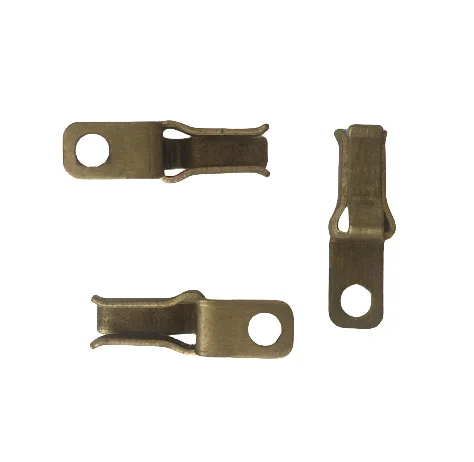
The landscape of metal stamping has expanded significantly over the decades. Today, manufacturers can choose from progressive die stamping, transfer stamping, compound die stamping, deep draw stamping, and fine blanking, among others. Each process carries distinct advantages and limitations depending on the application context. This article walks through the key selection criteria, process types, material considerations, and practical decision logic that engineers and procurement professionals need to confidently choose the most suitable stamping approach for their specific production needs.
Understanding the Core Variables That Drive Stamping Process Selection
Production Volume and Cost Efficiency
Production volume is arguably the single most influential factor when selecting a stamping process. High-volume production runs — typically above 100,000 parts — justify the significant upfront investment in progressive die tooling because the per-part cost drops dramatically as volume increases. Progressive die stamping automates multiple operations in a single continuous feed, making it ideal for mass production of small to medium-sized parts with consistent geometry.
For lower-volume or prototype runs, simpler tooling approaches such as single-stage or compound die stamping are more economical. The tooling cost is lower, lead times are shorter, and design changes can be accommodated without scrapping expensive progressive dies. Understanding your projected annual volume before committing to a stamping process is essential to avoiding over-investment or under-capacity situations.
Mid-volume production — typically between 10,000 and 100,000 parts — often sits in a decision gray zone where transfer stamping becomes a strong candidate. Transfer dies move parts between stations using mechanical fingers, allowing complex multi-step forming without the strip carrier required in progressive tooling. This flexibility makes transfer stamping well-suited for larger parts that cannot be efficiently processed in a progressive strip format.
Part Geometry and Dimensional Complexity
The geometric complexity of your part plays a decisive role in determining which stamping process is technically feasible. Simple flat blanks, brackets, and washers can be produced efficiently with compound or blanking dies. However, parts requiring deep cups, complex contours, or multiple bends in different planes demand more sophisticated stamping approaches such as deep draw or progressive multi-station tooling.
Deep draw stamping is specifically designed for parts where the depth of the formed cavity exceeds the diameter or width of the blank. Cylindrical housings, enclosures, and fluid containers are classic deep draw applications. The process requires careful material selection and precise control of blank holder force to prevent wrinkling or tearing during the draw operation. Not every material is suitable for deep draw stamping, which is why geometry and material selection must be evaluated together.
Fine blanking is the process of choice when tight dimensional tolerances and smooth sheared edges are required without secondary finishing. It uses a triple-action press to produce parts with edge quality and flatness that standard stamping cannot achieve. Gears, cams, and precision locking components are typical fine blanking applications. The tooling cost is higher, but the elimination of secondary operations often justifies the investment in precision-critical industries.
Matching Material Properties to the Right Stamping Method
Metal Type and Formability Ratings
Material selection and stamping process selection are deeply interdependent. Each metal alloy has a specific formability rating that determines how much it can be deformed before cracking or springback becomes a problem. Low-carbon steel and aluminum alloys are among the most forgiving materials for stamping, offering good elongation and consistent behavior across a wide range of processes. Stainless steel, copper, and brass require more careful process control due to their higher strength or work-hardening tendencies.
Stainless steel stamping demands higher press tonnage and more robust tooling because of the material's elevated yield strength and tendency to work-harden rapidly during forming. Tool wear is accelerated, and lubrication management becomes critical to maintaining part quality and extending die life. When stainless steel is specified, the stamping process must be designed with these material behaviors in mind, including appropriate die clearances and surface coatings on tooling.
Copper and brass are commonly used in electrical and connector applications where conductivity is paramount. These materials are generally more ductile than steel, which makes them well-suited for intricate progressive die stamping of small connector pins, terminals, and lead frames. However, their softness also means that tooling must be maintained carefully to prevent burr formation and dimensional drift over long production runs.
Material Thickness and Tolerance Requirements
Sheet metal thickness directly influences press tonnage requirements, die design, and the achievable tolerance range for a given stamping process. Thin-gauge materials — below 0.5 mm — require precise press control and fine-tolerance tooling to prevent distortion, while thick-gauge materials above 3 mm demand high-tonnage presses and robust die construction. Matching the stamping process to the material thickness range is a fundamental engineering requirement.
Tolerance requirements also vary significantly by application. Automotive structural components may tolerate ±0.2 mm variation, while electronic connector parts may require ±0.01 mm or tighter. Fine blanking and precision progressive stamping can achieve tighter tolerances than conventional single-stage processes, but they require higher tooling investment and more rigorous process control. Defining your tolerance requirements clearly before selecting a stamping process prevents mismatches between process capability and part specification.
Evaluating Tooling Investment and Lead Time Tradeoffs
Progressive Die Tooling Versus Simpler Alternatives
Progressive die tooling represents the highest upfront investment in the stamping world, but it delivers the lowest per-part cost at scale. A well-designed progressive die can perform blanking, piercing, bending, coining, and forming in a single continuous operation, eliminating the need for part handling between stations. For high-volume applications where part geometry is stable and volumes are committed, progressive die stamping is almost always the most economical long-term choice.
However, progressive die tooling has a long lead time — typically 8 to 16 weeks for complex tools — and design changes after tool completion are expensive. If your product is still in development or subject to design iteration, committing to progressive tooling prematurely is a significant financial risk. In these situations, soft tooling or compound die stamping with lower-cost tooling materials can bridge the gap until the design is frozen.
Transfer die stamping offers a middle path. Tooling costs are lower than progressive dies for large or complex parts, and the process allows greater flexibility in part handling and orientation between stations. Transfer stamping is particularly well-suited for parts that require operations on multiple faces or that are too large to be carried efficiently in a strip format. The tradeoff is slightly lower throughput compared to progressive stamping at equivalent volumes.
Secondary Operations and Total Cost of Ownership
A complete cost analysis of any stamping process must account for secondary operations. Some processes produce parts that require deburring, heat treatment, surface finishing, or assembly before they are ready for use. These secondary steps add cost, time, and potential quality variation. Choosing a stamping process that minimizes secondary operations — even if the tooling cost is higher — often results in a lower total cost of ownership over the production lifecycle.
Fine blanking, for example, produces parts with smooth edges and tight tolerances that often eliminate the need for grinding or edge finishing. Precision progressive stamping with in-die tapping or forming can eliminate separate threading or bending operations. When evaluating stamping process options, map out the complete production flow from raw material to finished part and calculate the total cost including all secondary steps, not just the press operation itself.
Industry-Specific Considerations for Stamping Process Selection
Automotive and Structural Applications
The automotive industry is the largest consumer of metal stamping globally, and its requirements are among the most demanding. Body panels, structural reinforcements, brackets, and chassis components must meet strict dimensional, strength, and surface quality standards. High-strength steel and advanced high-strength steel alloys are increasingly used in automotive stamping to reduce vehicle weight while maintaining crash performance, which places additional demands on press capacity and tooling durability.
For automotive structural parts, transfer stamping and large progressive die stamping are the dominant processes. The high volumes, tight tolerances, and material consistency requirements of automotive production make these processes the natural fit. Suppliers serving the automotive sector must also maintain rigorous quality management systems and statistical process control to meet OEM requirements, which further reinforces the need for stable, well-characterized stamping processes.
Electronics, Connectors, and Precision Components
In the electronics and connector industry, stamping is used to produce terminals, lead frames, shields, heat sinks, and structural housings at extremely high volumes and tight tolerances. Progressive die stamping dominates this sector because of its ability to produce millions of small, complex parts per year with consistent quality. Material selection typically focuses on copper alloys, phosphor bronze, and beryllium copper for their electrical and mechanical properties.
The miniaturization trend in electronics has pushed stamping precision requirements to new extremes. Parts with features measured in tenths of a millimeter require ultra-precise tooling, controlled press environments, and rigorous inspection protocols. Selecting a stamping process for electronics applications means not only choosing the right die type but also ensuring that the press, tooling, and quality systems are capable of sustaining the required precision over millions of cycles. Partnering with an experienced stamping fabricator with proven capability in precision electronics components is a critical success factor.
Practical Decision Framework for Choosing Your Stamping Process
Defining Your Selection Criteria Before Engaging Suppliers
Before approaching any stamping supplier or tooling house, you should have a clear picture of your selection criteria. This includes annual production volume, part material and thickness, dimensional tolerances, surface finish requirements, secondary operation constraints, and budget for tooling investment. Having these parameters defined in advance allows you to have productive technical conversations and receive accurate quotations rather than ballpark estimates.
It is also important to consider the expected product lifecycle. A part that will be produced for 10 years at high volume justifies a very different tooling investment than a part with a 2-year lifecycle or uncertain demand. The stamping process selection should reflect not just current needs but the realistic production horizon, including potential design changes and volume ramp scenarios.
Prototyping and Process Validation Before Full Commitment
For new parts or new materials, prototyping and process validation are essential steps before committing to production tooling. Soft tooling trials, simulation-based forming analysis, and first-article inspection allow engineers to validate that the chosen stamping process can actually achieve the required part geometry and tolerances before significant tooling investment is made. Skipping this step is a common source of costly surprises in production ramp-up.
Modern forming simulation software can predict material thinning, springback, wrinkling, and fracture risk for a given stamping process and material combination before any physical tooling is built. Using simulation as part of the process selection workflow reduces risk and accelerates the path to validated production. Many experienced stamping suppliers offer simulation services as part of their design-for-manufacturability support, which is a valuable capability to look for when selecting a manufacturing partner.
Ultimately, the right stamping process is the one that reliably produces conforming parts at the required volume and cost within your production timeline. There is no universally superior process — only the best fit for your specific combination of part design, material, volume, and quality requirements. Investing time in the selection decision upfront pays dividends throughout the entire production lifecycle of the component.
FAQ
What is the most cost-effective stamping process for high-volume production?
Progressive die stamping is generally the most cost-effective process for high-volume production runs exceeding 100,000 parts per year. The high upfront tooling cost is offset by very low per-part costs and fast cycle times. For lower volumes, compound die or transfer stamping may offer a better balance of tooling investment and unit cost.
How does material choice affect the stamping process selection?
Material properties such as yield strength, elongation, and work-hardening behavior directly determine which stamping processes are feasible and what press tonnage and tooling design are required. Soft materials like copper and aluminum are more forgiving, while high-strength steel and stainless steel require more robust tooling and higher press capacity. Always evaluate material formability alongside process selection.
When should fine blanking be chosen over standard stamping?
Fine blanking should be selected when parts require very tight dimensional tolerances, smooth sheared edges, and high flatness without secondary finishing operations. It is commonly used for precision gears, cams, locking components, and safety-critical parts. The tooling cost is higher than standard stamping, but the elimination of secondary operations and the superior part quality often justify the investment.
How important is supplier capability when selecting a stamping process?
Supplier capability is critically important. Even the best-designed stamping process will underperform if the supplier lacks the right press equipment, tooling expertise, quality systems, and process control discipline. When selecting a stamping partner, evaluate their equipment range, tooling design capability, quality certifications, and track record with similar materials and part complexities to ensure they can consistently deliver to your requirements.
Table of Contents
- Understanding the Core Variables That Drive Stamping Process Selection
- Matching Material Properties to the Right Stamping Method
- Evaluating Tooling Investment and Lead Time Tradeoffs
- Industry-Specific Considerations for Stamping Process Selection
- Practical Decision Framework for Choosing Your Stamping Process
- FAQ