
 EN
EN




Choosing the right 3d printing process is one of the most critical decisions any engineer, designer, or product developer will face. With so many 3d printing technologies available today, each offering distinct advantages in terms of material compatibility, surface quality, speed, and cost, the selection process can feel overwhelming. A poor choice can lead to wasted time, increased cost, and parts that fail to meet functional requirements. Understanding the core differences between 3d printing methods allows you to align your technology choice with your actual project goals.
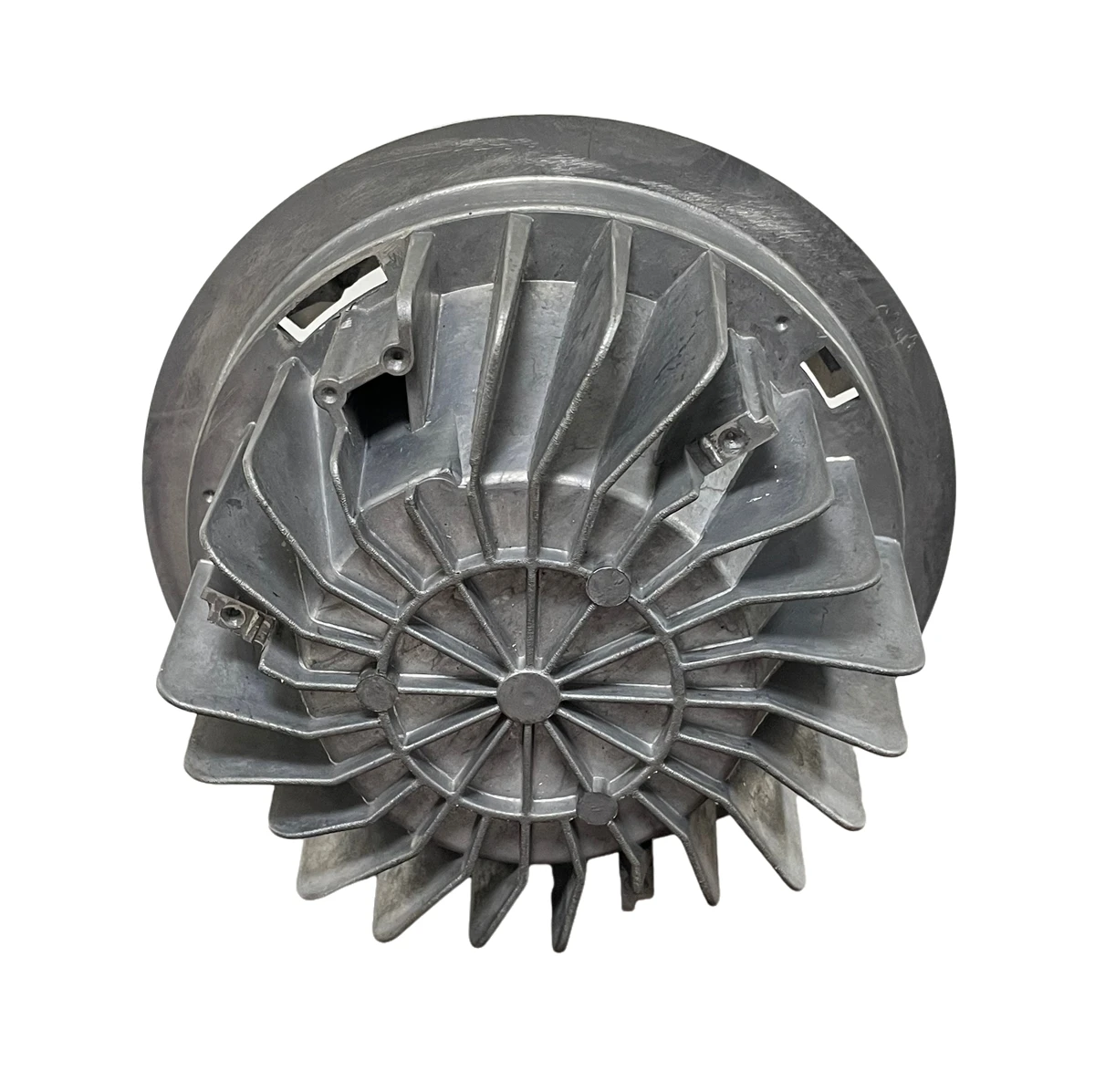
Every 3d printing project carries its own set of demands. A prototype for concept validation has very different requirements than a functional end-use part designed for mechanical stress. Whether you are working in aerospace, medical devices, consumer electronics, or industrial tooling, the 3d printing process you select will directly affect the outcome. This guide walks you through the key selection criteria, the most relevant 3d printing technologies, and the practical questions you need to answer before committing to a specific approach.
Key Factors That Drive 3D Printing Process Selection
Material Requirements and Mechanical Properties
The material you need is often the first filter in 3d printing process selection. Different 3d printing technologies support different classes of materials. Fused Deposition Modeling, commonly called FDM, works primarily with thermoplastic filaments such as PLA, ABS, and PETG. Stereolithography, known as SLA, uses photopolymer resins that deliver high surface detail but may lack the toughness required for load-bearing applications. Selective Laser Sintering, or SLS, fuses nylon powder and produces strong, functional parts without support structures. If your project demands specific mechanical properties such as heat resistance, flexibility, or biocompatibility, the 3d printing process must be capable of processing the appropriate material. Never select a 3d printing method and then adjust your material expectations around it. Always start with the material your part truly needs.
Dimensional Accuracy and Surface Finish
3d printing processes vary significantly in their dimensional accuracy and surface finish quality. SLA and Digital Light Processing, known as DLP, deliver extremely fine resolution and smooth surfaces, making them ideal for jewelry, dental models, and highly detailed prototypes. FDM 3d printing produces visible layer lines that often require post-processing for presentation-quality finishes. SLS 3d printing offers moderate surface quality but excels in geometric complexity and mechanical integrity. For projects where visual precision matters, resin-based 3d printing processes are generally preferred. For structural prototypes or jigs, FDM 3d printing remains a practical and cost-effective choice. Matching the 3d printing process to the required finish reduces rework and post-processing costs significantly.
Matching 3D Printing Technology to Project Type
Prototyping Versus End-Use Part Production
The distinction between prototyping and production is one of the most important factors in 3d printing selection. For early-stage prototyping, where speed and cost efficiency matter most, FDM 3d printing is often the default choice. It is fast, affordable, and delivers acceptable quality for form-and-fit testing. As a project progresses toward functional testing or end-use production, the 3d printing process requirements become more demanding. SLS 3d printing or Multi Jet Fusion, known as MJF, becomes more relevant when producing durable, complex parts at higher volume. Metal 3d printing technologies such as Direct Metal Laser Sintering, called DMLS, are reserved for high-performance parts in sectors like aerospace and medical implants. Understanding where your part sits in the product development lifecycle allows you to choose the 3d printing process that delivers value at that specific stage.
Geometry Complexity and Support Structures
Part geometry is a decisive factor in 3d printing process selection. FDM 3d printing requires support structures for overhangs and complex internal geometries, which adds post-processing time and can affect surface quality. SLA 3d printing also needs supports, though they are typically thinner and easier to remove. SLS 3d printing and MJF stand apart because they do not require supports at all. The surrounding powder bed supports the part during the 3d printing build, enabling highly complex geometries, internal channels, and interlocking assemblies that would be impossible or expensive with other methods. If your design includes undercuts, lattice structures, or organic shapes, a powder-bed 3d printing process is likely the most efficient path forward.
Cost, Speed, and Volume Considerations in 3D Printing
Per-Part Cost and Setup Investment
3d printing economics depend heavily on the technology chosen and the volume of parts required. FDM 3d printing carries the lowest entry cost, making it accessible for small teams and rapid iteration cycles. Resin-based 3d printing processes like SLA and DLP have moderate equipment costs but can become expensive at scale due to resin pricing. Industrial 3d printing processes like SLS and DMLS involve high capital investment and higher per-part costs, but they deliver value through superior part performance and design freedom. When evaluating 3d printing for a project, always calculate the total cost including material, machine time, post-processing labor, and potential rejects. A low-cost 3d printing process that produces parts requiring extensive finishing may not be cheaper in practice than a higher-cost option that delivers ready-to-use output.
Lead Time and Production Speed
Speed is a critical dimension in any 3d printing decision. FDM 3d printing is generally faster for small, simple parts but slows down with increasing complexity or part volume. DLP 3d printing is faster than SLA because it cures an entire layer at once rather than tracing line by line. MJF and binder jetting 3d printing processes can produce batches of parts simultaneously, making them highly competitive for short-run production. If your project has a tight deadline for design validation or a product launch, the speed capability of your chosen 3d printing process becomes a core constraint. Always confirm the actual build time and post-processing time together rather than treating them as separate variables.
FAQ
Which 3d printing process is best for functional prototypes?
For functional prototypes, SLS 3d printing is widely considered one of the most capable options because it produces strong, durable parts without support structures. FDM 3d printing is also suitable for basic functional testing when engineering-grade filaments are used. The right choice depends on the specific mechanical and thermal requirements of your part.
How does material choice affect 3d printing process selection?
Material choice is often the primary driver in 3d printing process selection. Each 3d printing technology is designed to work with a specific class of materials. If your part requires nylon, DMLS-grade metals, or biocompatible resins, the 3d printing process must be capable of handling those materials. Starting with the required material and then identifying compatible 3d printing processes is the most reliable selection strategy.
Can 3d printing be used for low-volume end-use production?
Yes, 3d printing is increasingly used for low-volume end-use production, particularly in industries with high customization needs such as medical devices, aerospace, and industrial tooling. Technologies like SLS, MJF, and metal 3d printing are well-suited for this purpose. The key is ensuring that the selected 3d printing process can consistently meet the dimensional, mechanical, and surface quality requirements of the final application.