
 EN
EN



Manufacturers and product designers across industries are increasingly asking whether 3d printing can genuinely improve customization and flexibility in their workflows. The short answer is yes — and the evidence is compelling. 3d printing enables teams to move from concept to physical prototype faster than traditional manufacturing methods, while also allowing for highly tailored designs that would be cost-prohibitive or structurally impossible to produce through conventional processes. Understanding exactly how 3d printing delivers this advantage helps businesses make smarter decisions about when and how to adopt it.
The value of 3d printing is not limited to speed alone. It fundamentally changes the relationship between design freedom and production cost. In traditional injection molding or CNC machining, complexity often means higher tooling costs. With 3d printing, geometric complexity adds little to no extra cost, which means engineers and designers can pursue functional shapes, internal channels, and intricate structures without worrying about manufacturability constraints. This core advantage makes 3d printing a powerful tool for businesses that prioritize product differentiation and rapid iteration.
How 3d Printing Enables Greater Customization
Design Freedom Without Tooling Constraints
One of the most significant ways 3d printing improves customization is by removing the need for fixed tooling. In traditional manufacturing, producing a customized part requires creating a dedicated mold or fixture, which is expensive and time-consuming. With 3d printing, each part can be produced directly from a digital file, meaning every unit can be unique without additional setup costs. This is particularly valuable in medical devices, consumer electronics, and industrial components where individual fit and function matter. 3d printing allows manufacturers to produce small batches or even single units economically, making true mass customization a realistic business strategy.
3d printing also allows design teams to iterate quickly. When a design needs adjustment, the digital file is modified and the next part is printed with the new geometry — no retooling required. This cycle of rapid revision means that 3d printing compresses product development timelines dramatically, giving businesses a competitive edge in markets where speed-to-market is critical.
Material and Geometry Options
Modern 3d printing supports a wide range of materials, from standard plastics like PLA and ABS to engineering-grade resins, nylon composites, and even metal alloys. This material versatility extends the customization potential of 3d printing beyond shape alone. Designers can select materials that match specific mechanical, thermal, or chemical requirements, ensuring that a custom part performs exactly as intended in its end-use environment. 3d printing also supports multi-material prints, where different zones of a single part can have different hardness or flexibility characteristics — something impossible with conventional single-material molding. This level of material control positions 3d printing as a highly adaptive production tool.
How 3d Printing Enhances Manufacturing Flexibility
On-Demand Production and Low-Volume Runs
Flexibility in manufacturing often comes down to the ability to respond quickly to changing demand. 3d printing excels in this area by enabling on-demand production without minimum order quantities. Traditional manufacturing processes require large production runs to amortize tooling costs, which forces companies to forecast demand and hold inventory. 3d printing eliminates this constraint, allowing businesses to produce exactly what is needed, when it is needed. This makes 3d printing especially valuable for spare parts, replacement components, and short-run specialty products. Companies using 3d printing for on-demand parts can reduce warehousing costs and respond to customer needs within hours rather than weeks.
3d printing also supports decentralized production. Because the core asset is a digital file rather than a physical mold, 3d printing facilities can be distributed across locations. A product designed in one country can be printed locally in another, reducing shipping time, logistics costs, and carbon footprint. This geographic flexibility is becoming increasingly important as global supply chains face disruption, and 3d printing provides a resilient alternative to long-distance component sourcing.
Integration With Injection Molding Workflows
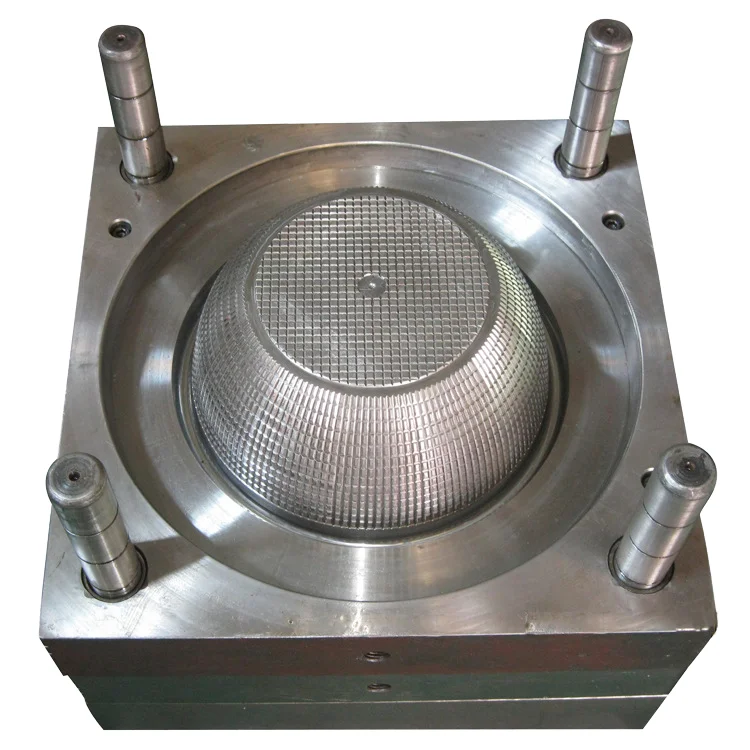
While 3d printing offers outstanding flexibility for prototyping and low-volume production, many businesses eventually scale to injection molding for high-volume manufacturing. The good news is that 3d printing and injection molding work well together within a product development workflow. 3d printing is used to validate design concepts, test ergonomics, and confirm fit before investing in production tooling. This reduces the risk of costly mold revisions and accelerates the transition to full-scale manufacturing. For products like household components made from ABS, PC, or PP materials — such as custom injection-molded parts — 3d printing serves as the essential validation step that ensures the final mold design is optimized before production begins. Pairing 3d printing with professional injection molding services creates a powerful end-to-end development pipeline.
Practical Implications for B2B Product Development
Reducing Time-to-Market With 3d Printing
For B2B product teams, 3d printing directly impacts the speed of the development cycle. Teams can produce functional prototypes within 24 to 48 hours using 3d printing, compared to weeks for traditionally machined samples. This acceleration allows more design iterations within the same project timeline, ultimately producing a better-validated product before launch. 3d printing also enables stakeholder presentations with physical models, which are far more effective than CAD renderings for communicating design intent to clients, procurement teams, or regulatory reviewers. Faster feedback loops enabled by 3d printing reduce development risk and increase confidence in the final design.
Cost Efficiency in Custom Part Production
Cost is always a central concern in B2B manufacturing decisions. 3d printing delivers significant cost savings at the prototyping and low-volume stages by eliminating tooling investment. For custom parts that would otherwise require a dedicated mold, 3d printing removes upfront capital expenditure and makes small-batch production economically viable. As 3d printing technology continues to advance, material costs are decreasing and print speeds are increasing, making 3d printing competitive even for mid-volume applications. Businesses that invest in 3d printing capabilities now are building a foundation for more agile and cost-effective manufacturing as the technology matures.
FAQ
Is 3d printing suitable for producing final production parts?
Yes, 3d printing can produce final production parts, particularly for low-volume runs, custom components, or applications where tooling costs would be prohibitive. Industrial-grade 3d printing systems produce parts with sufficient mechanical strength for many end-use applications. However, for high-volume production, injection molding typically offers lower per-unit costs, and 3d printing is best used as a complementary process for validation and low-volume output.
Which industries benefit most from 3d printing customization?
Industries that benefit most from 3d printing customization include medical devices, aerospace, consumer products, automotive, and industrial equipment. Any sector requiring patient-specific or application-specific parts — such as orthopedic implants, custom brackets, or tailored housings — gains significant value from 3d printing. The ability of 3d printing to produce one-off or small-batch parts without tooling cost makes it ideal for these high-customization environments.
How does 3d printing compare to injection molding for flexibility?
3d printing offers far greater flexibility than injection molding at the design and low-volume stage. With 3d printing, design changes require only a file update, while injection molding requires mold modification or replacement. However, injection molding surpasses 3d printing in cost efficiency and material performance at high volumes. Most professional product development workflows use 3d printing for early-stage flexibility and transition to injection molding for scaled production.