
 EN
EN




Every modern device — from a handheld toothbrush to a complex industrial machine — depends on a carefully selected set of electronic parts to function at its best. These components are not simply passive elements sitting inside a circuit board; they are the active drivers of speed, efficiency, reliability, and user experience. Understanding how electronic parts contribute to device performance is essential for engineers, product designers, and procurement professionals who want to build or source products that truly deliver on their promises.
The relationship between electronic parts and device performance is both direct and measurable. When the right components are selected, integrated correctly, and optimized for their operating environment, the result is a device that performs consistently, consumes energy efficiently, and lasts longer in real-world use. This article explores the specific mechanisms through which electronic parts improve device performance, covering power management, signal processing, control systems, and the role of component quality in end-product reliability.
The Role of Electronic Parts in Power Management
How Power Components Shape Energy Efficiency
One of the most direct ways electronic parts improve device performance is through precise power management. Voltage regulators, capacitors, inductors, and power management integrated circuits (PMICs) work together to ensure that every subsystem in a device receives exactly the voltage and current it needs — no more, no less. This precision reduces wasted energy, minimizes heat generation, and extends battery life in portable devices.
In rechargeable consumer devices, for example, the charging circuit relies on a combination of electronic parts including MOSFETs, charge controller ICs, and protection circuits to manage the charging cycle safely and efficiently. A well-designed power stage can reduce charging time while protecting the battery from overcharge, over-discharge, and thermal stress. These are not minor improvements — they directly affect how long a device lasts and how reliably it performs over hundreds of charge cycles.
The quality of power-related electronic parts also determines how stable a device behaves under varying load conditions. A capacitor with low equivalent series resistance (ESR) will filter power supply noise more effectively than a lower-grade alternative, resulting in cleaner operation for sensitive analog and digital circuits downstream. This kind of component-level decision has a cascading effect on overall device performance.
Battery and Charging Integration in Modern Devices
Modern rechargeable devices increasingly rely on USB Type-C charging interfaces, which require a specific set of electronic parts to implement correctly. USB Power Delivery (PD) controllers, ESD protection diodes, and current sensing resistors all play a role in making fast, safe charging possible. Without these components working in harmony, a device may charge slowly, overheat, or fail to negotiate the correct power profile with the charger.
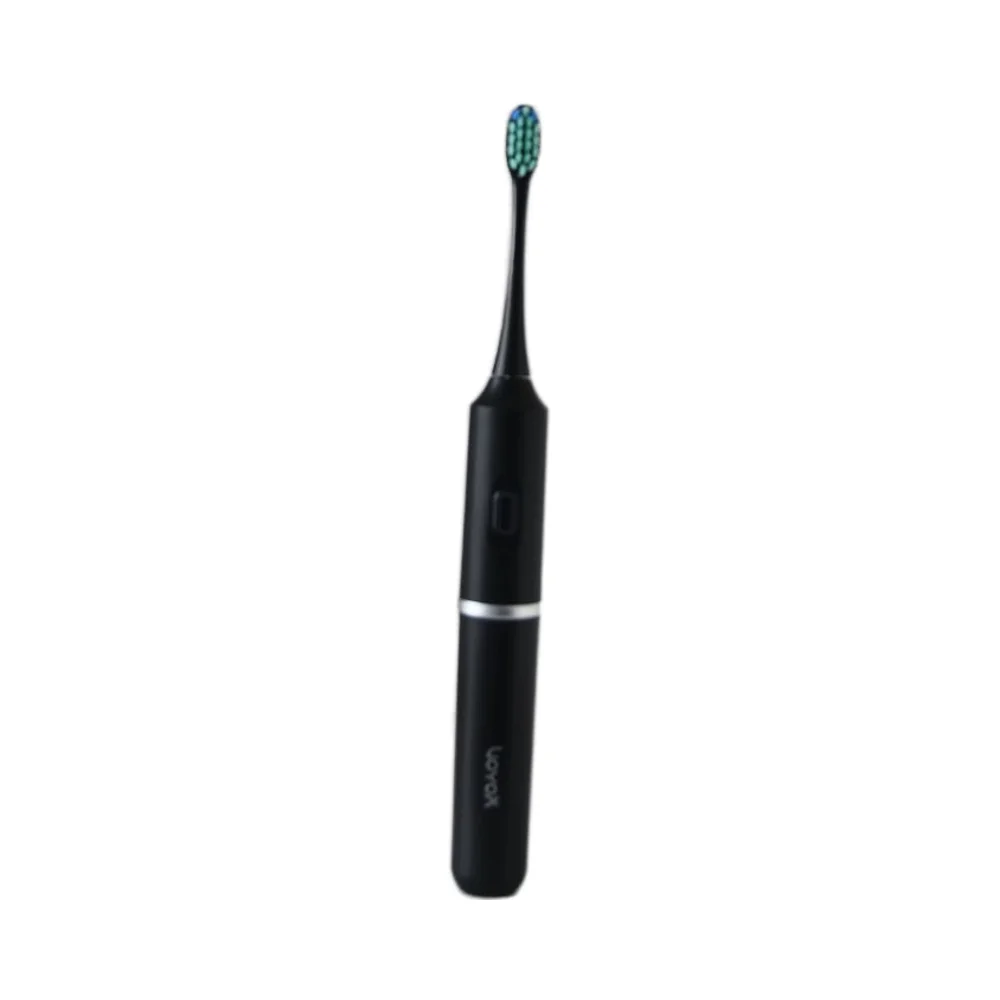
Take a product like a electronic parts-driven sonic electric toothbrush with Type-C charging and an LED display. The performance of such a device — its motor speed, display brightness, battery runtime, and charging behavior — is entirely determined by the quality and configuration of its internal electronic parts. Each component contributes a specific function, and the overall user experience is the sum of how well those functions are executed.
Signal Processing and Sensor Integration
How Electronic Parts Enable Intelligent Device Behavior
Beyond power management, electronic parts improve device performance by enabling intelligent signal processing. Microcontrollers, digital signal processors (DSPs), and application-specific integrated circuits (ASICs) allow devices to interpret sensor data, execute control algorithms, and respond to user inputs in real time. The processing speed and accuracy of these components directly determine how responsive and capable a device feels in use.
In devices that incorporate user feedback mechanisms — such as LED displays, haptic motors, or acoustic indicators — the electronic parts responsible for driving these outputs must be precisely matched to the control logic. A microcontroller that cannot update an LED display fast enough will produce visible flicker or lag. A motor driver that lacks sufficient current capacity will cause a vibration motor to underperform. These are performance failures rooted entirely in component selection.
Sensor integration is another area where electronic parts have a profound impact. Pressure sensors, temperature sensors, accelerometers, and touch interfaces all require analog front-end circuits to condition their signals before they can be processed digitally. The quality of operational amplifiers, analog-to-digital converters (ADCs), and reference voltage sources used in these front-end circuits determines the accuracy and reliability of the sensor data the device acts upon.
Noise Reduction and Signal Integrity
Signal integrity is a critical but often overlooked dimension of device performance. As operating frequencies increase and device form factors shrink, the risk of electromagnetic interference (EMI) and signal degradation grows. Carefully selected electronic parts — including ferrite beads, bypass capacitors, and shielded inductors — are used to suppress noise and maintain clean signal paths throughout a device's circuitry.
Poor signal integrity caused by inadequate electronic parts can manifest as erratic device behavior, reduced wireless range, audio distortion, or display artifacts. These are not software problems — they are hardware problems that can only be solved by choosing the right components and placing them correctly on the PCB. Engineers who understand the signal integrity implications of their component choices consistently produce devices that perform better and pass regulatory compliance testing more reliably.
Mechanical and Electromechanical Performance
Motors, Actuators, and the Components That Drive Them
Many consumer and industrial devices rely on electromechanical electronic parts to convert electrical energy into physical motion. Brushless DC motors, stepper motors, solenoids, and piezoelectric actuators are all examples of components whose performance characteristics — torque, speed, efficiency, and noise — directly translate into the user-perceived quality of the device they power.
In a sonic toothbrush, for instance, the motor is the heart of the device. The frequency and amplitude of its oscillation determine cleaning effectiveness. The electronic parts that control the motor — including the driver IC, PWM controller, and feedback circuit — determine whether the motor operates at its optimal point across varying load conditions such as different brushing pressures. A well-engineered motor control system maintains consistent performance even as the battery discharges, which is a direct quality-of-life improvement for the end user.
The selection of motor driver electronic parts also affects acoustic performance. Devices that use high-frequency PWM switching with appropriate filtering produce less audible noise than those using lower-quality drivers. This is particularly relevant in personal care and medical devices where quiet operation is a valued feature. The right electronic parts make the difference between a device that feels premium and one that feels cheap.
Durability and Environmental Resilience
Device performance is not only about peak capability — it is also about sustained performance over time and across operating conditions. Electronic parts rated for wider temperature ranges, higher humidity tolerance, and greater mechanical shock resistance contribute directly to the long-term reliability of a device. Industrial-grade components may cost more upfront, but they reduce field failure rates and warranty costs significantly.
For devices used in demanding environments — whether that means a bathroom counter, a factory floor, or an outdoor installation — the environmental ratings of electronic parts are a critical performance parameter. Conformal coatings, sealed connectors, and moisture-resistant capacitors are all examples of how component choices translate into real-world durability. Specifying the right electronic parts for the intended use environment is one of the most impactful decisions a product engineer can make.
Display and User Interface Performance
How Electronic Parts Define the User Experience
The user interface of a device is the most visible expression of its internal electronic parts. LED displays, OLED screens, capacitive touch panels, and indicator lights all depend on driver circuits, timing controllers, and power supply components to deliver the brightness, contrast, and responsiveness that users expect. A display that flickers, dims prematurely, or responds slowly to touch is a direct symptom of underperforming electronic parts.
LED display brightness and color accuracy are controlled by constant-current driver ICs that regulate the current flowing through each LED segment. The precision of these electronic parts determines whether the display looks consistent across units and over time. Devices with high-quality display drivers maintain their visual performance throughout their product lifecycle, while those using lower-grade components may show visible degradation within months of use.
Touch interface performance is similarly dependent on the quality of the capacitive sensing electronic parts used. A high-resolution capacitive controller with good noise immunity will respond accurately even when the user's hands are wet or when the device is operating near other electronic equipment. This level of reliability is only achievable through careful component selection and thorough characterization of the sensing circuit's performance under real-world conditions.
Feedback Mechanisms and Perceptual Quality
Beyond visual displays, electronic parts also drive the haptic and acoustic feedback mechanisms that shape how a device feels to use. Vibration motors, buzzers, and speakers are all electromechanical components whose output quality depends on the driver circuits and signal conditioning electronic parts that control them. A haptic feedback system that uses a precision linear resonant actuator (LRA) driven by a dedicated haptic driver IC will produce a noticeably more satisfying tactile response than one using a basic coin vibration motor with a simple on/off driver.
These perceptual quality differences matter enormously in consumer products. Users may not be able to articulate why one device feels better than another, but the underlying reason is almost always the quality and configuration of the electronic parts inside. Investing in better components at the design stage is one of the most cost-effective ways to improve perceived product quality and customer satisfaction.
Component Quality and Long-Term Device Reliability
Why Component Grade Matters for Performance Over Time
Short-term performance is only part of the story. The grade and specification of electronic parts used in a device determine how that performance holds up over thousands of operating hours. Electrolytic capacitors, for example, have a finite lifespan that is strongly influenced by operating temperature and ripple current. Using capacitors with higher temperature ratings and lower ESR in a power supply circuit can double or triple the expected service life of the device.
Similarly, the contact resistance of connectors and switches increases over time due to oxidation and mechanical wear. Specifying electronic parts with gold-plated contacts or sealed housings in high-cycle applications prevents this degradation from affecting device performance. These are the kinds of engineering decisions that separate products with strong long-term reliability records from those that generate high return and repair rates.
Procurement teams and product managers who understand the performance implications of electronic parts quality are better positioned to make informed sourcing decisions. The lowest-cost component is rarely the best value when total cost of ownership — including warranty, returns, and brand reputation — is taken into account. Specifying quality electronic parts from the outset is a strategic decision that pays dividends throughout the product lifecycle.
Testing and Validation of Electronic Parts Performance
Ensuring that electronic parts actually deliver their specified performance requires rigorous testing and validation. Incoming quality control (IQC) processes, accelerated life testing (ALT), and environmental stress screening (ESS) are all methods used to verify that components meet their specifications and will perform reliably in the finished device. These processes are especially important when sourcing electronic parts from new suppliers or when transitioning to alternative components due to supply chain constraints.
Functional testing at the board and system level is equally important. A component may meet its individual datasheet specifications but still cause performance issues when integrated into a specific circuit due to parasitic effects, layout sensitivities, or interaction with other electronic parts. Thorough system-level validation catches these issues before they reach production, saving significant cost and protecting product quality.
FAQ
What types of electronic parts have the biggest impact on device performance?
Power management ICs, microcontrollers, motor drivers, and signal conditioning components tend to have the most direct impact on device performance. These electronic parts control the core functions of a device — power delivery, processing, motion, and sensing — and their quality and configuration determine how well the device performs in real-world use. Display drivers and connectivity components also play a significant role in user-perceived performance.
How do electronic parts affect battery life in portable devices?
Battery life is primarily determined by how efficiently the electronic parts in a device consume and manage power. Low-quiescent-current regulators, efficient motor drivers, and intelligent power management ICs that enable sleep modes and dynamic voltage scaling all contribute to longer battery runtime. The charging circuit's efficiency also matters — a more efficient charger converts more of the input power into stored battery energy rather than heat.
Can upgrading electronic parts improve an existing device's performance?
In many cases, yes. Replacing lower-grade electronic parts with higher-specification alternatives — such as upgrading to a lower-ESR capacitor, a more precise voltage reference, or a higher-efficiency motor driver — can measurably improve device performance without requiring a complete redesign. However, any component substitution should be validated through testing to ensure compatibility and to confirm that the expected performance improvement is actually achieved in the system context.
How important is component sourcing when it comes to electronic parts performance?
Sourcing is critically important. Counterfeit and substandard electronic parts are a well-documented problem in the electronics supply chain, and they can cause performance failures that are difficult to diagnose. Sourcing from authorized distributors, verifying component authenticity, and maintaining traceability records are all essential practices for ensuring that the electronic parts used in a device actually meet their specifications and will perform as expected throughout the product's service life.